Best Sendinblue Alternatives in 2026: 8 Email Marketing Tools Compared
Sendinblue alternatives compared for newsletters, automation and ecommerce: Mailchimp, Klaviyo, ActiveCampaign and more, with pricing and honest trade-offs.
- Editor's choice
 Mailchimp
Simple newsletters at scale
Starts atSee websiteVisit mailchimp.comFull review - Great alternative
 Constant Contact
Local business email
Starts atSee websiteVisit constantcontact.comFull review - Also consider
 Klaviyo
Ecommerce email and SMS
Starts atSee websiteVisit klaviyo.comFull review
TL;DR:
- Mailchimp and MailerLite suit small teams that want simple newsletters and a free starting tier.
- Klaviyo and Omnisend suit online stores, with strong ecommerce data, product recommendations and abandoned cart flows.
- ActiveCampaign and GetResponse suit teams that want deeper automation, landing pages and lead scoring.
- Constant Contact and Kit suit creators and local businesses that value simple tools and guided setup over complex automation.
Quick comparison
| Tool | Best for | Starts at | Free plan? | |
|---|---|---|---|---|
| Mailchimp | Simple newsletters at scale | See website | Yes | Visit |
| Constant Contact | Local business email | See website | Free trial | Visit |
| Klaviyo | Ecommerce email and SMS | See website | Yes | Visit |
 Kit | Creators and newsletters | See website | Yes | Visit |
 ActiveCampaign | Advanced automation | See website | Free trial | Visit |
 MailerLite | Affordable newsletters | See website | Yes | Visit |
 GetResponse | Automation and landing pages | See website | Free trial | Visit |
 Omnisend | Ecommerce automation | See website | Yes | Visit |
The best Sendinblue alternatives
Sendinblue, now known as Brevo, is known for email plus SMS and a contact-based model. These alternatives cover the same ground, with different strengths for stores, creators and local firms.
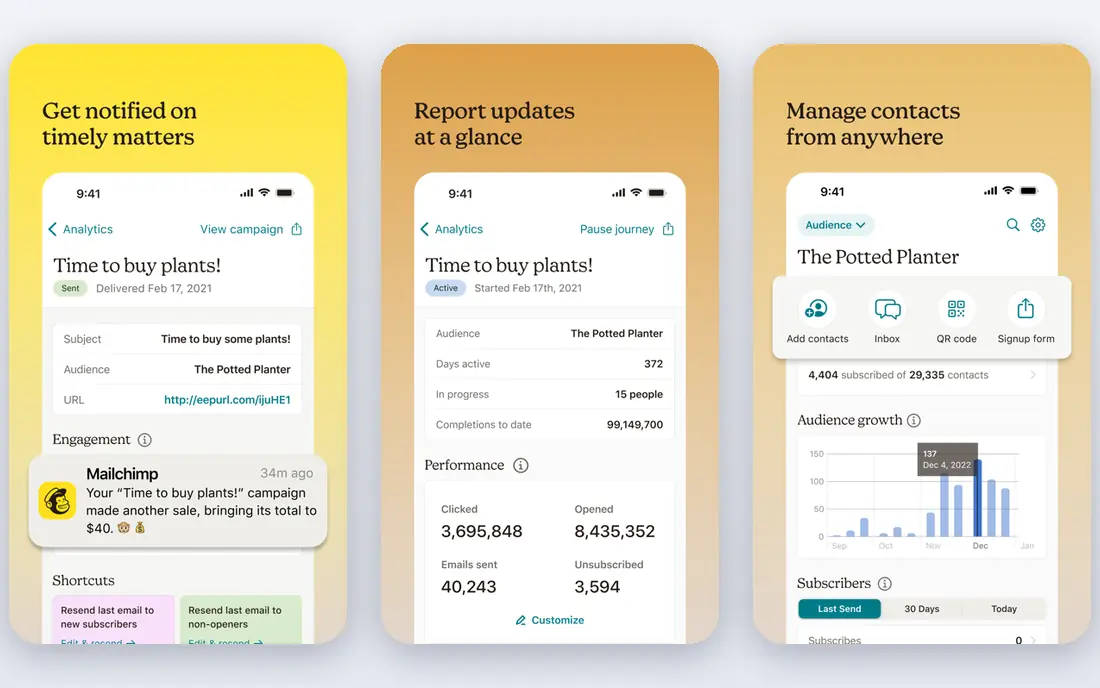
Mailchimp remains the most familiar email tool for small businesses, with a drag-and-drop builder, ready templates and integrations with stores, websites and social tools. A free tier lets a new list start sending, and paid plans add automation, testing and reporting. For a team that sends a regular newsletter and occasional promotions, Mailchimp is easy to learn and hard to outgrow quickly.
The catch is contact-based pricing. As a list grows, the monthly cost rises even if sending volume stays flat, so check the price at your next list size, not just today. Advanced automation and segmentation also sit in higher plans. Still, for simple, reliable newsletters, Mailchimp is our pick for most people.
- Very familiar builder
- Many templates
- Broad integrations
- Pricing rises with contacts
- Advanced automation is paid
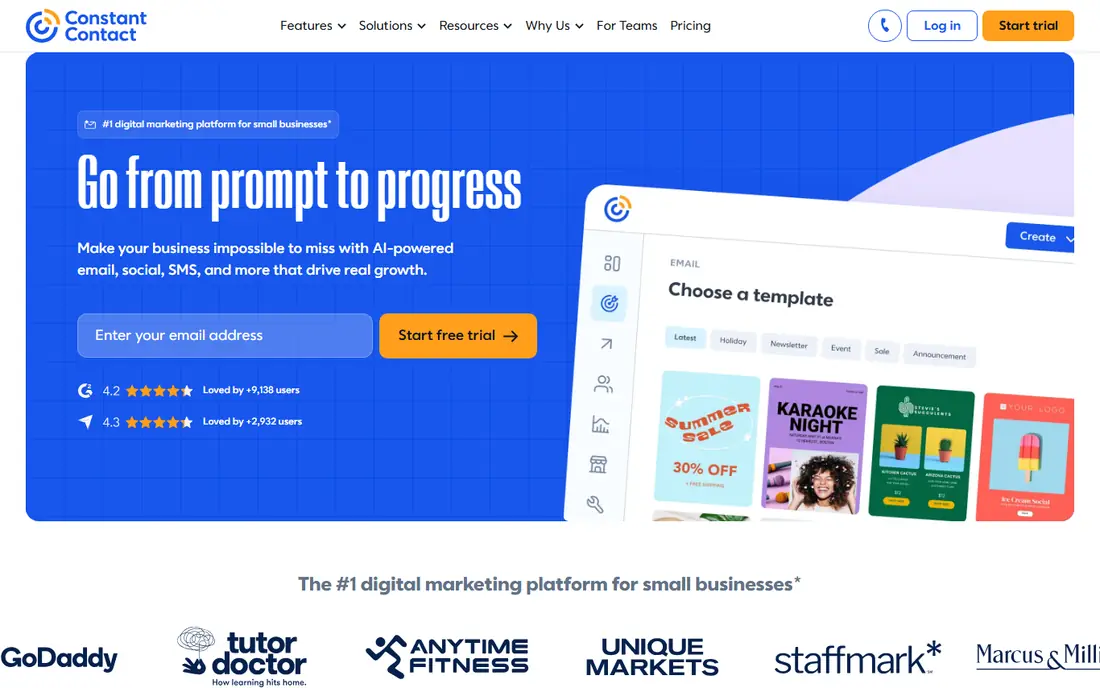
Constant Contact targets local businesses, nonprofits and event organisers, with guided templates, event registration and social posting alongside email. Support is a real strength for beginners, with phone and chat help that suits a team without a marketing specialist. The builder is straightforward, and list tools cover imports, sign-up forms and basic segments.
Automation is simpler than ActiveCampaign or Klaviyo, so a team that wants complex branching journeys may outgrow it. Design options are also more template-bound than a fully free builder. If you want a friendly tool that gets a newsletter out each week without a learning curve, Constant Contact fits well.
- Guided setup
- Event and social tools
- Helpful support for beginners
- Automation is simpler than rivals
- Design flexibility is limited

Klaviyo is built for online stores, pulling order, browsing and product data into segments and flows. Abandoned cart, post-purchase and win-back emails can use real purchase history, and SMS can sit in the same flows. Integrations with Shopify, WooCommerce and other store platforms are a core strength, not an add-on.
Pricing follows contacts and SMS use, so a growing store should model costs at higher list sizes. Setup also takes care to get data, consent and flows right. For a store that earns a large share of revenue from email, Klaviyo often pays for itself. For a simple newsletter, it is more tool than needed.
- Deep store data
- Strong abandoned cart flows
- SMS alongside email
- Pricing rises with contacts and SMS
- Setup takes care
Kit, formerly ConvertKit, is built for creators, writers and newsletter publishers. It offers landing pages, sign-up forms, simple sequences and paid newsletter tools, with a focus on growing an audience and selling digital products. The writing experience is clean, and automation is visual without being overwhelming.
Ecommerce depth is thinner than Klaviyo, and design flexibility is more limited than Mailchimp. For a creator whose main job is a newsletter, a course or a digital product, those limits rarely matter. Kit is a strong pick for publishers who want growth tools without a heavy marketing platform.
- Creator-focused forms and sequences
- Simple automation
- Clean writing tools
- Ecommerce features are thinner
- Design options are simple
ActiveCampaign suits teams that want automation beyond a simple welcome series, with branching journeys, lead scoring, site tracking and built-in CRM tools. A sales or marketing team can move a contact from a form to a nurture sequence to a sales task without switching tools. Reporting covers automation performance as well as campaign opens and clicks.
The learning curve is real, and pricing rises with contacts and feature tiers. A small team should start with one or two core automations, rather than building a complex system on day one. For teams that live on automation, ActiveCampaign is one of the strongest Sendinblue alternatives.
- Deep automation builder
- Lead scoring
- CRM features included
- Learning curve
- Pricing rises with contacts and features
MailerLite is known for fair pricing and a clean, simple builder, which makes it popular with small businesses, bloggers and nonprofits. It covers newsletters, landing pages, forms, automation and basic ecommerce links, without a heavy interface. A free tier covers small lists, and paid plans stay approachable as a list grows.
Automation and integrations are simpler than ActiveCampaign or Klaviyo, so complex store journeys may need workarounds. For a team that mainly sends newsletters and simple welcome flows, that simplicity is a benefit. MailerLite is our value pick for small lists that want reliable sending without a high bill.
- Low cost for small lists
- Clean builder
- Good deliverability basics
- Automation is simpler than top rivals
- Fewer native integrations
GetResponse combines email with landing pages, forms, automation and webinar tools, which suits teams that run lead generation and online events. Its automation builder supports branching journeys, scoring and ecommerce triggers, and its landing page tool lets a team test offers without a separate product. That breadth is useful for a small marketing team that wants one platform.
The interface covers many areas, so new users should expect a short learning period. Pricing tiers also need careful reading, since some features sit in higher plans. For a team that values landing pages and webinars alongside email, GetResponse is a capable all-in-one option.
- Landing pages and webinars
- Automation builder
- Ecommerce tools
- Interface has many sections
- Pricing tiers need reading
Omnisend is built for online stores, with prebuilt flows for abandoned carts, browse abandonment, welcome series and post-purchase follow-ups. It combines email with SMS and web push in the same automation, and its Shopify integration is straightforward. A free tier lets a small store test core flows before paying.
For a non-store newsletter, Omnisend is less natural than Mailchimp or MailerLite, since its strengths are store data and purchase flows. SMS costs also add to the bill, so model that channel separately. For a store that wants Klaviyo-style flows at a simpler price point, Omnisend deserves a trial.
- Store-focused flows
- Email plus SMS and push
- Easy Shopify setup
- Less suited to non-store newsletters
- SMS costs add up
How we picked these
We compared official pricing pages, feature pages and documentation for tools that send marketing email, support automation and handle lists, forms and reporting. We kept only tools that are actively maintained in 2026 and that support US sending, consent tools and unsubscribe handling. We mixed general newsletter tools with ecommerce-focused platforms, since Sendinblue users span both, and we noted where pricing follows contacts, sends or SMS use.
We did not claim hands-on deliverability testing. Our comparison rests on vendor documentation, pricing pages and public reviews from small businesses, creators and store owners.
What to check before you switch
Pricing at your next list size
Most tools price by contacts, not just by sends. Check the cost at your current size and at double that size, and ask how inactive contacts are counted. A tool that looks cheap today can become costly after a year of list growth.
Deliverability and consent
Check authentication setup, bounce handling, unsubscribe tools and consent records. A clean import matters: remove old, unengaged contacts before migration, and confirm consent for your list. Good deliverability depends more on list hygiene than on any single vendor claim.
Automation you will actually use
List the three automations that matter most, such as welcome, abandoned cart or win-back, and test each one in the trial. A deep builder you never use is worse than a simple builder you use weekly. Build the core flows first, then add complexity.
Migration and integrations
Check imports for contacts, tags and templates, and test the store or website integration before cutover. Keep the old tool running until the first campaign and automation cycle have run cleanly on the new platform. That overlap prevents a lost send during transition.
FAQ
Is Mailchimp a good Sendinblue alternative?
Yes, for simple newsletters and broad integrations, Mailchimp is a strong alternative. It is easy to learn and widely supported. Check contact-based pricing at your list size, since costs rise as the list grows, and compare automation depth if you need complex journeys.
Which Sendinblue alternative is best for ecommerce?
Klaviyo and Omnisend lead for ecommerce, because they use store data for segments, product recommendations and cart flows. Klaviyo offers deeper data and SMS in one platform, while Omnisend offers a simpler setup and price point. Test both with your store data before choosing.
Is there a free Sendinblue alternative?
Mailchimp, Klaviyo, Kit, MailerLite and Omnisend all offer free tiers, with limits on contacts, sends or features. Free tiers suit small lists and testing, but growing lists will need a paid plan. Check what each free tier includes, since limits differ widely.
Can I migrate my list from Sendinblue?
Yes. Most tools support contact import by file, with tags and custom fields, and many offer guided migration help. Clean the list first, confirm consent, and test a small send before moving the full list. Keep the old account until the first full campaign cycle is complete.
Does Sendinblue still exist under Brevo?
Yes, Sendinblue rebranded as Brevo, and existing accounts moved to the Brevo platform. If you are comparing alternatives, you are really comparing Brevo with the tools on this list. The core comparison, email, automation and SMS, remains the same.
Which tool is best for creators?
Kit is built for creators, with landing pages, sequences and paid newsletter tools. MailerLite also suits creators on a budget, while Mailchimp suits creators who want many templates and integrations. Pick Kit if audience growth and digital products are your main work.