Best Moosend Alternatives in 2026: 9 Email Marketing Tools Compared
Compare the best Moosend alternatives for email marketing in 2026, with pricing by list size, automation, free plans, and ecommerce features compared.

- Editor's choice
 MailerLite
Small business value
Starts at$12 per monthVisit mailerlite.comFull review - Great alternative
 Brevo
Large lists, volume pricing
Starts at$9 per monthVisit brevo.comFull review - Also consider
 Mailchimp
All-round small business
Starts at$13 per monthVisit mailchimp.comFull review
TL;DR:
- MailerLite is our pick for most small businesses, thanks to a clean editor, a free plan, and low paid prices.
- Brevo suits large lists with modest sending, since it charges by email volume rather than subscriber count.
- Mailchimp remains the safe all-rounder, with broad integrations and a familiar editor, though costs rise with list size.
- Kit suits creators who sell courses and products, while Klaviyo suits ecommerce stores that need deep purchase data.
- Prices in this category depend heavily on list size, so compare costs at your actual subscriber count, not just the entry tier.
Quick comparison
| Tool | Best for | Starts at | Free plan? | |
|---|---|---|---|---|
| MailerLite | Small business value | $12 per month | Yes | Visit |
| Brevo | Large lists, volume pricing | $9 per month | Yes | Visit |
| Mailchimp | All-round small business | $13 per month | Yes | Visit |
 Kit | Creators selling products | $39 per month | Yes | Visit |
 Constant Contact | Small business and events | $12 per month | Free trial | Visit |
 Klaviyo | Ecommerce segmentation | $20 per month | Yes | Visit |
 ActiveCampaign | Advanced automation | $15 per month | Free trial | Visit |
 GetResponse | Funnels and webinars | $19 per month | Yes | Visit |
 Omnisend | Ecommerce email plus SMS | $16 per month | Yes | Visit |
The best Moosend alternatives
Moosend is known for affordable email marketing with automation and ecommerce features. The tools below match that value focus while adding different strengths in design, creators, ecommerce, or advanced automation.
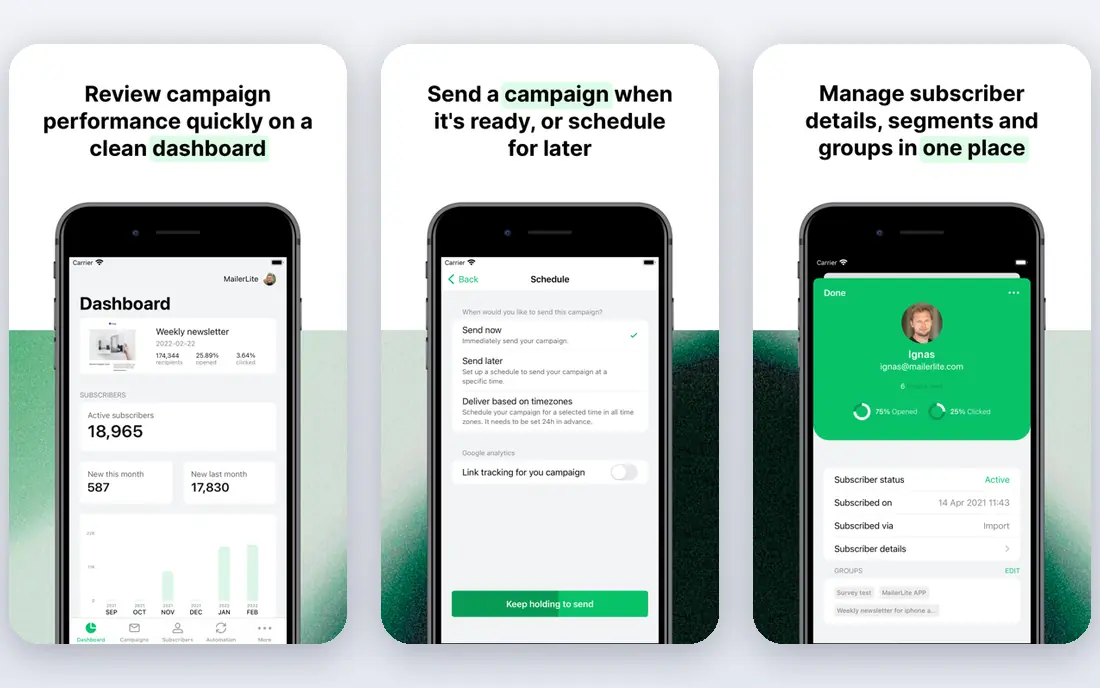
MailerLite is the tool we recommend first to most small businesses leaving Moosend. The interface is clean, the drag-and-drop editor is easy to learn, and landing pages, signup forms, and basic automation are included without a steep price jump. The free plan covers a small list, which lets you test deliverability before paying.
The approval process for new accounts can feel strict, and free plan templates are limited. If you need very advanced automation with many branches, ActiveCampaign will serve you better. For newsletters, promotions, and welcome sequences, MailerLite offers the best value here.
- Clean, easy editor
- Landing pages and forms included
- Low paid prices
- Strict approval for new accounts
- Fewer templates on the free plan
- Automation is lighter than ActiveCampaign
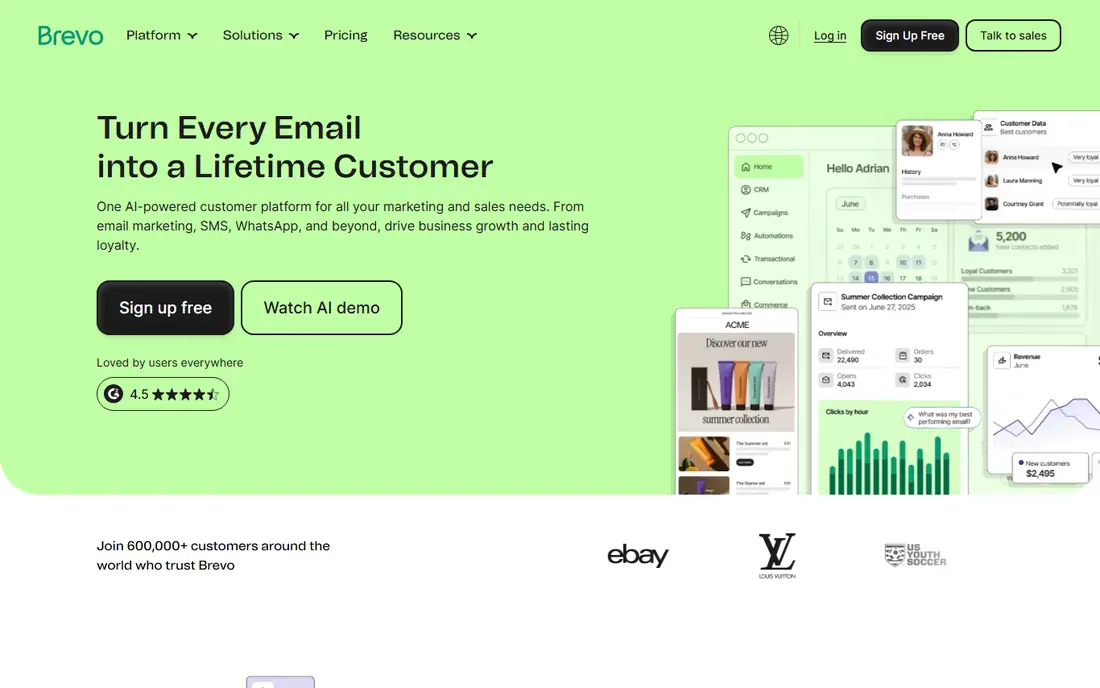
Brevo, formerly Sendinblue, changes the pricing math. Instead of charging by subscriber count, it charges by email volume, so a large list that receives mail infrequently can cost far less than on per-contact platforms. It also adds SMS, WhatsApp campaigns, and live chat, which suits businesses that reach customers on several channels.
The free plan limits sending to 300 emails per day, and some testing features sit on higher plans. If you send daily to a large list, volume pricing may not save you money. For large, lightly mailed lists, Brevo is often the cheapest serious option.
- Charges by emails sent, not subscribers
- SMS and WhatsApp included
- Unlimited contacts on free plan
- Daily limit on free plan
- Starter lacks some testing features
- Interface is less polished than MailerLite
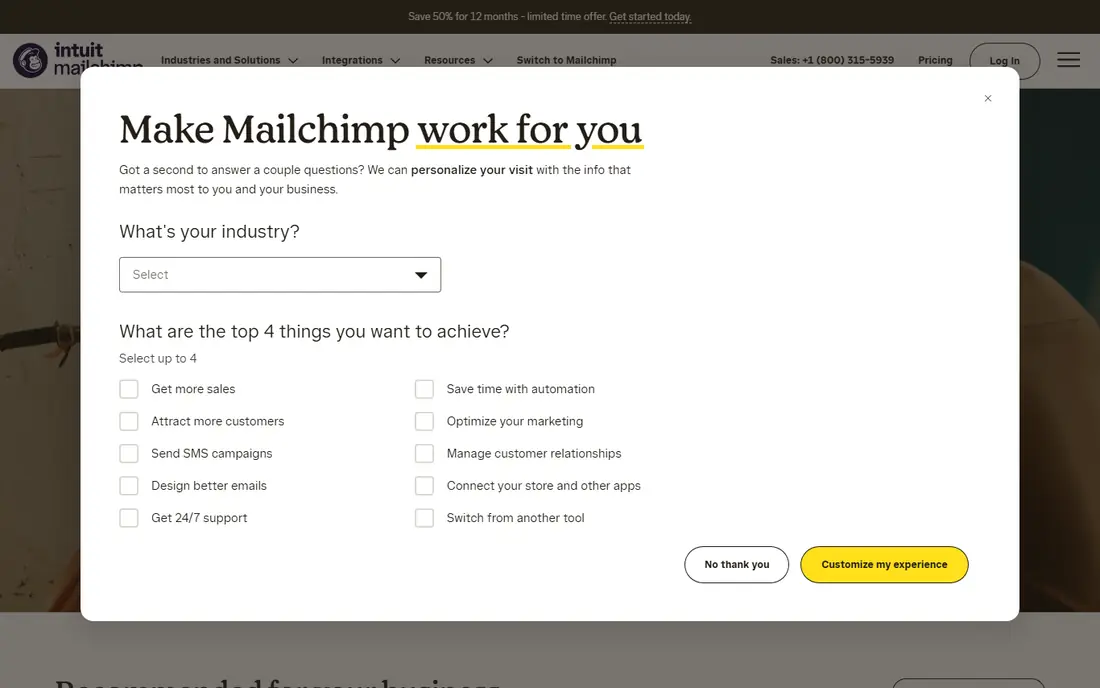
Mailchimp remains the default choice for many small businesses, and for good reason. The editor is familiar, templates are plentiful, integrations cover most ecommerce and CRM tools, and analytics are easy to read. If your team has used Mailchimp before, the learning curve is close to zero.
The catch is cost at scale. Prices rise with contact count, and the free plan now covers only a small list with limited sends. For a small, growing list, Mailchimp is a safe pick. For a large list on a tight budget, MailerLite or Brevo usually cost less.
- Familiar editor and broad integrations
- Good templates
- Strong analytics
- Costs rise sharply with list size
- Free plan limits are tight
- Pricing tiers can confuse
Kit, formerly ConvertKit, is built for creators: bloggers, YouTubers, podcasters, and course sellers. Tag-based management means one subscriber can carry several interests without paying for them twice, and visual automations make welcome sequences and product launches easy to build. The free plan covers up to 10,000 subscribers with limits, which is generous for a starting creator.
Paid plans start higher than MailerLite, and the plain-text email style will not suit brands that want heavily designed newsletters. For creators who sell to their list, Kit focus and automation justify the price.
- Creator-focused design
- Tag-based subscriber management
- Visual automations
- Higher paid starting price
- Plain email style may not suit design-heavy brands
- Commerce features vary by plan
Constant Contact suits small businesses, nonprofits, and event organizers that want a simple, dependable tool with good support. The editor is straightforward, event registration and social posting tools are included, and beginners can get help without digging through forums. That hand-holding matters for teams without a marketer on staff.
There is no standing free plan, only a trial, and automation is lighter than ActiveCampaign or Klaviyo. For a local business sending newsletters and event invites, it is a friendly and reliable Moosend alternative.
- Simple editor
- Event and social tools
- Helpful support for beginners
- No free plan, only a trial
- Automation is lighter than rivals
- Costs rise with list size
Klaviyo is the ecommerce specialist in this list. It pulls purchase, browsing, and product data from your store, so you can segment by what people actually bought, viewed, or abandoned. Flows for welcome, abandoned cart, post-purchase, and win-back are strong, and SMS can run alongside email in the same flow.
Pricing is based on active profiles, so costs rise as your store grows, and advanced flows take time to learn. For a simple newsletter, it is more than you need. For a store where email drives a large share of revenue, Klaviyo segmentation usually pays for itself.
- Deep ecommerce data and segmentation
- Strong flows for abandoned carts
- SMS included
- Costs rise fast with profiles
- Learning curve for advanced flows
- Overkill for simple newsletters
ActiveCampaign suits teams that want automation with real logic: if a contact clicks, buys, or visits a page, the next steps change accordingly. The builder handles branching, scoring, and CRM tasks in one place, which replaces several tools for growing businesses. Deliverability and reporting tools are also solid.
There is no free plan, only a trial, and complex automations take time to design and test. Small teams sending a monthly newsletter will find it more than they need. For businesses that live on funnels and lifecycle email, it is the most capable tool here.
- Powerful conditional automation
- Built-in CRM features
- Good deliverability tools
- No free plan
- Learning curve for complex automations
- Costs rise with contacts and features
GetResponse is an all-in-one marketing tool rather than email alone. You can build funnels, landing pages, and webinars alongside email campaigns, which suits course sellers and digital product businesses that run live launches. Automation covers welcome, nurture, and sales sequences without a separate tool.
The interface packs in a lot, so beginners may need time to find their way around, and webinar capacity depends on plan. If you run webinars or funnels, the bundle is good value. If you only need email, a simpler tool will feel cleaner.
- Funnels, landing pages, and webinars in one place
- Good automation
- Free plan to test
- Interface feels busy
- Webinar limits vary by plan
- Pricing rises with list size
Omnisend suits smaller ecommerce stores that want email and SMS together without Klaviyo pricing or complexity. Prebuilt flows cover welcome, abandoned cart, and post-purchase messages, and Shopify integration is straightforward. The free plan lets a small store test flows before paying.
Non-ecommerce businesses will find its features less relevant, and advanced reporting sits on higher plans. For a store that wants one tool for email and SMS at a moderate price, Omnisend is a practical Moosend alternative.
- Ecommerce email plus SMS in one flow
- Prebuilt flows for stores
- Easy Shopify integration
- Less suited to non-ecommerce lists
- Higher plans needed for advanced reporting
- Template range is narrower
How we picked these
We compared official feature pages, pricing pages, and public reviews for email marketing tools that overlap with Moosend: newsletters, automation, landing pages, and ecommerce features. We used October 2026 pricing comparisons for entry tiers, noted where free plans are limited, and stressed list-size pricing, since entry prices alone mislead buyers in this category.
How to choose the right email tool
Start with your list size and sending frequency, then add the features you actually use. A tool that is cheap at 500 contacts can be dear at 10,000, and a tool priced by volume can be dear if you send daily.
Compare cost at your real list size
Price each finalist at your current subscriber count and at double that count. Brevo volume pricing, MailerLite per-contact pricing, and Klaviyo profile pricing produce very different totals as you grow, so a one-year view beats an entry-price view.
Test deliverability before you migrate
Send test campaigns to major providers, check spam placement, and confirm authentication for your domain. A tool with a pretty editor but poor inbox placement will hurt results no matter how good the templates look.
Keep your list and automations portable
Export your contacts, tags, and automation maps before you switch, and rebuild your most important flows first. A clean migration with a tested welcome sequence beats moving every old campaign at once.
FAQ
Is Mailchimp better than Moosend?
Mailchimp offers broader integrations and a more familiar editor, while Moosend is often cheaper at similar list sizes. Choose Mailchimp if integrations and team familiarity matter most, and choose a budget option such as MailerLite or Brevo if price at your list size is the deciding factor.
What is the cheapest Moosend alternative?
Brevo and MailerLite are usually cheapest, depending on your list and sending pattern. Brevo wins for large, lightly mailed lists, while MailerLite wins for small to mid-sized lists sent regularly. Price both at your actual subscriber count before deciding.
Can I migrate my list from Moosend?
Yes. Most tools support CSV import, and several offer assisted migration for larger lists. Export contacts with tags and custom fields, clean duplicates and bounces first, and test a small send before moving your full list.
Which Moosend alternative is best for ecommerce?
Klaviyo is best for larger stores that need deep purchase segmentation, while Omnisend suits smaller stores that want email plus SMS at a lower price. Mailchimp and Brevo also cover ecommerce basics, including abandoned cart flows on higher plans.
Do these tools offer a free plan?
MailerLite, Brevo, Mailchimp, Kit, Klaviyo, GetResponse, and Omnisend all offer free plans with limits on contacts or sends. Constant Contact and ActiveCampaign offer trials rather than standing free plans, so factor that into your testing time.