LinkedIn Alternatives in 2026: 8 Options Compared
LinkedIn alternatives for jobs, networking, and freelance work compared. We review eight options to help you find clients, roles, and contacts elsewhere.
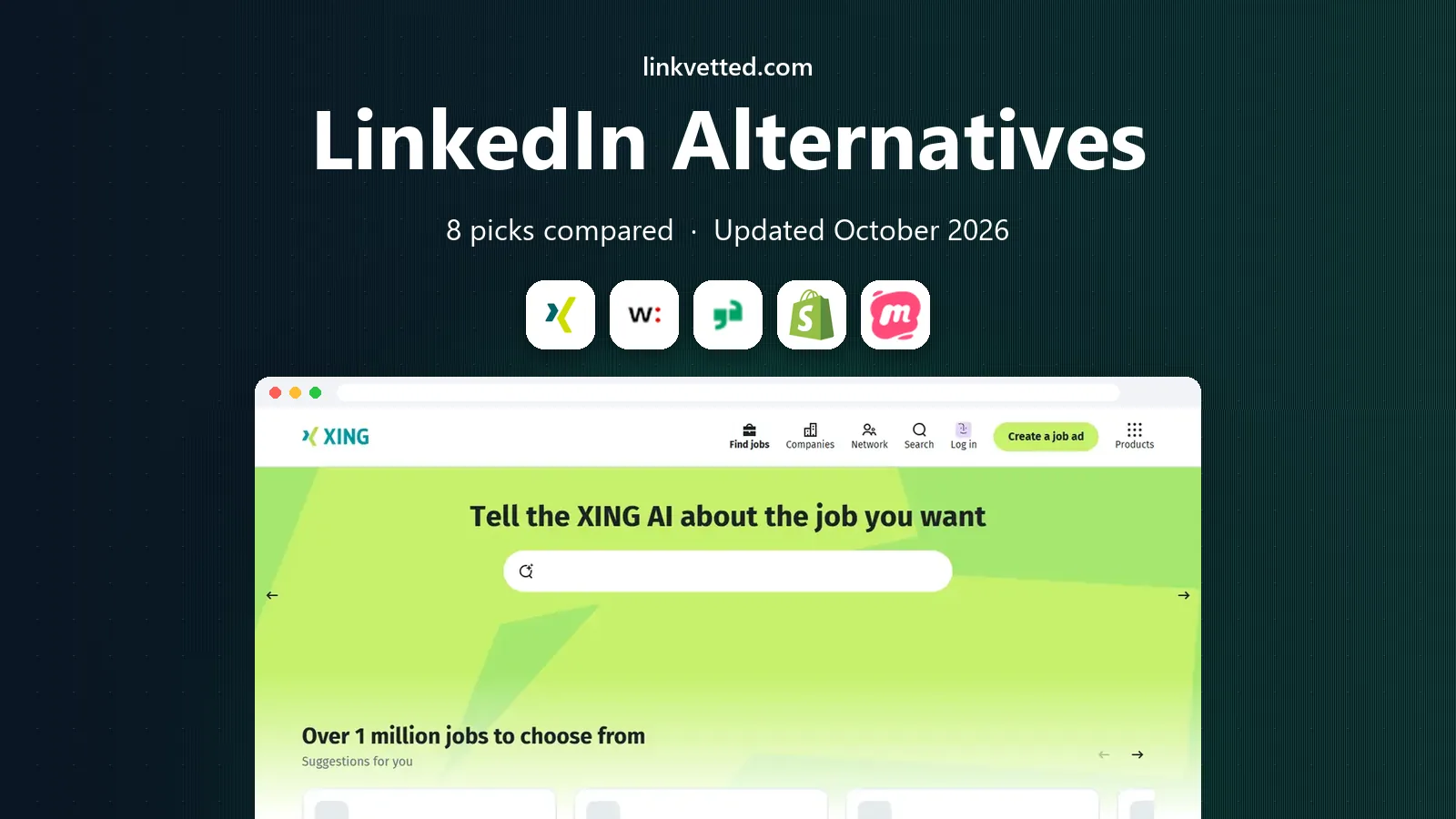
- Editor's choice
 Xing
Professional networking in German speaking markets
Starts atFreeVisit xing.comFull review - Great alternative
 Wellfound
Startup jobs and startup hiring
Starts atFreeVisit wellfound.comFull review - Also consider
 Glassdoor
Jobs plus salary and company insight
Starts atFreeVisit glassdoor.comFull review
TL;DR:
- No single site replaces LinkedIn, so most job seekers and freelancers do better by pairing a job board with a community or event platform.
- Wellfound and Handshake are strong for startup and early career roles, while Xing is most relevant for German speaking professional networks.
- Glassdoor pairs job listings with salary and company reviews, which helps you screen employers before you apply.
- Meetup and Lunchclub suit people who prefer in person or small group networking over posting and feed based outreach.
- For freelance work, portfolio visibility and direct outreach often matter more than a large follower count on any one platform.
Quick comparison
| Tool | Best for | Starts at | Free plan? | |
|---|---|---|---|---|
| Xing | Professional networking in German speaking markets | Free | Yes | Visit |
| Wellfound | Startup jobs and startup hiring | Free | Yes | Visit |
| Glassdoor | Jobs plus salary and company insight | Free | Yes | Visit |
 Handshake | Students and early career roles | Free | Yes | Visit |
 Meetup | Local professional events and groups | Free | Yes | Visit |
 Alignable | Small business networking | Free | Yes | Visit |
 Lunchclub | Curated one to one introductions | Free | Yes | Visit |
 Bumble Bizz | Professional connections in a dating style app | Free | Yes | Visit |
The best LinkedIn alternatives
We focused on active platforms that help with jobs, clients, or professional contacts, rather than general social apps with no work focus.

Xing is the closest LinkedIn style network for German speaking professionals. Members build a profile, list skills and experience, join groups, and search jobs posted by employers in the region. Recruiters in Germany, Austria, and Switzerland use it actively, so a complete profile there can open doors that a global profile may miss.
Outside those markets, its value drops sharply, so it works best as a second network rather than a full replacement. If you work with, or want to work in, German speaking markets, keep your profile current and respond to recruiter messages promptly. For other regions, pair it with a broader job platform.
- Strong in Germany, Austria, and Switzerland
- Useful job listings
- Clear professional profiles
- Much smaller reach outside German speaking markets
- Some features need a paid plan

Wellfound, formerly AngelList Talent, connects job seekers with startups. Many listings show salary ranges and equity details, which makes it easier to judge a role before you apply. Candidates can message founders and hiring managers directly, which suits people who prefer a short, direct hiring process.
The trade-off is scope. If you want a role at a large bank, hospital, or government agency, Wellfound will not be your main source. For startup, product, engineering, design, and operations roles, it remains one of the most useful LinkedIn alternatives, especially when you want pay transparency up front.
- Salary and equity ranges on many listings
- Direct contact with founders
- Startup focused search
- Limited appeal for large corporate roles
- Fewer listings outside tech and startups

Glassdoor combines job search with employee reviews, salary data, and interview notes. That mix helps you move past a polished job post and check pay ranges, management style, and work patterns before you invest time in an application. You can also set alerts for roles and companies you follow.
Reviews are self reported, so treat single reviews with care and look for patterns across many entries. Used that way, Glassdoor is a practical research tool as well as a job board. It works well alongside a networking platform, since it answers the question of whether a company is worth pursuing.
- Large job listings
- Salary reports and reviews
- Interview insights from past candidates
- Reviews vary in quality
- Some company pages need careful reading
Handshake serves students, recent graduates, and employers hiring for early career roles. Students create a profile, upload a resume, and receive role suggestions based on their major, interests, and location. Employers can message candidates directly, which gives students a clearer path than cold applications alone.
Senior professionals will find less here, since the focus stays on internships, entry level jobs, and early career programs. For students, the best approach is to complete the profile, apply early, and use campus career services alongside the platform. That combination tends to produce more interviews than the app alone.
- Built for students and recent graduates
- Employer outreach
- Internship listings
- Less useful for senior roles
- Access often tied to school partnerships
Meetup helps you find local groups and events by topic, from product management and data to design, marketing, and small business ownership. Attending the same group more than once builds familiarity, which is often what turns a casual contact into a referral. Many groups also share job leads and freelance needs informally.
Event quality varies by city, organizer, and topic, so try two or three groups before judging the platform. If your city has a thin calendar, online groups can fill the gap, though they offer less of the trust that comes from meeting in person. For local networking, Meetup is still a strong, simple choice.
- Real local events
- Topic based groups
- Good for building repeat contacts
- Quality varies by city and group
- Organizing events can cost money
Alignable is a network for small business owners who want local referrals, partners, and customers. Members create a business profile, join local groups, and connect with nearby owners in related fields. For trades, agencies, consultants, and local services, those introductions can lead directly to work.
Corporate job seekers will get less from it, since the focus is on owner to owner connections rather than hiring. Small business owners should treat it as a referral channel: answer questions, share useful local knowledge, and follow up after introductions. That steady activity matters more than a polished profile alone.
- Built for small business owners
- Local referrals
- Useful for service businesses
- Less relevant for corporate job seekers
- Interface feels busy at times
Lunchclub matches professionals for one to one meetings based on goals, interests, and background. Instead of scrolling a feed, you set your aims and receive suggested matches for a short video or in person meeting. That format suits people who dislike mass outreach and prefer a focused conversation.
Matches are not always a perfect fit, and the network is smaller than LinkedIn, so results depend on your city and field. When a match is relevant, though, a short meeting can be more useful than dozens of connection requests. Use it as a supplement to a job board, not as your only channel.
- Matches you with relevant professionals
- Low effort
- Video or in person options
- Match quality varies
- Smaller network than LinkedIn
Bumble Bizz sits inside the Bumble app as a mode for professional networking. Users create a work focused profile, then swipe through nearby professionals and match for a conversation. The format is quick and mobile first, which appeals to people who want light networking without managing another full profile.
The trade-off is depth. Profiles carry less work history, portfolio detail, and endorsement context than LinkedIn, so it works better for introductions than for hiring decisions. If you use it, keep your profile focused on what you do, what you offer, and what kind of contact you want. Then move promising matches to email or a call quickly.
- Simple profile and swipe format
- Clear intent for professional contact
- Broad user base
- Less depth than a full professional profile
- Networking mode is secondary to dating
How we picked these
We compared official product pages, app store listings, and public help materials for platforms that support jobs, hiring, referrals, or professional introductions. We favored active services with a clear work purpose, a usable free tier, and a distinct audience or format. We left out general social apps with no professional focus, closed or inactive networks, and tools that only offer resume templates without a network or job listings.
How to choose a LinkedIn alternative for your goal
Start with your goal, not the app. Job seekers need listings and employer insight, so Glassdoor, Wellfound, or Handshake will usually come first. Freelancers and small business owners need referrals and visible proof of work, so Alignable, Meetup, and a strong portfolio page matter more. People moving into German speaking markets should add Xing early, since local recruiters use it heavily.
Next, test two platforms for a month and track real outcomes, such as replies, interviews, referrals, or client calls, rather than likes or connection counts. Keep profiles consistent across platforms, with the same role title, core skills, and contact route. A short, clear profile that states what you do and who you help will outperform a long profile that tries to cover every possible role.
Also think about how each platform handles your data and your time. A network that needs daily posting to stay visible may not suit a busy job seeker, while a job board with alerts can work quietly in the background. Set a weekly routine instead of checking every app every day: review new listings, reply to messages, and attend one event or meeting each week. That routine keeps momentum without turning networking into a second job. If a platform stops producing replies or interviews after a month, drop it and try another option from this list rather than paying for a premium plan you do not need.
Finally, keep notes on every useful contact, including where you met and what you discussed, so follow up feels personal rather than generic.
FAQ
What is the best alternative to LinkedIn?
There is no single replacement. Glassdoor is a strong pick for job search and employer research, Wellfound for startup roles, Handshake for students, and Meetup for local networking. Most people get better results by using two platforms that cover different needs.
Are LinkedIn alternatives free?
Most tools on this list offer a free plan for job seekers and networkers. Paid plans usually add extra search, messaging, or business features. Start free, and only pay if a specific paid feature clearly helps your goal.
Can I find a job without LinkedIn?
Yes, though it takes more direct effort. Apply through company sites and job boards, attend local events, ask for referrals, and follow up with hiring managers. A clear resume and a small portfolio often matter more than activity on any single network.
Which LinkedIn alternative is best for freelancers?
Alignable suits local service businesses, while Meetup helps build repeat local contacts. Freelancers should also keep a portfolio site and use direct outreach, since clients often hire from a referral or a past project sample rather than a platform feed.
Is Xing only useful in Germany?
Xing is most useful in Germany, Austria, and Switzerland, where employers and recruiters use it widely. Outside those markets, its network is much smaller, so treat it as a regional addition rather than a global replacement.