Best VPN Service in 2026: 8 Services Compared
Compare the best VPN service options for privacy, streaming, and value, including prices, device limits, free plans, and renewal costs to check first.

- Editor's choice
 NordVPN
Best overall value
Starts at$3.49 per monthVisit nordvpn.comFull review - Great alternative
 ExpressVPN
Premium speed and ease
Starts at$2.99 per monthVisit expressvpn.comFull review - Also consider
 Surfshark
Unlimited devices
Starts at$2.49 per monthVisit surfshark.comFull review
TL;DR:
- The best VPN service for most people balances speed, privacy audits, device limits, and renewal price, not just the first-year deal.
- NordVPN, ExpressVPN, and Surfshark lead for general use, while Proton VPN leads for a strong free plan.
- Mullvad suits privacy-focused users who want a flat monthly price with no long-term deal.
- Check the renewal price before you buy, because many long-term deals rise sharply after the first term.
Quick comparison
| Tool | Best for | Starts at | Free plan? | |
|---|---|---|---|---|
| NordVPN | Best overall value | $3.49 per month | No | Visit |
| ExpressVPN | Premium speed and ease | $2.99 per month | No | Visit |
| Surfshark | Unlimited devices | $2.49 per month | No | Visit |
 Proton VPN | Strong free plan | $2.99 per month | Yes | Visit |
 Private Internet Access | Low-cost long plan | $2.03 per month | No | Visit |
 CyberGhost | Easy streaming setup | $2.19 per month | No | Visit |
 Mullvad | Flat privacy-first price | See website | No | Visit |
 IPVanish | Unlimited devices on a budget | $2.19 per month | No | Visit |
The best VPN services
We compared official pricing pages, privacy policies, audit information, and app features for VPN services that work on major platforms. This guide covers the best VPN services for general use, streaming, privacy, and value, and it explains renewal pricing that often decides the long-term cost.

NordVPN is our pick for most people because it covers the main jobs well: fast connections, a large server network, apps for major platforms, and extra tools such as ad and malware blocking on higher tiers. It supports up to 10 devices, which covers a household with phones, laptops, and a TV device.
The main caution is renewal pricing. The long-term deal price is much lower than the standard renewal rate, so set a reminder before renewal and check whether a new offer is available. We think NordVPN fits general users who want a strong all-rounder and are willing to manage renewal timing.
- Large server network
- Independently audited no-logs policy
- Threat protection and extra security tools on higher tiers
- Renewal price is higher than the first-term deal
- No free tier
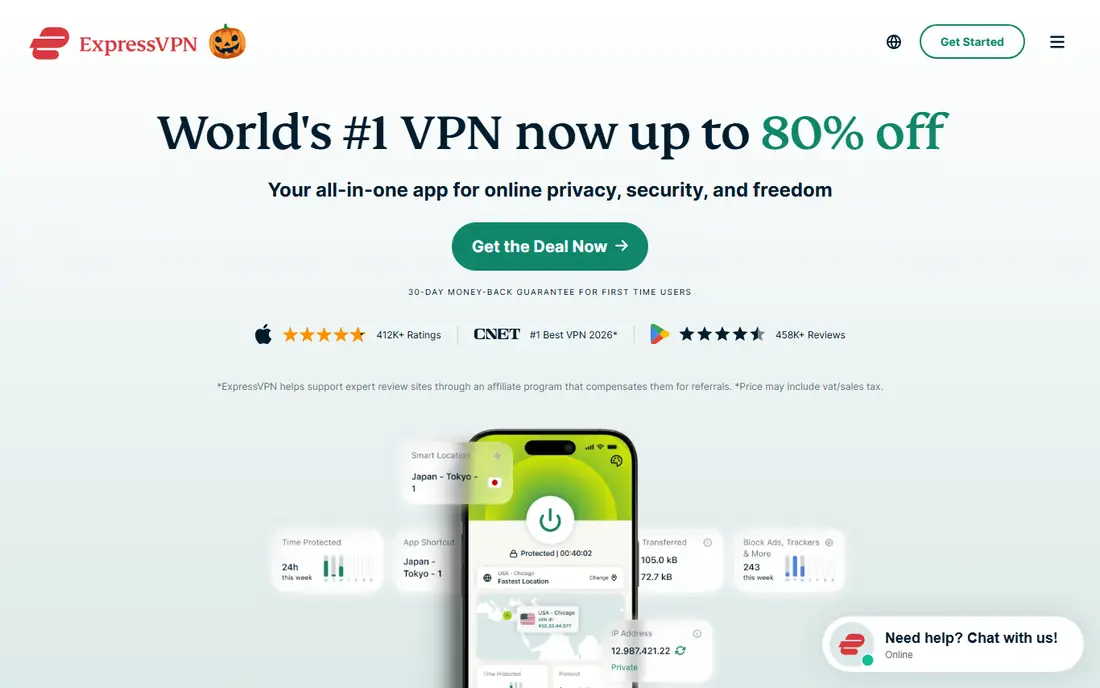
ExpressVPN suits people who want the simplest setup and consistent performance. Its apps are easy to use, connections are quick, and it works well for streaming and travel use. Higher tiers add more devices and extra security tools, while the basic tier covers core VPN use.
The price is the trade-off. ExpressVPN costs more at renewal than budget options, so it fits users who value ease and reliability over the lowest price. If you only need a VPN occasionally, a cheaper long-term plan or a strong free plan may serve you better.
- Simple apps and fast setup
- Strong streaming support
- Audited no-logs policy with RAM-only servers
- Higher renewal price than some rivals
- Device limit depends on plan tier

Surfshark is the best value pick for households with many devices. Unlimited connections mean you can protect phones, laptops, tablets, and streaming devices under one subscription without counting devices. That alone can make it cheaper than buying two subscriptions from a rival with a device limit.
The first-term price is low, but the renewal rate is higher, so check that rate before you commit to a long plan. We recommend Surfshark for families and shared households who want one subscription for every device and who will watch renewal pricing.
- Unlimited simultaneous devices
- Low first-term price
- Extra security bundle options
- Renewal price rises after the first term
- Server network is smaller than NordVPN
Proton VPN is the best choice if you want to try a VPN free without a data cap on the free tier. The free plan covers basic privacy on one device, which suits casual use on public Wi-Fi. Paid Plus adds faster speeds, more servers, streaming support, and up to 10 devices.
The free plan is not a full replacement for a paid plan if you stream or use many devices. We think Proton VPN fits privacy-conscious users who want a trustworthy free start and a clear upgrade path, especially if they already use Proton Mail or other Proton services.
- Free plan with no data cap on the free tier as listed
- Strong privacy reputation
- Swiss jurisdiction and audited policies
- Free plan is limited to one device and fewer servers
- Plus renewal price is higher than the deal price
Private Internet Access, often called PIA, suits budget users who want a long plan and unlimited devices. Its apps are open source, which helps privacy-minded users check how the software works, and its no-logs policy has been audited. Unlimited devices make it a good household option at a low monthly rate.
The interface feels more technical than NordVPN or ExpressVPN, so beginners may need a few minutes to find settings. We recommend PIA for value-focused users who are comfortable with settings and who want a low long-term price without a strict device limit.
- Low long-term monthly price
- Unlimited devices
- Audited no-logs policy and open-source apps
- Based in the United States
- Interface is more technical than some rivals
CyberGhost suits people who mainly want a VPN for streaming and general privacy without learning settings. Its apps label servers for streaming, torrenting, and gaming, which helps beginners pick the right server quickly. The long-term price is also competitive with other budget options.
The trade-off is consistency. Speeds can vary by server, so you may need to try a few servers for the best result. We think CyberGhost fits casual users and beginners who want a simple, low-cost VPN for everyday use and streaming.
- Servers labeled for streaming and specific uses
- Low long-term price
- Easy apps for beginners
- No free tier
- Speeds can vary by server and location
Mullvad is different from most VPNs because it charges a flat monthly price and does not push long-term deals. You do not need to provide an email address to create an account, and you can pay in several ways, including cash in some regions. That approach appeals to privacy-focused users who dislike renewal price jumps.
The downside is streaming and server choice. Mullvad has fewer servers than NordVPN or Surfshark, and it is not the best pick if streaming access is your main goal. We recommend it for privacy-first users who want a simple, predictable price and who value minimal data collection over streaming features.
- Flat monthly price with no long-term deal games
- No email account required
- Strong privacy practices
- Smaller server network than large rivals
- Streaming support is more limited
IPVanish suits households that want unlimited devices at a budget price. It covers phones, computers, and streaming devices under one plan, and its apps are straightforward to set up. That combination makes it a practical alternative to Surfshark for large households.
The main caution is jurisdiction and renewal pricing, as with other budget VPNs. Check the renewal rate and the current privacy audit information before you buy. We think IPVanish fits budget households who want unlimited devices and do not need the extra security bundles of higher-priced rivals.
- Unlimited devices
- Low long-term price
- Apps for major platforms including Fire TV
- No free tier
- Privacy jurisdiction is the United States
How we picked these
We compared official pricing pages, server and device information, privacy policies, and audit reports, and we favored services that work today on major platforms and publish clear pricing. We looked at first-term prices, renewal prices, device limits, free plans, no-logs audits, and streaming support. We also weighed ease of use, because a VPN that is hard to set up may go unused.
A VPN does not make you anonymous, and it does not protect you from phishing, malware, or weak passwords. Use it alongside updated software, strong passwords, and two-factor authentication where available.
What to check before you buy a VPN
Start with your main use. For general privacy on public Wi-Fi, almost any reputable VPN works. For streaming, check server labels and current support for the services you use, since access can change. For a household, device limits matter more than a small price difference.
Next, read the renewal terms. Note the first-term total, the renewal annual price, and the refund window. A low first-year price can become expensive in year two, and a flat-price service like Mullvad avoids that jump. Finally, check the privacy policy and audit history, server locations, and whether the app works on all your devices, including routers or TV devices if you need them.
A simple buying checklist
Confirm the number of devices, the countries you need, and whether a kill switch is included. Test speed on your usual servers during the refund window, and check streaming and work apps you rely on. If the service slows your connection too much or blocks a work tool, use the refund window and try another provider.
FAQ
What is the best VPN service for most people?
NordVPN is a strong all-rounder for most people, with Surfshark close behind for households with many devices. Proton VPN is the best starting point if you want a free plan first.
What is the best VPN service for streaming?
ExpressVPN and NordVPN are strong for streaming, with CyberGhost also useful for beginners because of its labeled servers. Streaming access can change, so test during the refund window.
Is a free VPN safe?
A reputable free plan from Proton VPN is safer than many unknown free VPNs, but free plans have limits on speed, servers, and devices. Avoid free VPNs that do not publish a clear privacy policy or audit information.
Does a VPN slow down my internet?
A VPN usually reduces speed a little, because traffic is encrypted and routed through a server. Choosing a nearby server and a modern protocol usually keeps the drop small for browsing and streaming.
How much should I pay for a VPN?
Budget long-term plans often cost around $2 to $3.50 per month on a deal, while renewal prices are higher. Pay for the renewal price you are willing to accept, not just the first-term deal.