7 Best Tools for SEO for Medical Practices
Find the best tools for SEO for medical practices, from local listings and keyword research to audits and review tracking, with pricing that fits small clinics.

- Editor's choice
 Semrush
All-in-one research for clinics
Starts atSee websiteVisit semrush.comFull review - Great alternative
 Ahrefs
Backlinks and competitor research
Starts atSee websiteVisit ahrefs.comFull review - Also consider
 BrightLocal
Local listings and reviews
Starts atSee websiteVisit brightlocal.comFull review
TL;DR:
- Local search and Google Business Profile work matter more for most clinics than national rankings.
- Patient intent keywords, such as symptoms, treatments, and near me searches, should guide content.
- Medical content needs careful accuracy review, and no tool replaces a clinician check.
- Track calls, bookings, and directions, not just rankings, to judge whether SEO is working.
- Choose one all-in-one tool first, then add a local or technical tool only if a clear gap remains.
Quick comparison
| Tool | Best for | Starts at | Free plan? | |
|---|---|---|---|---|
| Semrush | All-in-one research for clinics | See website | Free trial | Visit |
| Ahrefs | Backlinks and competitor research | See website | Free trial | Visit |
| BrightLocal | Local listings and reviews | See website | Free trial | Visit |
 Moz Pro | Straightforward tracking and audits | See website | Free trial | Visit |
 SE Ranking | Good value all-in-one SEO | See website | Free trial | Visit |
 Screaming Frog SEO Spider | Deep technical site crawls | See website | Yes | Visit |
 Google Search Console | Free first-party search data | Free | Yes | Visit |
The best tools for SEO for medical practices
We focused on tools a clinic can actually use, for local visibility, patient-focused keywords, technical health, and reviews.

For clinics that want one research hub, Semrush stands out because keyword research, audits, competitor analysis, and local tracking. For a typical user, it covers research, audits, and content in one workspace, so a small team does not need four separate logins. That focus helps you judge the tool on the work it will do each week, rather than on a long list of extras you may never open. On strength, it covers research, audits, and content in one workspace, so a small team does not need four separate logins. Pricing and limits still matter, so check the plan that covers your actual volume, users, or locations. A tool that fits at entry level can become costly if you grow fast, and a tool that looks expensive can save time if it replaces two other subscriptions. The trade-off is clear: limits on lower plans can frustrate a multi-location group, and the interface has a lot to learn at first. Choose it if you want broad research plus audits in one subscription, and look elsewhere if you only need basic local listing checks. Before you commit, run a short trial with your real data, and check support response, reporting, and renewal terms.
- Keyword research, site audits, and competitor data in one place
- Local tools for listings and position tracking
- Content tools for briefs and readability checks
- Entry plans have project and keyword limits
- Full local features may need add-ons

If you want backlink analysis, keyword research, and site audits without extra complexity, Ahrefs is worth a close look. For a typical user, the backlink data helps you see which local and health sites link to competitors, which guides outreach. That focus helps you judge the tool on the work it will do each week, rather than on a long list of extras you may never open. On strength, the backlink data helps you see which local and health sites link to competitors, which guides outreach. Pricing and limits still matter, so check the plan that covers your actual volume, users, or locations. A tool that fits at entry level can become costly if you grow fast, and a tool that looks expensive can save time if it replaces two other subscriptions. The trade-off is clear: pricing can feel high for a single clinic, and some local features are less direct than a dedicated local tool. Choose it if you compete in a busy market and need strong link data, and look elsewhere if you mainly need listing management. Before you commit, run a short trial with your real data, and check support response, reporting, and renewal terms.
- Large backlink index and keyword data
- Site audit for technical issues
- Content gap tools that show rival topics
- No free plan for full access
- Some features need higher tiers
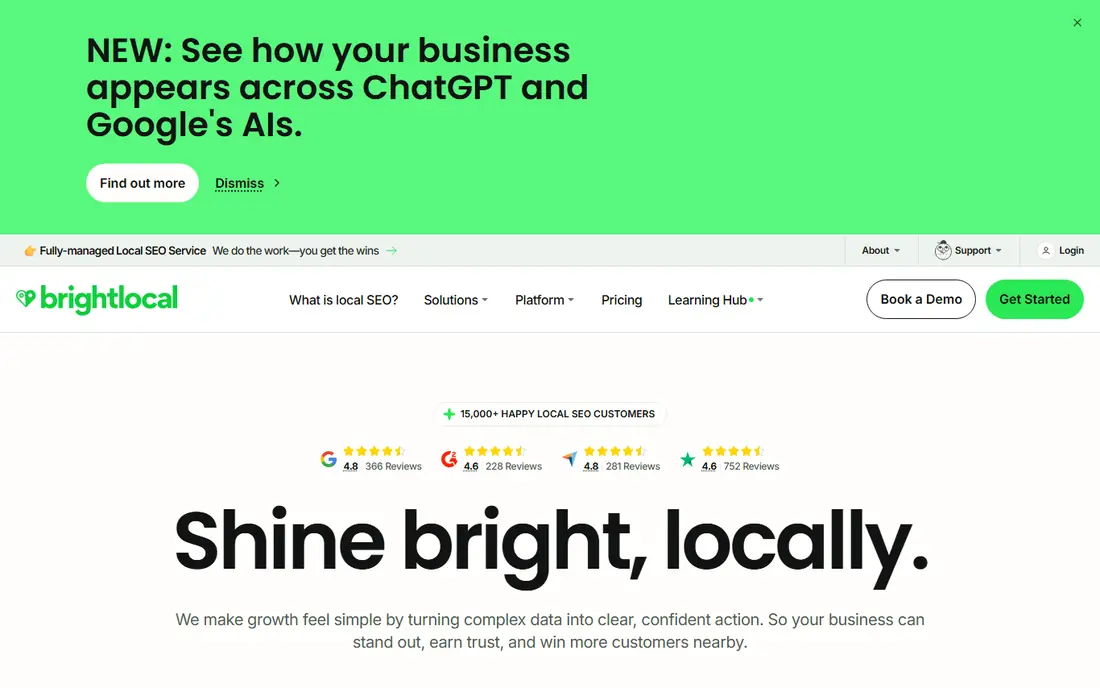
BrightLocal is a practical choice for single-location and small multi-location clinics, built around local rank tracking, citations, and reviews. For a typical user, it focuses on the local tasks that bring patients in, such as listings, reviews, and map rankings. That focus helps you judge the tool on the work it will do each week, rather than on a long list of extras you may never open. On strength, it focuses on the local tasks that bring patients in, such as listings, reviews, and map rankings. Pricing and limits still matter, so check the plan that covers your actual volume, users, or locations. A tool that fits at entry level can become costly if you grow fast, and a tool that looks expensive can save time if it replaces two other subscriptions. The trade-off is clear: it is not a full replacement for deep keyword or backlink research. Choose it if local visibility is your main goal, and look elsewhere if you need enterprise content research. Before you commit, run a short trial with your real data, and check support response, reporting, and renewal terms.
- Local rank tracking, citation checks, and review monitoring
- Reports that are easy to share with a practice manager
- Per-location pricing that suits small groups
- Less depth for national keyword research
- Some reports need setup time
Start with Moz Pro when keyword tracking, site audits, and link metrics is your main need. For a typical user, reports are readable without SEO training, which helps a practice manager act on the findings. That focus helps you judge the tool on the work it will do each week, rather than on a long list of extras you may never open. On strength, reports are readable without SEO training, which helps a practice manager act on the findings. Pricing and limits still matter, so check the plan that covers your actual volume, users, or locations. A tool that fits at entry level can become costly if you grow fast, and a tool that looks expensive can save time if it replaces two other subscriptions. The trade-off is clear: teams that need the deepest backlink data may find gaps compared with larger indexes. Choose it if you want simple, steady tracking, and look elsewhere if you need the largest possible link database. Before you commit, run a short trial with your real data, and check support response, reporting, and renewal terms.
- Keyword tracking, site crawls, and link metrics
- Clear reports for non-technical managers
- Local listing tools in related products
- Backlink index is smaller than some rivals
- Advanced features trail larger suites
For teams that value rank tracking, audits, and keyword research, SE Ranking offers a clear, focused setup. For a typical user, it packs many core tools into a lower starting price than larger suites, which helps small budgets. That focus helps you judge the tool on the work it will do each week, rather than on a long list of extras you may never open. On strength, it packs many core tools into a lower starting price than larger suites, which helps small budgets. Pricing and limits still matter, so check the plan that covers your actual volume, users, or locations. A tool that fits at entry level can become costly if you grow fast, and a tool that looks expensive can save time if it replaces two other subscriptions. The trade-off is clear: entry limits may require an upgrade as you add locations or keywords. Choose it if you want broad coverage without a premium price, and look elsewhere if you need only free Google data. Before you commit, run a short trial with your real data, and check support response, reporting, and renewal terms.
- Keyword tracking, audits, and competitor tools
- Local rank tracking and reporting
- Flexible plans for agencies and small teams
- Some data limits apply on entry plans
- Interface can feel busy at first
Screaming Frog SEO Spider suits clinics with larger or older websites who need technical crawling and audit detail in one place. For a typical user, it finds technical problems that cloud dashboards sometimes summarize too briefly, such as redirect chains and duplicate titles. That focus helps you judge the tool on the work it will do each week, rather than on a long list of extras you may never open. On strength, it finds technical problems that cloud dashboards sometimes summarize too briefly, such as redirect chains and duplicate titles. Pricing and limits still matter, so check the plan that covers your actual volume, users, or locations. A tool that fits at entry level can become costly if you grow fast, and a tool that looks expensive can save time if it replaces two other subscriptions. The trade-off is clear: it does not track rankings or keywords, so you still need another tool for research. Choose it if you need a thorough technical audit, and look elsewhere if you want a simple cloud rank tracker. Before you commit, run a short trial with your real data, and check support response, reporting, and renewal terms.
- Fast, detailed crawls of large sites
- Finds broken links, redirects, and missing metadata
- Free version for up to 500 URLs
- Desktop software, not a cloud dashboard
- Needs some technical skill to interpret results
When search performance, indexing, and coverage data matters most, Google Search Console deserves a spot on your shortlist. For a typical user, it is the only free source of your actual Google queries and clicks, so it grounds every other tool. That focus helps you judge the tool on the work it will do each week, rather than on a long list of extras you may never open. On strength, it is the only free source of your actual Google queries and clicks, so it grounds every other tool. Pricing and limits still matter, so check the plan that covers your actual volume, users, or locations. A tool that fits at entry level can become costly if you grow fast, and a tool that looks expensive can save time if it replaces two other subscriptions. The trade-off is clear: it will not show competitor keywords or full backlink lists, and data can lag. Choose it if you want trusted, free data to guide content, and look elsewhere if you need competitor analysis alone. Before you commit, run a short trial with your real data, and check support response, reporting, and renewal terms.
- Shows real queries, clicks, and indexing problems from Google
- Free for every verified site
- Alerts for coverage and mobile issues
- Data is limited to Google and your own site
- No competitor or backlink research
How we picked these
We reviewed official feature pages, pricing pages, app store listings, privacy policies, and public reviews for each product, and we favoured tools that are available today, fit the topic closely, and publish clear pricing or trial terms. We gave extra weight to tools with clear security, privacy, and support practices, and we left out products that did not fit the topic, even when they were popular in a nearby category. We did not claim hands-on testing we did not do. Instead, we compared what each vendor publishes, how reviewers describe daily use, and where limits appear, such as plan caps, renewal costs, and missing features. Prices change, so check the vendor site before you buy, and treat any price marked See website as a prompt to confirm the current plan.
How a medical practice should choose an SEO tool
Start with local visibility
Most patients search near home, so your listings, reviews, and service pages need to be accurate and consistent. A tool that tracks local rankings, citations, and reviews will help more than a broad national tracker. Check your Google Business Profile weekly, and answer reviews in a professional, privacy-aware way.
Use keywords patients really type
Patients search for conditions, treatments, costs, and doctors by name, often in plain language. Look for long, specific phrases with clear intent, such as a treatment plus a city name. Build one helpful page per service, and keep medical claims accurate and sourced.
Fix technical basics before buying more tools
Slow pages, broken links, missing titles, and poor mobile layout can hold back good content. Run a site audit, fix the high-impact errors first, and then repeat the audit monthly. A clean, fast site also helps patients book with less friction.
FAQ
What is the best platform for SEO for medical practices?
There is no single best platform for every clinic, because needs differ by size and location. Semrush and Ahrefs suit practices that want deep keyword and competitor research. BrightLocal suits practices that mainly need local listings and review tracking. Start with your main gap, local or content, and pick from there.
Do small clinics need paid SEO tools?
Many small clinics can start with free tools, such as Google Search Console and Google Business Profile, plus a low-cost local tool. Paid tools help when you need competitor data, rank tracking at scale, or regular audits. If you only manage one location, avoid paying for agency-scale features you will not use.
Is SEO different for medical websites?
Yes, because patients need trustworthy, accurate health information, and search engines hold health pages to a higher standard. Content should be reviewed by qualified staff, list authors clearly, and avoid promises about outcomes. Local trust signals, such as reviews and accurate listings, also carry extra weight.
How long does medical SEO take to show results?
Local fixes, such as listings and profile updates, can show movement in weeks. Competitive treatment keywords often take several months of steady content and link building. Track bookings and calls alongside rankings, so you can see progress even before top positions arrive.
Can one tool handle medical SEO alone?
One all-in-one tool can cover much of the work for a single clinic, but local listings and review tools often add value. A common setup is one research tool, one local tool, and Google Search Console for first-party data. Keep the stack small, and review each subscription yearly.