9 Best Tools for Keyword Gap Analysis in 2026
We compared the best tool for keyword gap analysis, from Semrush Keyword Gap to Ahrefs Content Gap, with pricing, free options and steps for content teams.
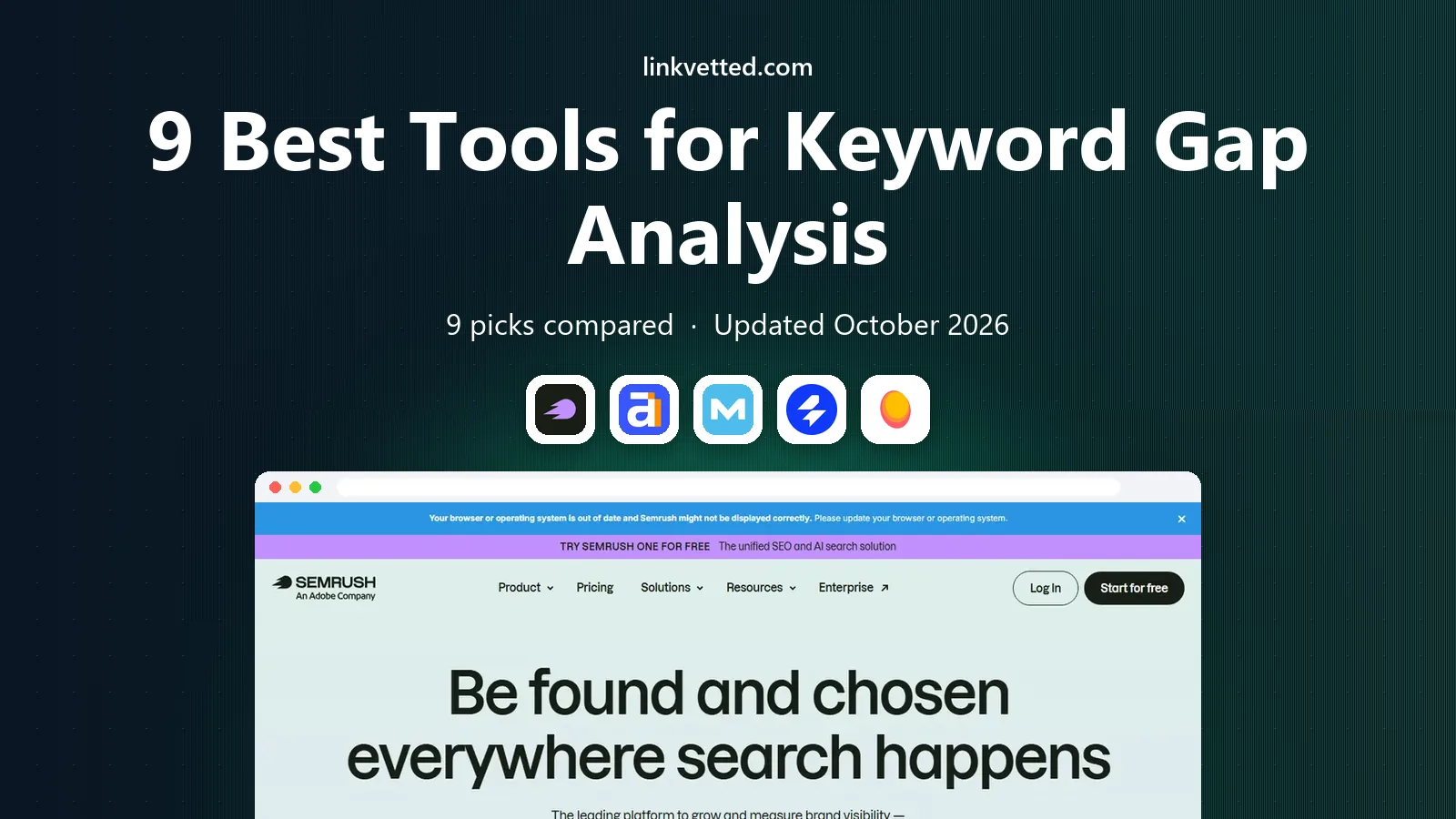
- Editor's choice
 Semrush
All in one keyword gap analysis
Starts at$139 per monthVisit semrush.comFull review - Great alternative
 Ahrefs
Content gap depth and backlink research
Starts at$29 per monthVisit ahrefs.comFull review - Also consider
 Moz Pro
Beginners and Domain Authority benchmarking
Starts atSee websiteVisit moz.comFull review
TL;DR:
- Semrush Keyword Gap is the most direct tool for this job, with side by side comparison of your site against up to four rivals.
- Ahrefs Content Gap suits teams that value backlink depth, click data and page level competitor research alongside keyword gaps.
- SE Ranking, Moz Pro and Mangools offer simpler, lower cost routes for small teams that do not need a full enterprise suite.
- Google Keyword Planner remains the best free starting point for volume checks, though it lacks a true competitor gap view.
- A gap list is only useful after filtering by intent, difficulty and business fit, since raw keyword counts include many irrelevant terms.
Quick comparison
| Tool | Best for | Starts at | Free plan? | |
|---|---|---|---|---|
| Semrush | All in one keyword gap analysis | $139 per month | Free trial | Visit |
| Ahrefs | Content gap depth and backlink research | $29 per month | Yes | Visit |
| Moz Pro | Beginners and Domain Authority benchmarking | See website | Free trial | Visit |
 SE Ranking | Mid market all in one value | See website | Free trial | Visit |
 Mangools | Simple, clean keyword research for small sites | $29.90 per month | Free trial | Visit |
 Ubersuggest | Budget keyword research for beginners | $12 per month | Yes | Visit |
 SpyFu | Competitor keyword and PPC history | $39 per month | Yes | Visit |
 Serpstat | Research, tracking and audit in one lower tier | $69 per month | Free trial | Visit |
 Google Keyword Planner | Free volume data straight from Google | Free | Yes | Visit |
The best tool for keyword gap analysis
We compared official feature pages, pricing pages, documentation and public reviews for SEO tools with a real competitor gap feature in October 2026. The list below covers professional suites, mid market platforms and budget tools, since gap analysis needs vary from a single blog to a large agency portfolio.
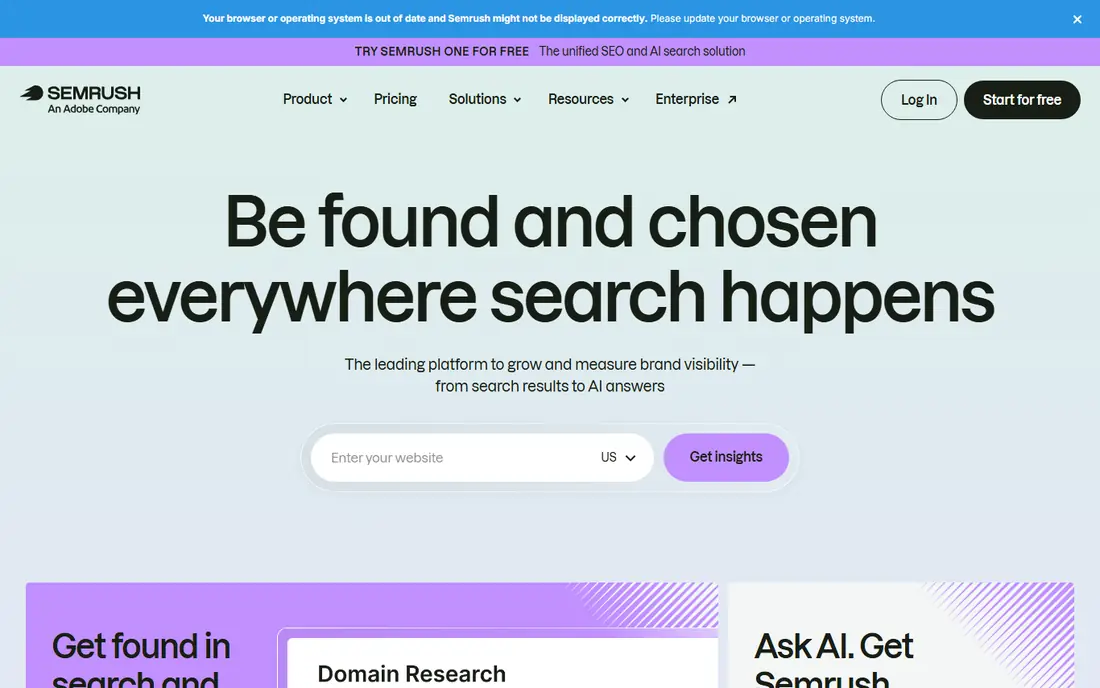
Semrush is the clearest pick when keyword gap analysis is the main job. The Keyword Gap tool compares your domain with rival domains and shows shared keywords, missing keywords and untapped keywords, with filters for volume, difficulty, intent and SERP features. That structure makes it easy to move from a long gap list to a short content plan, rather than exporting a spreadsheet and sorting it by hand. The suite also adds site audits, rank tracking, backlink tools and content templates, which helps a team that uses SEO daily. The entry price of $139 per month is high for a solo blogger, and the interface takes time to learn. For an agency, a content team or a business with real search competition, Semrush is the most complete gap tool on this list.
- Dedicated Keyword Gap tool for up to four rivals
- Large keyword database
- Intent, volume and difficulty filters
- Highest entry price on this list
- Interface can feel busy for new users

Ahrefs Content Gap shows keywords that rivals rank for and you do not, with page level detail that helps a writer understand why a rival page ranks. Click data and traffic potential estimates add context that raw volume alone misses, since a high volume keyword with low clicks is less valuable than it first appears. The backlink index is also among the largest, which helps link building alongside content gaps. Pricing needs care. A Starter plan from $29 per month covers basic research, while the Lite plan used by many professionals costs more. The free Webmaster Tools tier covers your own sites, which is useful for checking your own rankings before buying. For a content led team that values depth and SERP context, Ahrefs is a strong rival to Semrush.
- Content Gap tool with strong competitor page data
- Large backlink index
- Click and traffic potential metrics
- Full Lite plan costs more than the Starter plan
- Learning curve for new SEO users
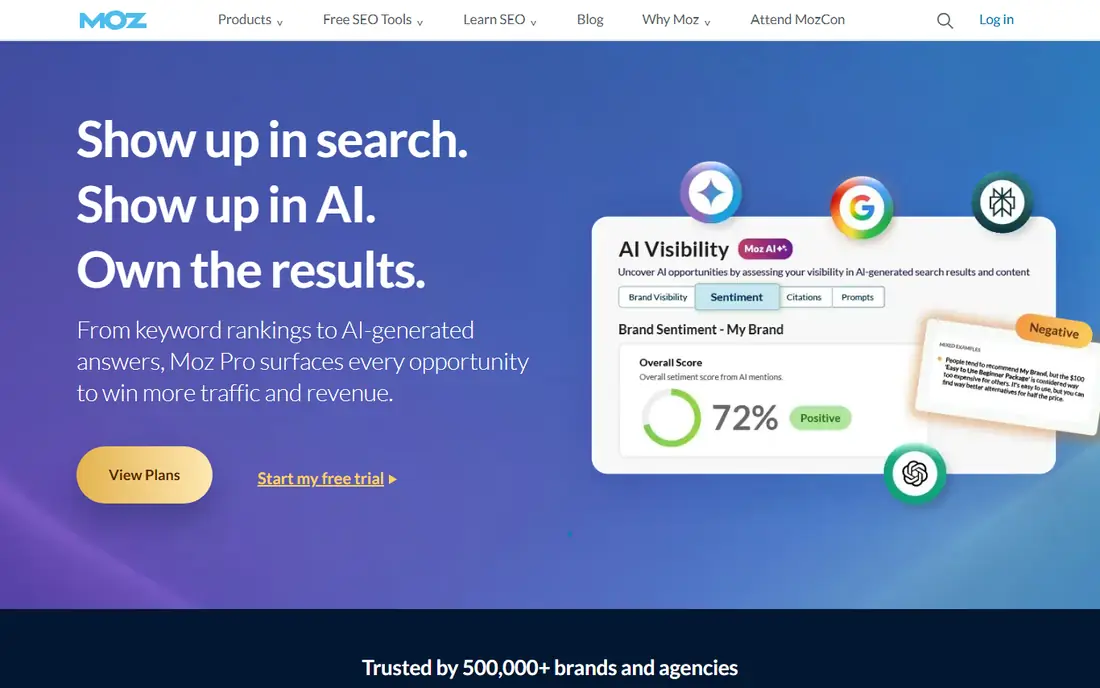
Moz Pro suits marketers who want a friendly introduction to keyword research without a steep learning curve. Keyword Explorer gives volume, difficulty and priority scores, and lists help a small team organise target keywords by topic. Domain Authority remains a widely used benchmark for comparing site strength, even though it is a Moz metric rather than a Google ranking factor. The gap workflow is less direct than Semrush Keyword Gap or Ahrefs Content Gap, since Moz focuses more on keyword research and tracking than on side by side rival comparison. Database depth is also smaller, which matters for large or international sites. For a beginner, a local business or a small team, Moz Pro offers a calmer, clearer route into SEO.
- Clear interface for new SEO users
- Domain Authority and Page Authority metrics
- Keyword lists and priority scoring
- Smaller keyword and backlink database than Semrush or Ahrefs
- Gap features are less direct
SE Ranking bundles keyword research, competitor analysis, rank tracking and site audits in a single platform, which suits agencies and mid sized businesses that want one subscription rather than several tools. Competitor research shows rival keywords and pages, and rank tracking helps a team measure whether gap content actually gains positions after publishing. Dataset depth varies by country and niche, so test SE Ranking on your own market and rivals before switching from a larger suite. Pricing varies by plan and limits, so check the current plan page for rank tracking and report limits. For a mid market team that needs breadth without enterprise pricing, SE Ranking is a strong value pick.
- Keyword research, rank tracking and audits in one plan
- Competitor research tools
- Agency friendly reporting
- Dataset breadth can vary by market versus Semrush and Ahrefs
- Add ons increase cost at scale
Mangools, built around KWFinder, is known for a clean, friendly interface that makes keyword research less intimidating. Long tail discovery, local filters and SERP previews help a small site find realistic targets, rather than chasing high difficulty terms dominated by large publishers. Rank tracking and site profiling round out a simple toolkit for a freelancer or small business. The gap workflow is lighter than the professional suites, since Mangools focuses on keyword discovery rather than deep rival comparison. Very large sites with thousands of pages may outgrow its limits. For a blogger, a niche site or a small agency client, Mangools offers usable data at a lower price and with less clutter.
- Clean interface
- KWFinder for long tail research
- SERP analysis and rank tracking included
- Less suited to very large sites
- Gap comparison is lighter than Semrush or Ahrefs
Ubersuggest is the cheapest usable keyword research tool on this list, with an Individual plan from $12 per month and a free tier for limited daily searches. It covers keyword ideas, content ideas, site audits and basic competitor data in a simple interface, which suits a new blogger, a startup or a student learning SEO. Data depth and limits are the trade off. Ubersuggest will not match Semrush or Ahrefs for large scale gap analysis, backlink research or international data. For a small site with a modest keyword set, that depth may not matter. For a competitive market where every gap keyword counts, a professional suite will repay its higher price.
- Lowest paid starting price on this list
- Simple all in one basics
- Free tier for limited searches
- Data depth is thinner than professional suites
- Limits on projects and tracking
SpyFu stands out for history. It shows which keywords rivals have ranked for and advertised on over time, which helps a team spot seasonal patterns, long running winners and gaps that appear when a rival stops targeting a term. PPC data alongside organic data is useful for teams that run both search channels and want a combined gap view. The interface is less polished than Semrush or Ahrefs, and site audit features are lighter. For a team whose main need is competitor intelligence and gap discovery, rather than a full technical audit suite, SpyFu offers strong value from $39 per month, with limited free searches for testing.
- Long competitor keyword and ad history
- PPC gap data alongside organic gaps
- Unlimited searches on paid plans
- Interface feels dated
- SEO audit features are lighter than full suites
Serpstat bundles keyword research, competitor analysis, rank tracking and site audits in a single platform, with pricing from $69 per month. Competitor domain analysis shows rival keywords, top pages and visibility trends, which supports gap work for teams that also need tracking and audits. API access helps agencies that pull data into reports. As with SE Ranking, database depth varies by market, so test your own rivals and keywords before committing. The interface is functional rather than beginner friendly, which may slow new users. For a team that wants a full SEO toolkit at a mid range price, Serpstat is worth comparing with SE Ranking.
- Keyword research, rank tracking and audits in one tool
- Competitor domain analysis
- API access
- Database depth varies by market
- Interface takes time to learn
Google Keyword Planner remains the best free starting point for keyword gap work, even though it is not a gap tool in the strict sense. It gives search volume data from Google, helps scope a topic by region, and can suggest related keywords from a seed list or a rival URL. That data is useful for sanity checking a gap list from another tool. The limits are clear. Volume figures are broad ranges unless you run active ads, and there is no side by side rival gap table with missing and untapped keywords. Use Keyword Planner to validate volume and discover ideas, then use Semrush, Ahrefs or another gap tool to build the actual competitor comparison. For a zero budget start, that pairing works well.
- Free with a Google Ads account
- Volume data from Google itself
- Useful for early scoping by region
- No true competitor gap view
- Volume ranges are broad for many users
- SEO metrics are limited
How we picked these
We compared official feature pages, pricing pages, documentation and public reviews for SEO tools with a competitor gap or competitor keyword feature still offered in October 2026. We checked database size, gap workflow, filters for intent and difficulty, and pricing, since a tool that only lists rival keywords without filtering creates more work than it saves. We included free and budget tools alongside professional suites, since team size and market competition change the right choice. We did not claim hands on testing that did not happen. Our notes reflect documented features, published starting prices and consistent patterns in public comparisons. Prices and plan limits change often, so confirm the current plan on the vendor page before purchase.
Turning a gap list into a content plan
Filter by intent before volume
Group gap keywords by search intent, such as informational, commercial or transactional, and match each group to a page type. A blog post, a product page and a comparison page serve different intents, and a gap keyword assigned to the wrong page type rarely ranks well, even with good volume.
Check difficulty and business fit
Remove keywords that are too difficult for your current authority, and remove keywords that do not fit your products, services or audience, even if volume looks attractive. A smaller list of winnable, relevant keywords beats a long list of impressive but irrelevant terms.
Assign one keyword cluster per page
Group closely related gap keywords into a cluster and assign the cluster to a single page, with one primary keyword and several supporting terms. That structure avoids thin, overlapping pages that compete with each other, and it gives writers a clear brief for headings, examples and internal links.
FAQ
What is the best tool for keyword gap analysis?
Semrush Keyword Gap is the most direct tool for this job, since it compares your site with rivals side by side. Ahrefs Content Gap is the best alternative for teams that value backlink depth and page level competitor detail.
What is keyword gap analysis?
Keyword gap analysis compares the keywords your site ranks for with the keywords rivals rank for, to find terms you are missing. The output is usually split into shared keywords, missing keywords and untapped keywords, which then feed a content plan.
Is there a free keyword gap analysis tool?
Google Keyword Planner is free and useful for volume checks, while Ubersuggest and SpyFu offer limited free searches. A true, full gap comparison usually needs a paid plan from Semrush, Ahrefs, SE Ranking or a similar suite.
How often should I run a gap analysis?
Run a full gap analysis quarterly, and a lighter check monthly for key rivals or new content areas. Search results, rival content and your own rankings change often, so a gap list from a year ago will include stale terms and miss new opportunities.
Should I target every missing keyword?
No, filter by intent, difficulty and business fit first. Target keywords that match your audience, that you can rank for with realistic effort, and that support a product, service or content goal. Ignore high volume terms that do not fit your site.
Can a small site compete on gap keywords?
Yes, by focusing on long tail, low difficulty gaps and specific topics where larger rivals are thin. Mangools, Ubersuggest and Moz Pro suit this approach, since they highlight realistic targets rather than only the largest, most competitive terms.