Best Sleep App in 2026: 8 Apps Compared
Looking for the best sleep app in 2026? We compare 8 apps for falling asleep, tracking sleep, smart alarms and calming sounds, with prices noted in full.
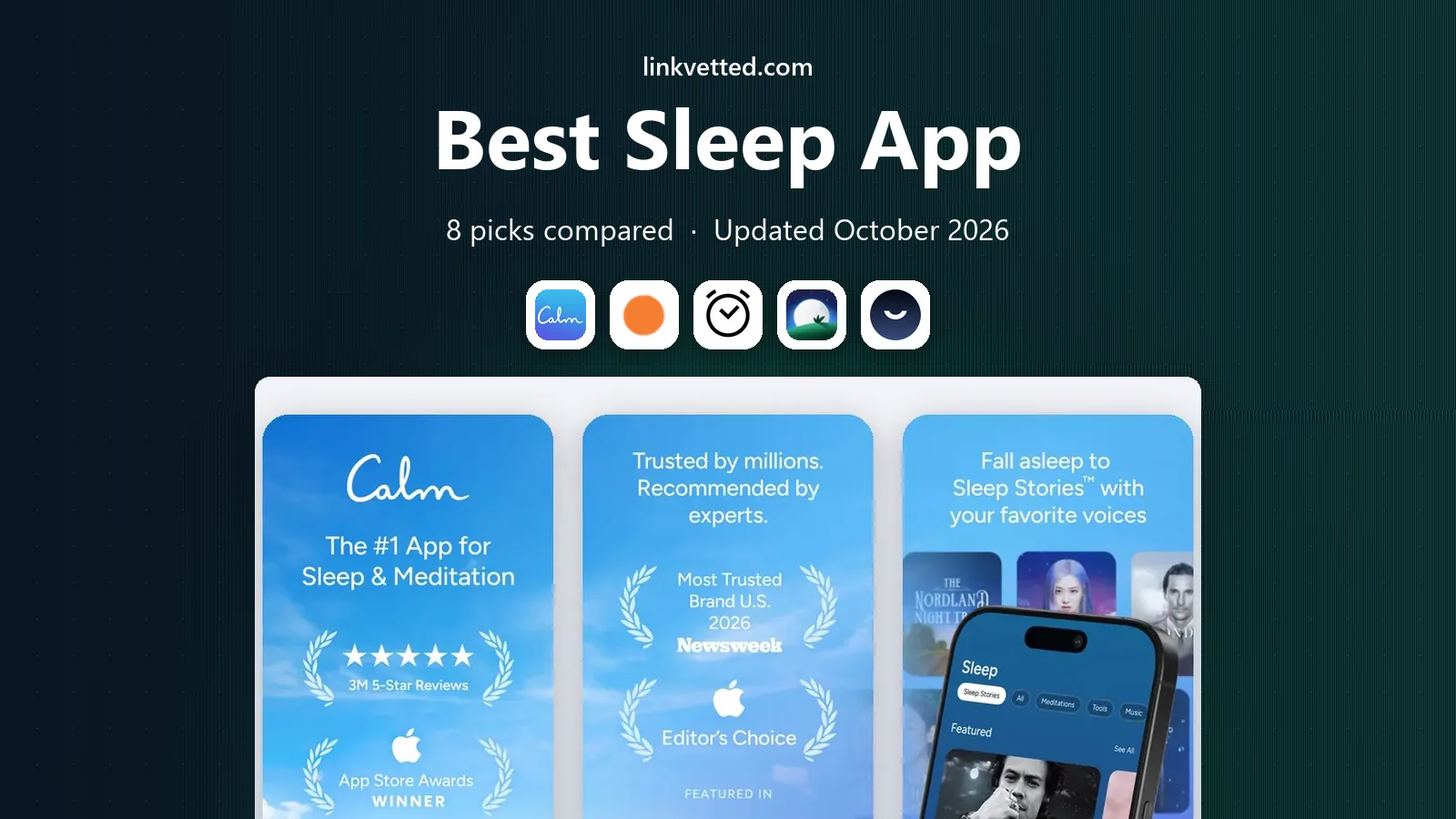
- Editor's choice
 Calm
Sleep stories and meditation
Starts at$69.99 per yearVisit calm.comFull review - Great alternative
 Headspace
Guided sleep meditation
Starts at$69.99 per yearVisit headspace.comFull review - Also consider
 Sleep Cycle
Tracking and smart alarm
Starts at$39.99 per yearVisit sleepcycle.comFull review
TL;DR:
- Sleep Cycle is our pick for tracking and gentle wake-ups, while Calm is the strongest all-round choice for falling asleep.
- Headspace suits people who want structured meditation and sleep content in one calm, guided library.
- BetterSleep, Pzizz, and Loona focus on sounds and stories, so they help most when a busy mind is the main problem.
- Rise and SleepScore add coaching and scores, but their advice is only useful if you check it regularly and act on it.
- No phone app can diagnose a sleep disorder, so see a clinician if snoring, pauses in breathing, or daytime sleepiness persist.
Quick comparison
| Tool | Best for | Starts at | Free plan? | |
|---|---|---|---|---|
| Calm | Sleep stories and meditation | $69.99 per year | Yes | Visit |
| Headspace | Guided sleep meditation | $69.99 per year | Free trial | Visit |
| Sleep Cycle | Tracking and smart alarm | $39.99 per year | Yes | Visit |
 BetterSleep | Sounds and sleep stories | $59.99 per year | Yes | Visit |
 Pzizz | Falling asleep fast | See website | Free trial | Visit |
 Loona | Calming bedtime stories | See website | Yes | Visit |
 Rise | Sleep debt and energy planning | See website | Free trial | Visit |
 SleepScore | Simple sleep score and advice | See website | Yes | Visit |
The best sleep app
The best sleep app depends on the problem you are trying to solve. Some people need help switching off, others want to understand their nights, and some just want a kinder alarm. The eight apps below cover those needs, with clear notes on price and limits.

Calm is the easiest recommendation for someone whose mind races at bedtime. Sleep Stories give you something calm to follow instead of replaying the day, and the wider library adds breathing exercises, music, and short meditations for stress during the day. That range helps if your sleep problem is really a wind-down problem.
The free version only includes a small selection, so most of the sleep content sits behind Premium at $69.99 per year. If you already use Calm for daytime meditation, the sleep library is a strong bonus. If you only want a tracker, a cheaper or free tracking app will serve you better.
- Large library of Sleep Stories, music, and meditation
- Easy bedtime routines
- Family plan option
- Full library needs a paid subscription
- Content can feel broad rather than personal
- Yearly price is not low
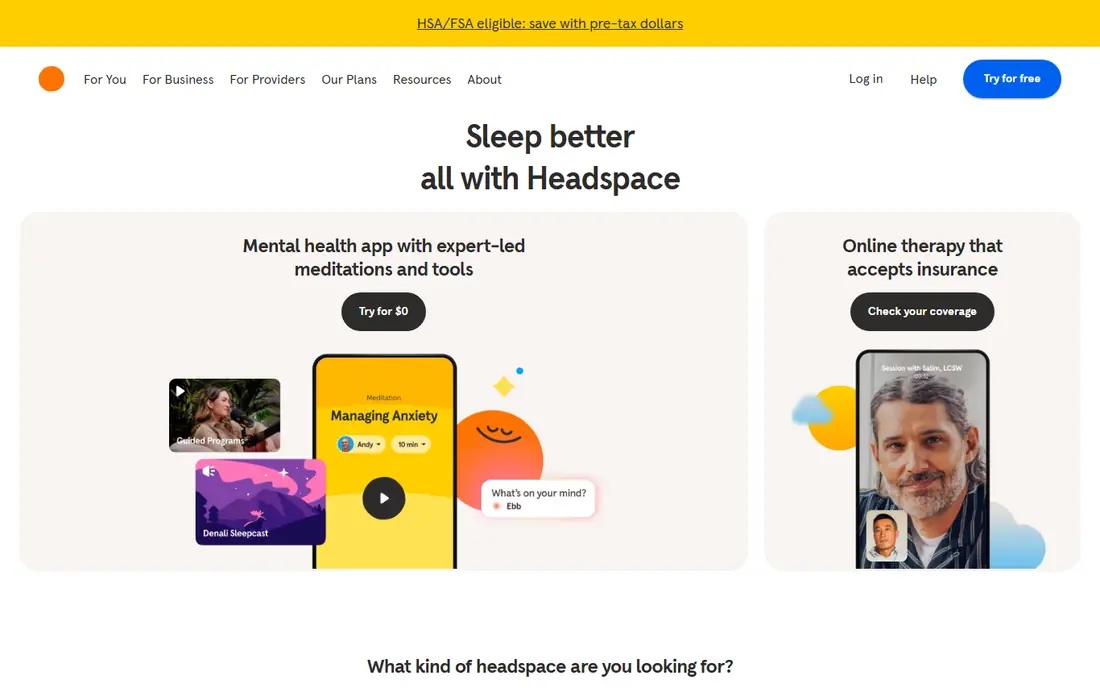
Headspace works best for people who like to be told what to do next. Short courses teach one skill at a time, and the sleep section builds on that same guided style, with sleepcasts that mix narration and sound. For a beginner who has tried meditation apps and drifted away, that structure can make the habit stick.
The price matches Calm at $69.99 per year, and there is little free content after the trial ends. If you prefer open-ended sounds or long stories, Calm or BetterSleep may fit better. If you want a course that builds week by week, Headspace is the more focused choice.
- Clear, structured courses for beginners
- Dedicated sleep content including sleepcasts
- Calm and consistent teaching style
- Little to use after the trial without paying
- Structured style can feel restrictive for experienced meditators
- Sleep content is smaller than Calm

Sleep Cycle turns your phone into a sleep tracker using sound and movement analysis, with no watch or band required. The smart alarm wakes you inside a window you choose, aiming for a lighter sleep phase so mornings feel less abrupt. Over weeks, the trend charts show how bedtime, wake time, and sleep quality move together.
That convenience has limits. Phone sensors estimate sleep stages, and they cannot match a clinical sleep study or a good wearable for accuracy. Premium at $39.99 per year adds longer trends, snore tracking, and more sounds. For a first tracker, it is friendly and affordable. For detailed health data, pair it with a wearable or talk to a clinician.
- Phone-only tracking with no wearable needed
- Smart alarm aims to wake you in light sleep
- Snore detection on Premium
- Phone tracking is less precise than a wearable
- Long-term trends need Premium
- Keeping the phone by the bed can disturb some sleepers
BetterSleep, formerly Relax Melodies, is built around sound. You can mix rain, wind, white noise, and gentle tones into a personal soundscape, then add a story or meditation on top. That control helps people who know exactly which sounds help them drift off, and who get bored by a fixed playlist.
It also includes basic sleep tracking, but it is not a replacement for a dedicated tracker. The smart alarm is simpler than Sleep Cycle, and the yearly price at $59.99 is higher than a tracking-only app. Choose BetterSleep when falling asleep is the main struggle, and choose Sleep Cycle when understanding your nights matters more.
- Mix-your-own soundscapes
- Large library of stories and meditations
- Simple sleep tracking included
- Alarm is basic compared with Sleep Cycle
- Yearly price is higher than Sleep Cycle
- Some content is similar across categories
Pzizz takes a different approach from story apps. It generates a continuous mix of music, voice, and sound effects that never repeats in exactly the same way, so your brain has less to latch onto and follow. You set a timer, press play, and let the audio carry you toward sleep without choosing a new track every night.
That simplicity is both the strength and the limit. Pzizz does not try to be a tracker, a meditation course, or a large story library, and people who want variety may miss those options. If you fall asleep best to steady, evolving sound rather than narration, Pzizz is worth a trial. Check the current price in the app store before subscribing, since prices vary by platform.
- Generates endless, non-repeating sleep audio
- Simple set-and-forget design
- Nap and focus modes included
- Less content variety than Calm
- No deep tracking
- Subscription needed for full access after the trial
Loona is designed as a wind-down ritual rather than a tracker. Each session combines a short interactive story with calming visuals and sound, guiding your attention away from the day and toward sleep. The format feels closer to a bedtime story than a meditation lesson, which helps people who find formal meditation hard to stick with.
The trade-off is scope. Loona does not track sleep in depth, and its library is smaller than the biggest meditation apps. If stories help you relax, and you want a gentle nightly routine, it is a pleasant choice. If you want charts, scores, or a smart alarm, pair it with Sleep Cycle or choose a broader app.
- Interactive stories that ease you toward sleep
- Calming visuals and sound design
- Good for people who dislike silent meditation
- Story format will not suit everyone
- Smaller library than Calm
- Full access needs a subscription
Rise focuses on the daytime side of sleep. It estimates your sleep debt, shows when your energy is likely to peak and dip, and suggests bedtimes and habits that fit your schedule. For shift workers, parents, or anyone with an irregular routine, that planning view can be more useful than a single nightly score.
The catch is that Rise asks for regular attention. If you check it once a month, the debt and energy forecasts will not change your habits. It also offers less falling-asleep audio than the story and sound apps in this list. Use Rise when you want a plan for better days, not just a sound for tonight.
- Shows sleep debt and daily energy peaks
- Focuses on habits and timing, not just last night
- Integrates with phone and wearable data
- Advice only helps if you follow it daily
- Subscription needed for full features
- Less sleep audio content than Calm or BetterSleep
SleepScore keeps the nightly routine simple. It tracks sleep from your phone, gives you a score in the morning, and offers advice based on patterns it sees over time. For someone who wants one number and a few clear suggestions, rather than a dashboard full of charts, that simplicity is appealing.
The score alone will not fix poor sleep, and the advice is general rather than medical. Treat it as a trend tool: watch the score over weeks, note what changes on good nights, and test one habit at a time. If you need a smart alarm or a large sound library, Sleep Cycle or BetterSleep will cover that side better.
- Simple nightly score that is easy to read
- Personalised advice based on your data
- Phone tracking with no wearable needed
- Score can feel vague without context
- Deeper advice needs a subscription
- Tracking is less detailed than wearable-based apps
How we picked these
We compared official feature pages, pricing pages, and app store listings, and we checked which apps are actively maintained and widely available in 2026. We favoured apps with a clear job, a free plan or trial, and honest limits about tracking accuracy. We did not claim hands-on testing we did not do, and we left out apps that promise diagnosis or treatment without clinical backing.
How to choose the right sleep app
Start by naming the main problem. If you lie awake with a busy mind, a sound or story app such as Calm, BetterSleep, Pzizz, or Loona is the right first try. If you wake up groggy or want to understand your nights, a tracker such as Sleep Cycle or SleepScore is more useful. If your days feel flat, Rise may help you plan sleep around energy and debt.
Test one app at a time for at least a week. Sleep habits change slowly, and trying three apps at once makes it hard to know what helped. Keep the phone charging, use the same bedtime window, and note how you feel in the morning, not just what the score says.
Check the practical details before you pay. Confirm the price in your app store, since prices vary by country and platform, and check if the subscription renews automatically. Turn off notifications that could wake you, and keep the phone face down or outside the bed if the screen disturbs you.
Finally, know when an app is not enough. Loud snoring, pauses in breathing, waking with headaches, or strong daytime sleepiness can point to a sleep disorder that needs clinical care. An app can support better habits, but it cannot diagnose or treat those conditions, and a clinician can offer tests and treatment an app cannot.
FAQ
What is the best app to sleep better at night?
Calm is our pick for most people who struggle to fall asleep, because its stories, music, and meditations cover many wind-down styles. Sleep Cycle is a better pick if tracking and a gentle alarm matter more than audio. Try the free content in both for a week, and keep the one that helps you feel calmer at bedtime.
What are the best sleep apps for falling asleep?
Calm, BetterSleep, Pzizz, and Loona are the strongest falling-asleep apps in this list, each with a different style. Calm and BetterSleep offer stories and mixed sounds, Pzizz generates endless sleep audio, and Loona uses interactive bedtime stories. The best choice is the sound or story style you actually enjoy, since you will use it every night.
What is the best app for sleep tracking?
Sleep Cycle is our pick for phone-only tracking, thanks to its smart alarm and easy trend charts, while SleepScore suits people who want a simple nightly score. Neither app matches a clinical sleep study for accuracy, so use them to spot trends over weeks, not to judge a single night. A wearable can add heart rate data if you want deeper tracking.
Are there good free sleep apps?
Yes, and the free options cover different needs. Sleep Cycle and SleepScore offer free tracking, Calm offers a small free selection, and BetterSleep offers free sounds with paid content on top. Free plans usually limit stories, long-term trends, or advanced features, so start free and pay only when you hit a limit that matters to you.
What is the best free sleep app for iPhone and Android?
Sleep Cycle is a strong free starting point on both iPhone and Android, since it tracks sleep with just a phone and includes a smart alarm. Calm and BetterSleep also work on both platforms, but their best sleep content needs a subscription. Check the app store price for your country before subscribing, since the same app can cost different amounts on different platforms.
Can a sleep app help with insomnia?
A sleep app can support better habits, such as a regular wind-down routine, consistent bedtimes, and less screen time before bed, but it cannot treat insomnia on its own. If poor sleep lasts for weeks, affects your work or mood, or includes snoring or breathing pauses, talk to a clinician about proven treatments. Use an app as a helper alongside professional advice, not as a replacement for it.