Best Service for Mobile Marketing in 2026: 8 Platforms Compared
Compare the best service for mobile marketing, from push and SMS to in-app messages and lifecycle journeys, with 2026 pricing and fit for each team size.

- Editor's choice
 Braze
Consumer brands with apps
Starts atSee websiteVisit braze.comFull review - Great alternative
 Klaviyo
Ecommerce email plus SMS
Starts atSee websiteVisit klaviyo.comFull review - Also consider
 Attentive
Ecommerce brands where SMS leads
Starts atSee websiteVisit attentive.comFull review
TL;DR:
- Braze and Iterable suit large consumer brands running complex cross-channel journeys.
- Klaviyo and Attentive suit ecommerce brands where email and SMS drive revenue.
- OneSignal is the easiest low-cost start for push and in-app messages.
- CleverTap and MoEngage suit mobile-first teams that want analytics plus engagement.
Quick comparison
| Tool | Best for | Starts at | Free plan? | |
|---|---|---|---|---|
| Braze | Consumer brands with apps | See website | Free trial | Visit |
| Klaviyo | Ecommerce email plus SMS | See website | Yes | Visit |
| Attentive | Ecommerce brands where SMS leads | See website | No | Visit |
 OneSignal | Startups needing push fast | $19 per month | Yes | Visit |
 CleverTap | Mobile-first analytics plus engagement | See website | No | Visit |
 MoEngage | Lifecycle programs across channels | See website | No | Visit |
 Iterable | Growth teams with complex journeys | See website | No | Visit |
 Airship | Enterprises with large app audiences | See website | No | Visit |
The best services for mobile marketing
Mobile marketing covers push notifications, SMS, in-app messages, and WhatsApp, plus the journeys that link them. The platforms below differ mainly in audience size, channel depth, and how much setup they need, so the best pick depends on whether you run an app, a store, or both.

Braze fits large consumer brands well, and its cross-channel journey builder gives it a clear reason to be on a shortlist. It also provides Canvas journeys, segmentation, and personalization, which helps a busy team keep daily work in one place instead of juggling separate tools. If your main need is complex lifecycle journeys, start with a trial and test the exact workflow you will use most. The trade-off is smaller teams may find pricing and setup heavy, so check that point against your own volume, team size, and budget before you commit. Pricing, limits, and contract terms can change, so confirm the current plan page and read the fine print on any usage meter. When the fit is right, Braze is a steady choice for complex lifecycle journeys without adding needless complexity.
- Cross-channel journeys across push, SMS, email, and in-app
- Quote-based pricing
- Setup needs dedicated time
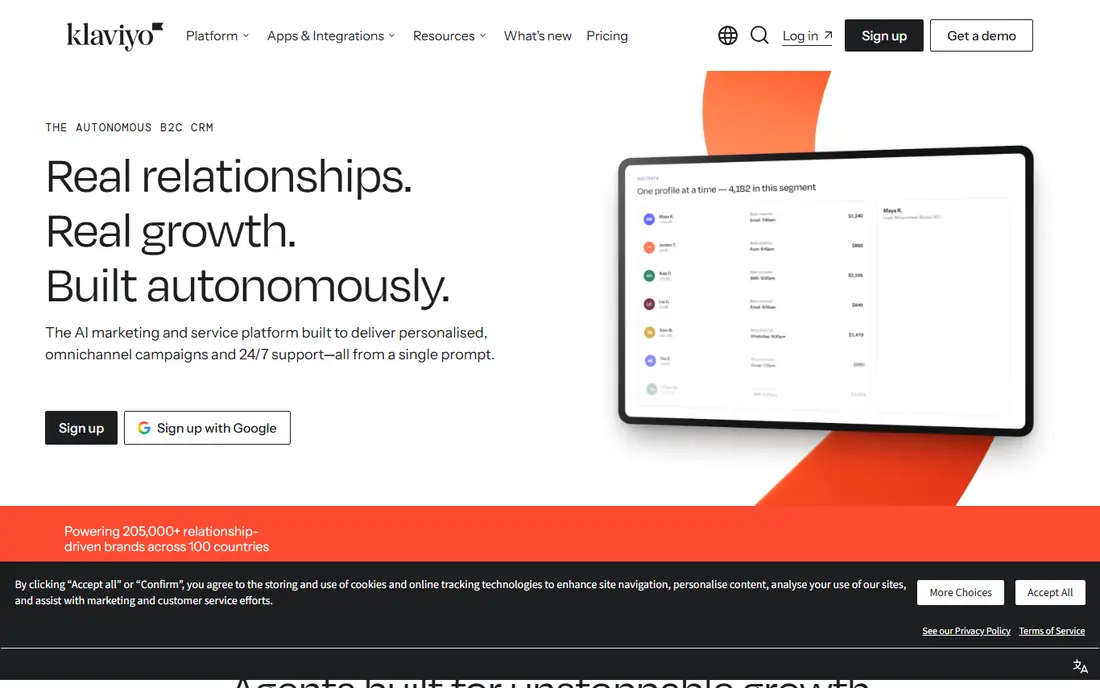
For ecommerce brands, Klaviyo stands out because its ecommerce data and automation flows. The addition of email, SMS, forms, and predictive segments makes the day to day work feel more joined up, and it reduces the number of separate logins a team has to manage. Teams that care most about email and SMS revenue from one tool will usually know within a week if the fit is right. On the downside, list growth can raise the bill faster than expected, which matters more as usage grows or as more people join. Read the pricing page closely, test support response times, and confirm how data can be exported later. If those checks pass, Klaviyo can serve ecommerce brands well for email and SMS revenue from one tool over a longer period.
- Strong Shopify links
- Email and SMS in one platform
- Costs rise with active profiles and SMS volume

Attentive was built with large ecommerce brands in mind, and that focus shows in how its SMS signup and personalization tools is presented. With SMS, email, and list-growth units included, it covers more of the routine work than a narrow single-purpose tool can cover. If SMS as a major revenue channel is high on your list, it deserves a serious look before you decide. That said, smaller stores may find contracts and minimums too high, so a short pilot with real data is worth more than a feature list alone. Compare the total monthly cost at your expected volume, not just the headline starting price. For large ecommerce brands, that pilot usually shows quickly if Attentive supports SMS as a major revenue channel in practice.
- Two-tap signup and AI send-time tools for SMS
- Quote-based pricing with minimums on many plans
Among the options here, OneSignal appeals most to startups and mid-size app teams because its fast push setup and free tier. It pairs that with push, in-app, email, and SMS options, so setup and daily use stay practical rather than theoretical. For buyers who rank push live in days, not weeks first, this is a sensible place to begin a comparison. In practice, large cross-channel programs may need a larger platform is the main reason some buyers look elsewhere, and it is worth weighing honestly. Check renewal terms, support hours, and any add-on fees before signing up. If those terms suit you, OneSignal remains a practical option for startups and mid-size app teams focused on push live in days, not weeks.
- Free plan for small audiences
- Fast push setup
- Advanced journeys and SMS sit on higher tiers
CleverTap fits mobile-first product teams well, and its combined analytics and messaging gives it a clear reason to be on a shortlist. It also provides push, in-app, SMS, email, and WhatsApp, which helps a busy team keep daily work in one place instead of juggling separate tools. If your main need is mobile engagement with built-in analytics, start with a trial and test the exact workflow you will use most. The trade-off is smaller teams may prefer transparent self-serve pricing, so check that point against your own volume, team size, and budget before you commit. Pricing, limits, and contract terms can change, so confirm the current plan page and read the fine print on any usage meter. When the fit is right, CleverTap is a steady choice for mobile engagement with built-in analytics without adding needless complexity.
- Analytics and engagement in one mobile-focused tool
- Pricing is quote-based
- Demo is the usual entry point
For consumer brands running lifecycle programs, MoEngage stands out because its lifecycle journey tools. The addition of push, email, SMS, in-app, and WhatsApp makes the day to day work feel more joined up, and it reduces the number of separate logins a team has to manage. Teams that care most about AI-assisted lifecycle campaigns will usually know within a week if the fit is right. On the downside, teams wanting instant self-serve signup may need a demo first, which matters more as usage grows or as more people join. Read the pricing page closely, test support response times, and confirm how data can be exported later. If those checks pass, MoEngage can serve consumer brands running lifecycle programs well for AI-assisted lifecycle campaigns over a longer period.
- AI-assisted segments and cross-channel journeys
- Quote-based pricing
- Onboarding takes time
Iterable was built with growth and enterprise consumer brands in mind, and that focus shows in how its flexible journey and API design is presented. With email, push, SMS, in-app, and direct mail options included, it covers more of the routine work than a narrow single-purpose tool can cover. If sophisticated cross-channel programs is high on your list, it deserves a serious look before you decide. That said, setup and cost suit larger teams better than tiny stores, so a short pilot with real data is worth more than a feature list alone. Compare the total monthly cost at your expected volume, not just the headline starting price. For growth and enterprise consumer brands, that pilot usually shows quickly if Iterable supports sophisticated cross-channel programs in practice.
- Flexible APIs and deep personalization for large audiences
- Quote-based pricing
- Learning curve for new teams
Among the options here, Airship appeals most to large enterprises with apps because its dependable push delivery at scale. It pairs that with push, in-app, wallet passes, and SMS, so setup and daily use stay practical rather than theoretical. For buyers who rank large-scale push and wallet programs first, this is a sensible place to begin a comparison. In practice, smaller app teams may find it heavier than needed is the main reason some buyers look elsewhere, and it is worth weighing honestly. Check renewal terms, support hours, and any add-on fees before signing up. If those terms suit you, Airship remains a practical option for large enterprises with apps focused on large-scale push and wallet programs.
- Dependable push at scale
- Wallet and in-app tools
- Enterprise pricing and positioning
How we picked these
We checked official feature pages, pricing pages, and app store listings, and we read privacy policies and public user reviews to see where each product helps and where it falls short. We favored products that are available in the United States in October 2026, that publish clear pricing or a clear way to get a quote, and that fit the topic without stretching the definition. Where a price could not be verified on the vendor site, we wrote See website rather than guessing. We also weighed who each product is really for, not just who it claims to serve. A low starting price means little if the plan you need costs far more, and a long feature list means little if daily use is slow or confusing. That is why each write-up names one honest weakness next to its strengths, and why the comparison table uses the same order as the list below.
How to choose a mobile marketing service
Map your channels first: push, SMS, email, in-app, and WhatsApp have different costs, consent rules, and deliverability needs. Check consent and compliance tools for SMS and push, since opt-in records and quiet hours matter. Compare billing by active users, contacts, or messages, since each model grows differently. Test a single journey end to end, from signup to message to purchase, before you migrate a full list.
FAQ
What is mobile marketing?
Mobile marketing reaches people on phones through push notifications, SMS, in-app messages, email on mobile, and WhatsApp. It works best when messages are timely, personal, and based on clear consent. The goal is to help users return, complete a purchase, or finish a task, not to send more messages for its own sake.
Is SMS marketing still effective?
SMS can be effective for time-sensitive offers, order updates, and reminders, because texts are often read quickly. It also costs more per message than push or email, and it requires clear opt-in and easy opt-out. For most ecommerce brands, SMS works best as one channel in a wider mix, not as the only channel.
What is the difference between push and in-app messages?
Push messages reach users outside the app, such as on the lock screen, and they need notification permission. In-app messages appear while a person is using the app, so they can guide onboarding, promote a feature, or offer help at the right moment. Many teams use both, with push for return visits and in-app for guidance.
How do mobile marketing platforms charge?
Some charge by monthly active users, some by contacts or profiles, and some by messages sent. SMS and WhatsApp often add per-message carrier costs on top of a platform fee. Always model your audience size and message volume together, since a low platform fee can still lead to a high total bill.
Do I need Braze if I am a small store?
Probably not at first. Small stores often start with Klaviyo, OneSignal, or a simple SMS tool, then move to Braze or Iterable when journeys, audiences, and app channels grow more complex. The right time to upgrade is when your current tool limits segmentation, testing, or cross-channel journeys.