Best SEO Tools for Affiliate Marketing in 2026: 9 Tools Compared
Compare the best seo tools for affiliate marketing, from keyword research and rank tracking to link cloaking, content scoring and reporting for creators.

- Editor's choice
 Ahrefs
Affiliate competitor and keyword research
Starts at$129 per monthVisit ahrefs.comFull review - Great alternative
 Semrush
All-in-one affiliate SEO research
Starts at$139 per monthVisit semrush.comFull review - Also consider
 SE Ranking
Affordable affiliate keyword tracking
Starts at$129 per monthVisit seranking.comFull review
TL;DR:
- Ahrefs, Semrush and SE Ranking cover the research side, including keywords, competitors and rankings for affiliate content.
- Rank Math helps WordPress affiliates with on-page basics, while Pretty Links and ThirstyAffiliates manage and cloak affiliate links.
- Surfer SEO improves content briefs and drafts, but it does not replace keyword research or link management.
- Affiliate income depends on helpful content and clear disclosure, and no tool replaces that trust with readers.
Quick comparison
| Tool | Best for | Starts at | Free plan? | |
|---|---|---|---|---|
| Ahrefs | Affiliate competitor and keyword research | $129 per month | Yes, limited | Visit |
| Semrush | All-in-one affiliate SEO research | $139 per month | Yes, limited | Visit |
| SE Ranking | Affordable affiliate keyword tracking | $129 per month | Free trial | Visit |
 Mangools | Budget keyword research for affiliates | See website | Yes, limited | Visit |
 Surfer SEO | Content optimisation for affiliate posts | See website | No | Visit |
 Rank Math | WordPress on-page SEO for affiliates | See website | Yes | Visit |
 Pretty Links | Affiliate link shortening and tracking | See website | Yes, limited | Visit |
 ThirstyAffiliates | WordPress affiliate link management | See website | Yes, limited | Visit |
 Lasso | Affiliate link displays and reporting | See website | Free trial | Visit |
The best SEO tools for affiliate marketing
Affiliate SEO has two halves. The first is finding topics and keywords that can rank and convert. The second is managing the links themselves, so clicks are tracked, links stay working, and disclosures stay clear. We compared official feature and pricing pages, then picked tools that serve at least one half well for affiliate publishers in October 2026.

Ahrefs helps affiliates find what already works. Its content reports show which competitor pages earn traffic and links, and its keyword explorer shows related terms and difficulty for a niche. That research shapes a content plan around topics with real demand, not guesses.
For a single small site, the price is steep. Use the free Webmaster Tools tier for your own site first, and pay only when competitor research becomes a weekly task. When it does, Ahrefs is hard to beat for depth.
- Strong competitor content reports
- Keyword difficulty and traffic estimates
- Backlink data for outreach
- High price for a single affiliate site
- Credits add cost on heavy research

Semrush suits affiliates who publish often and want research, tracking and content help in one account. Its keyword gap tool finds terms competitors rank for that you do not, and its topic research tool suggests angles and questions for new posts. Daily tracking shows whether a new post climbs or stalls.
The suite is broad, and a solo affiliate may pay for advertising and social tools that stay unused. Check project limits against your site count, and keep Search Console connected so paid estimates sit next to real clicks.
- Keyword gap and topic research tools
- Daily rank tracking
- Content templates and audits
- Broad suite with many unused tools
- Project and keyword limits need checking
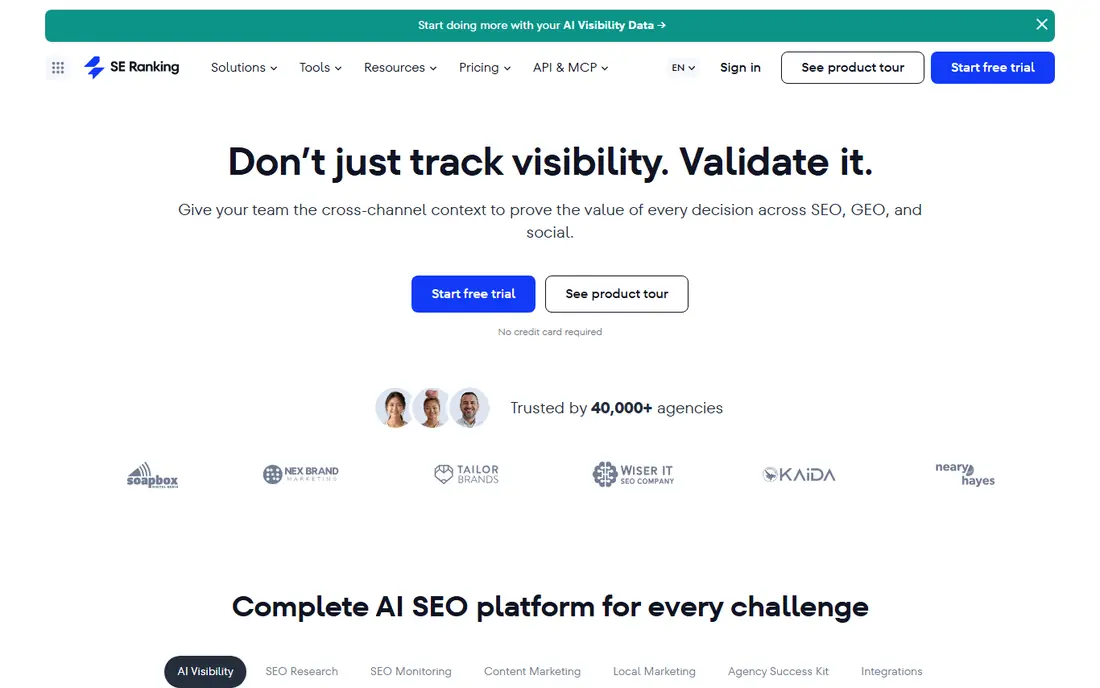
SE Ranking gives affiliate teams research, daily tracking and audits without enterprise pricing. You can watch a set of money pages, run site audits, and report progress in a clean format. For a team managing several affiliate sites, that combination is practical.
Limits matter here. Keyword and project counts, plus paid add-ons, decide the real monthly cost. Map your sites and tracked terms before subscribing, so a growing portfolio does not push the bill up without warning.
- Daily rank tracking
- Keyword research and audits in one plan
- Client-style reporting for partners
- Add-ons raise cost at scale
- Interface takes time to learn
Mangools is a good first paid tool for a new affiliate site. KWFinder returns keyword ideas with volume and difficulty in a readable layout, and SERPChecker shows which pages actually rank for a term. That helps a writer judge whether a topic is winnable before drafting.
Heavy research days hit the daily caps, and link analysis is thinner than Ahrefs. For one or two sites with a steady publishing pace, Mangools covers the research job at a lower cost than a full suite.
- Easy keyword difficulty scores
- SERPChecker shows real ranking pages
- Low learning curve
- Daily lookup caps
- Backlink data is less deep than larger suites
Surfer SEO helps affiliate writers shape a review or comparison post around what ranks. It compares top pages for a query, suggests terms and structure, and scores a draft as you write. For teams updating old posts, its audit tool shows which pages need fresh terms or sections.
Use the score as a guide, not a goal. A review that reads like a keyword list will not convert readers, even if it scores well. Keep an editor focused on honest pros and cons, clear verdicts and real reader questions.
- Content scores based on ranking pages
- Audit tool for old posts
- Outline builder for new reviews
- Needs a separate keyword tool
- Scores can lead to over-optimised, stiff writing
Rank Math is the on-page plugin many WordPress affiliates start with. Its free plan covers titles, meta descriptions, sitemaps and basic schema, including review markup that can help product posts. The setup wizard gets a new site configured without deep technical work.
It is WordPress only, and running two SEO plugins at once causes conflicts, so pick one and stick with it. Paid plans add rank tracking and deeper schema, but a small site can run well on the free plan plus a separate keyword tool.
- Free plan covers many on-page basics
- Schema support for reviews and products
- Easy setup wizard
- WordPress only
- Advanced features need a paid plan
- Can overlap with other SEO plugins
Pretty Links turns long affiliate URLs into short, branded links that look trustworthy in a post. Its click tracking shows which links earn clicks, and if a merchant changes a URL, you can update it once instead of editing every post. That saves real time across a large site.
It runs on WordPress, so sites on other platforms need a different link tool. Free features cover the basics, while detailed reporting and automation sit on paid plans. For WordPress affiliates, it is a simple, reliable link manager.
- Clean, branded short links for affiliate URLs
- Click tracking and reporting
- Easy link replacement site-wide
- WordPress only
- Advanced reporting and automation need paid plans
ThirstyAffiliates is built for affiliates who manage hundreds of links. It stores links in categories, can auto-link chosen keywords in posts, and reports clicks by link. Geolocation options let you send visitors to the right regional merchant page, which helps international traffic convert.
The add-on model needs attention. Several useful features are separate paid add-ons, so the total cost can exceed the base price. On a large site, test automatic linking carefully, since over-linking a post hurts readability.
- Link categorisation and automatic keyword linking
- Click reports
- Geolocation and smart uncloaking options
- WordPress only
- Some features need paid add-ons
- Setup takes care on large sites
Lasso helps affiliate posts look and convert better. Its product displays, comparison tables and callout boxes present products clearly, and its tracking shows which displays earn clicks. Broken-link alerts flag merchant links that stop working, which protects revenue.
It is WordPress focused, and its value sits mainly in displays and reporting, not in keyword research. If your posts already convert well and need better presentation and link monitoring, Lasso is worth a trial. If you need research first, start with a suite instead.
- Attractive product displays and tables
- Link tracking and broken-link alerts
- Amazon and other network support
- WordPress focused
- Pricing is subscription-based for display features
How we picked these
We compared official feature pages, pricing pages and public documentation, and kept tools that serve affiliate SEO directly, either through research and tracking or through link management. We favoured tools that are actively sold in October 2026 and that work for real affiliate publishers, from solo bloggers to small teams. Tools with no working official site were left out.
How to use these tools together
A practical stack pairs one research tool, one on-page plugin and one link manager. Research finds topics, Rank Math handles on-page basics, and Pretty Links or ThirstyAffiliates manages the links. Surfer can join the stack when content volume grows, and Lasso adds displays when presentation becomes the bottleneck.
Disclose affiliate links clearly
Always disclose affiliate relationships near the links, in plain terms readers understand, and follow each network's rules. Disclosure is not just a legal and network requirement. It also builds trust, since readers who know how you earn are more likely to click and buy through your links.
Judge content by clicks and revenue, not just rankings
A post can rank well and still earn little if the intent is wrong or the product fit is poor. Track clicks per post, earnings per click and conversion by merchant, alongside rankings. That data shows which topics deserve updates and which should be retired or rewritten.
FAQ
What is the best SEO tool for affiliate marketing beginners?
Mangools for research plus Rank Math for WordPress on-page work is a low-cost, easy start. Add Pretty Links when you have enough affiliate links to manage. Upgrade to Ahrefs or Semrush only when competitor research and daily tracking become weekly needs.
Do I need a link cloaking tool?
Cloaking, in the sense of clean branded links, helps with tracking and link maintenance, and tools such as Pretty Links and ThirstyAffiliates do it well. Hiding the affiliate nature of a link from readers or networks is different and risky. Always disclose affiliate links clearly, whatever tool you use.
Can SEO tools replace keyword research by hand?
No. Tools surface volume, difficulty and competitor data, but you still need to judge intent, product fit and whether you can write a better page than the current top results. Use tool data to shortlist topics, then read the ranking pages yourself before committing to a post.
How do I track which affiliate posts earn money?
Use your link manager's click reports together with your affiliate network dashboard, which shows sales and commissions. Match clicks to posts over time to find earnings per post. Lasso adds display-level tracking, which helps when one post contains several product boxes.
Is affiliate SEO still worth it in 2026?
Yes, for publishers who write genuinely helpful comparisons and reviews with clear disclosures. Generic, thin affiliate pages struggle, while detailed posts that answer real buyer questions, show honest drawbacks and update prices still rank and convert. Focus on a niche you can cover deeply.
Should I use Amazon links with these tools?
Many affiliates use Amazon links alongside other networks, and tools such as Lasso and ThirstyAffiliates support them. Check Amazon's operating agreement for disclosure and link rules, since violations can close an account. Diversify networks over time so one program change does not remove all income.