Best Platform for SEO B2C in 2026: 8 Platforms Compared
Compare the best platform for SEO B2C for consumer brands in 2026, with tools for rankings, content, technical fixes, and local search growth for shoppers.
- Editor's choice
 Semrush
All-in-one B2C SEO
Starts at$139.95 per monthVisit semrush.comFull review - Great alternative
 Ahrefs
Keyword and competitor research
Starts at$129 per monthVisit ahrefs.comFull review - Also consider
 Moz Pro
Clear reporting for small teams
Starts at$49 per monthVisit moz.comFull review
TL;DR:
- Semrush and Ahrefs are the best all-in-one platforms for consumer brands, with keyword, content, technical, and link tools in one login.
- Surfer and Screaming Frog fill gaps that suites miss: Surfer for content optimization, Screaming Frog for deep technical crawls.
- Moz Pro and SE Ranking suit smaller consumer teams that want clear reporting without enterprise pricing or complexity.
- BrightEdge and Conductor suit large consumer brands with many pages, markets, and stakeholders, but both require a sales quote.
Quick comparison
| Tool | Best for | Starts at | Free plan? | |
|---|---|---|---|---|
| Semrush | All-in-one B2C SEO | $139.95 per month | Yes | Visit |
| Ahrefs | Keyword and competitor research | $129 per month | Free trial | Visit |
| Moz Pro | Clear reporting for small teams | $49 per month | Free trial | Visit |
 Surfer | Content optimization | See website | Free trial | Visit |
 Screaming Frog SEO Spider | Technical crawls | See website | Yes | Visit |
 SE Ranking | Value suite for growing brands | $129 per month | Free trial | Visit |
 BrightEdge | Enterprise consumer SEO | See website | No | Visit |
 Conductor | Enterprise content and SEO | See website | No | Visit |
The best platform for SEO B2C
Consumer SEO differs from business-to-business SEO. Shoppers search with short, intent-heavy queries, compare products, and decide fast, often on a phone and often near a store. We compared vendor pricing pages and feature lists for keyword research, content, technical health, local search, and reporting, with that shopper journey in mind.
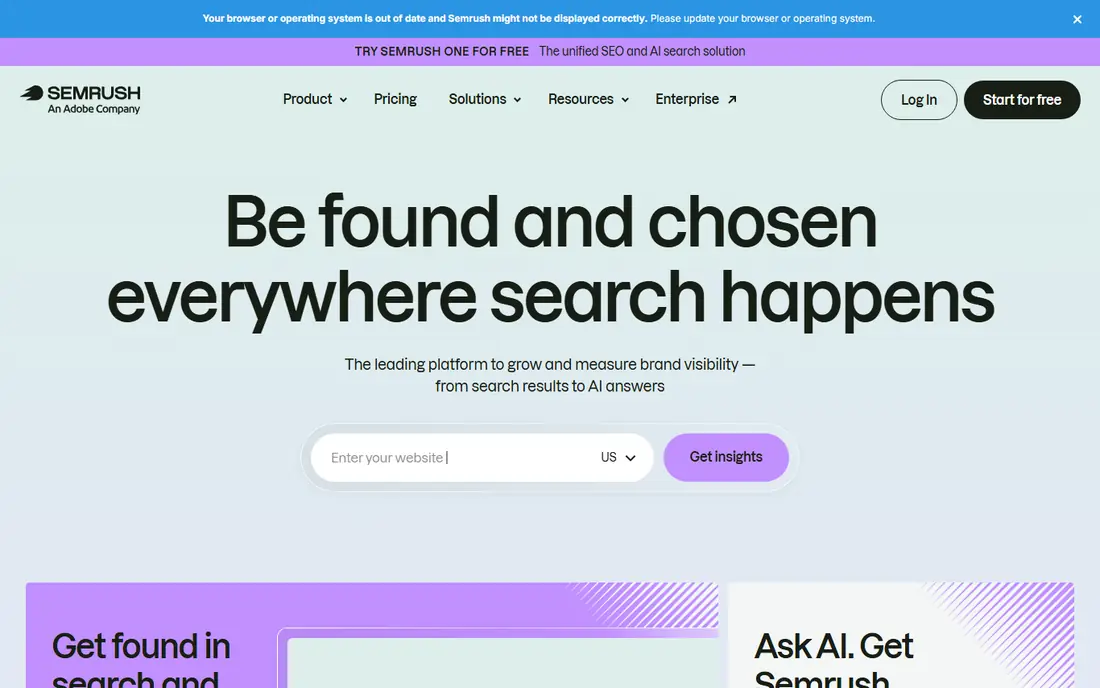
Semrush is our first pick for a consumer brand that wants one platform. Keyword Magic Tool finds shopper queries and questions, the SEO Writing Assistant and content tools help shape product and category pages, Site Audit flags technical issues, and Position Tracking follows rankings by device and location. Local tools help multi-location brands manage listings and reviews.
The Pro plan is listed from $139.95 per month, with a limited free plan for small checks. Entry keyword limits, reported at 500 tracked keywords, suit a focused brand but not a large catalog with many categories. For a team that handles SEO, content, and local work together, Semrush covers the most ground in one login.
- Keyword research, content tools, site audit, and rank tracking in one suite
- Local and listing tools for multi-location brands
- Competitor visibility data
- Higher entry price
- Many tools can overwhelm a small team
- Keyword limits on the entry plan

Ahrefs suits consumer brands that compete on content and links. Keywords Explorer shows search volume, difficulty, and clicks for shopper queries, while Content Explorer finds topics that earn links in a niche. That pairing helps a brand plan buying guides, comparisons, and product content that both ranks and earns coverage.
The Lite plan is listed from $129 per month, with 750 tracked keywords reported and weekly rank updates by default. Ahrefs does not optimize a draft as directly as Surfer, so pair it with a content tool if on-page optimization is a weak spot. For research depth and competitor insight, Ahrefs is a strong foundation.
- Strong keyword and competitor data
- Content Explorer for link-worthy topics
- Backlink index for digital PR and product coverage
- Weekly rank updates by default
- Content optimization tools are thinner than Surfer
- Higher plans needed for larger teams
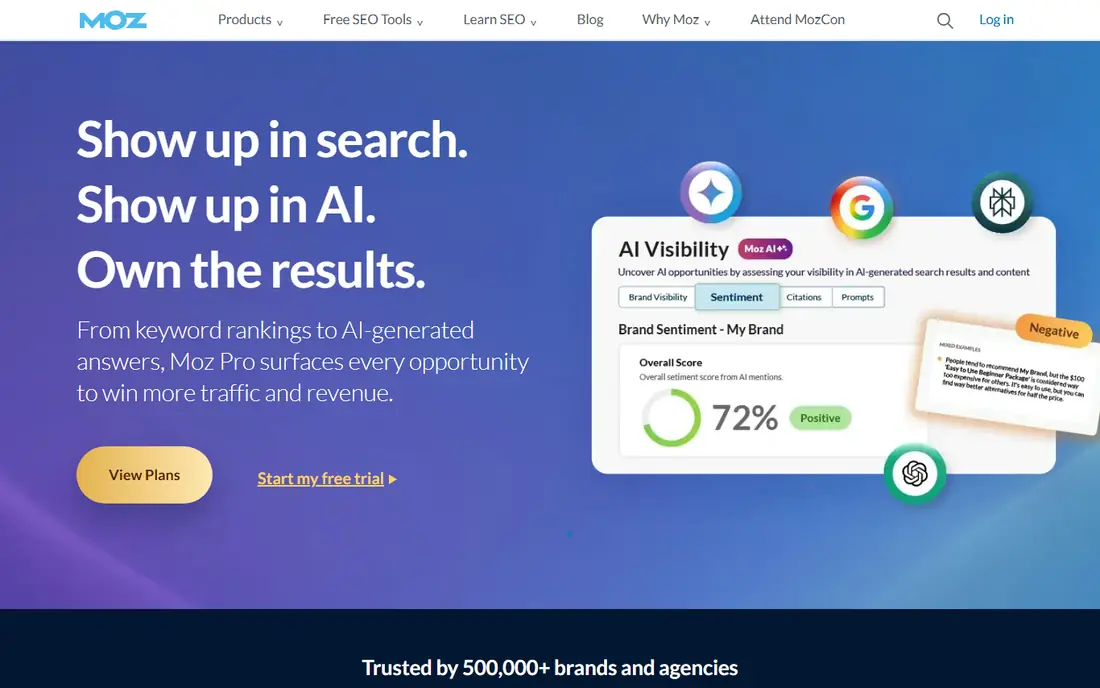
Moz Pro is the clearest platform for a small consumer team without a dedicated SEO specialist. Keyword Explorer, Rank Tracker, and Site Crawl cover the core jobs, and reports use Domain Authority and other metrics that a marketing manager can read without a long briefing. The Starter plan is listed from $49 per month, with a 30-day free trial.
The limits are scale and depth. The link index is smaller than Ahrefs, and lower plans limit campaigns and tracked sites. For a small brand, a single store, or a team learning SEO, Moz Pro gives enough structure without enterprise cost. Larger brands will outgrow it and should compare Semrush or SE Ranking.
- Readable reports and metrics for non-specialists
- Keyword research and rank tracking
- Site crawl and on-page guidance
- Link index smaller than Ahrefs
- Campaign and site limits on lower plans
- AI and local features vary by plan
Surfer fills the content gap in a B2C stack. Its Content Editor scores a draft against top-ranking pages for a query, suggests terms, headings, and structure, and helps a writer optimize a product description, category page, or buying guide without guessing. Content Audit applies the same logic to pages that already rank but have slipped.
Pricing is listed as See website, since plans and limits have changed across comparisons, with a free trial available. Surfer does not replace rank tracking, technical audit, or link research, so pair it with Semrush, Ahrefs, or SE Ranking. For a brand whose main problem is thin product and category content, Surfer is the most direct fix.
- Data-driven content briefs and editor
- Content Score for on-page optimization
- Audit tools for existing product and category pages
- Not a full SEO suite on its own
- Pricing and plan limits change
- Best paired with a research platform
Screaming Frog SEO Spider is a desktop crawler that checks a site the way a search engine does. For a consumer site with thousands of product pages, it finds broken links, duplicate titles, missing metadata, redirect chains, and thin pages faster than a manual review. Integrations with Google Search Console and analytics add click and impression data to the crawl.
The free version covers up to 500 URLs, with a paid license for larger crawls, so we list the starting price as See website. The tool needs technical interpretation, since a crawl report lists issues without deciding which ones matter most. For any B2C brand with a large catalog, it belongs in the stack alongside a suite such as Semrush.
- Deep technical crawls for large catalogs
- Finds broken links, duplicates, and redirect chains
- Integrates with Search Console and analytics
- Desktop tool with a learning curve
- License pricing varies
- Reports need interpretation by someone technical
SE Ranking is the value alternative to Semrush for a growing consumer brand. The Core plan is listed from $129 per month, or $103.20 per month billed annually, with 2,000 tracked keywords and daily updates reported. Keyword research, site audit, backlink monitoring, and white-label reports cover the core suite jobs at a lower cost per keyword.
Content optimization is not as direct as Surfer, and AI visibility may need an add-on, so check those costs if they matter to your brand. For a brand with many categories, a large keyword set, or an agency partner that reports under its own brand, SE Ranking offers strong depth for the price.
- Daily rank tracking for many keywords
- Keyword research, audit, and backlink tools
- White-label reports for agencies and partners
- Content optimization is thinner than Surfer
- AI visibility features may need an add-on
- Interface packs in many tools
BrightEdge is built for large consumer brands with many pages, markets, and stakeholders. It tracks search performance at scale, ties content to revenue signals where integrations allow, and reports share of voice across competitors. AI search reporting helps large brands see how they appear in AI answers, not just classic results.
Pricing is quote-based, so we list it as See website, and onboarding takes longer than a self-serve suite. A small brand will not use enough of it to justify the cost or setup. For an enterprise brand that needs governance, large-scale reporting, and cross-team workflows, BrightEdge is a credible enterprise pick.
- Enterprise-scale keyword and content performance data
- AI search and share-of-voice reporting
- Workflows for large teams
- Pricing requires a sales quote
- Onboarding and setup take time
- Overkill for a small brand
Conductor pairs SEO data with content performance for enterprise teams. It shows which pages drive visibility, how market share shifts against competitors, and where content gaps sit, which helps a large brand plan product, category, and editorial content together. Workflows help content, SEO, and product teams coordinate on the same pages.
As with BrightEdge, pricing requires a quote, so we list it as See website, and setup is heavier than a self-serve tool. For a small brand, Semrush or SE Ranking covers the same core jobs at a fraction of the effort. For an enterprise consumer brand with a large content operation, Conductor is worth a demo and a quote.
- Content and SEO performance in one enterprise platform
- Market share and competitor views
- Workflows for content teams
- Pricing requires a sales quote
- Setup and training take time
- Overkill for a small or single-site brand
How we picked these
We compared vendor pricing pages, feature lists, and public reviews, focusing on the jobs a consumer brand repeats: shopper keyword research, product and category content, technical health for large catalogs, local visibility, and reporting. We kept platforms available today, from self-serve suites to enterprise tools, and we noted quote-based pricing instead of inventing a number.
How to choose a B2C SEO platform
Start with your bottleneck. If rankings are unknown, start with Semrush, Ahrefs, or SE Ranking for tracking and research. If pages rank but do not convert, check content with Surfer and technical health with Screaming Frog. If you have many stores, add local tools. Do not buy an enterprise platform before a self-serve suite has shown what you need.
Shopper intent and mobile checks
Check rankings by device, since most shoppers search on a phone, and check local results if you have stores. Track product, category, and comparison queries separately, since each stage of a purchase needs different content. A platform that only reports national desktop rankings will miss the queries that drive store visits and sales.
Reporting that a team will use
Test a report with a real stakeholder before you buy. A marketing lead needs traffic, rankings, and revenue signals in one view, while a content writer needs a brief and a score. If reports need manual cleanup each month, the platform will be abandoned, no matter how deep its data is.
FAQ
What is the best SEO platform for B2C brands?
Semrush is our pick for most consumer brands, with keyword, content, technical, and local tools in one suite. Ahrefs is close for research and competitor insight. Smaller teams should compare Moz Pro and SE Ranking, while large brands should demo BrightEdge and Conductor.
What is the best tool for SEO for B2C product pages?
Surfer is the best direct tool for optimizing a product or category page, with a content score based on top-ranking pages. Screaming Frog finds technical issues across a large catalog, such as duplicates and broken links. Pair both with a suite for keyword research and rank tracking.
Is Semrush or Ahrefs better for consumer SEO?
Semrush is better as a single login for keyword, content, audit, local, and rank tracking work. Ahrefs is better for keyword and competitor research depth and for backlink data. Many teams use one as the main platform and the other for a second opinion on important keywords.
How much does a B2C SEO platform cost?
Self-serve suites start near $49 per month for Moz Pro and near $129 to $139.95 per month for Ahrefs and Semrush. SE Ranking Core starts at $129 per month with more tracked keywords. Enterprise platforms such as BrightEdge and Conductor require a quote and cost far more.
Do B2C brands need local SEO tools?
Yes, if they have stores, service areas, or pickup options. Local rankings, map results, listings, and reviews drive visits in a way national rankings do not show. Semrush includes local tools, and BrightLocal, covered in our visibility guide, specializes in map and local rank reporting.