Best Online Tools for Personal Growth in 2026: 8 Tools Compared
Compare the best online tools for personal growth in 2026, with meditation, courses, habits, and journaling tools for a calmer, more focused daily life.

- Editor's choice
 Headspace
Guided meditation for beginners
Starts at$12.99 per monthVisit headspace.comFull review - Great alternative
 Calm
Sleep stories and relaxation
Starts at$14.99 per monthVisit calm.comFull review - Also consider
 Mindvalley
Video courses for life skills
Starts atSee websiteVisit mindvalley.comFull review
TL;DR:
- Personal growth is a broad goal, so pick a tool that matches one clear aim, such as sleep, learning, habits, or reflection.
- Headspace and Calm suit daily meditation, while Mindvalley and MasterClass suit structured video courses.
- Insight Timer and Habitica give strong free starting points for meditation and habit building.
- Skillshare suits practical skill learning, while Day One suits reflection and long term journaling.
- A tool only helps if you use it, so choose the smallest daily routine you can keep for a month.
Quick comparison
| Tool | Best for | Starts at | Free plan? | |
|---|---|---|---|---|
| Headspace | Guided meditation for beginners | $12.99 per month | Free trial | Visit |
| Calm | Sleep stories and relaxation | $14.99 per month | Free trial | Visit |
| Mindvalley | Video courses for life skills | See website | No | Visit |
 Insight Timer | Free guided meditation library | Free | Yes | Visit |
 Skillshare | Practical creative and work skills | See website | Free trial | Visit |
 MasterClass | Learning from well known teachers | See website | No | Visit |
 Habitica | Turning habits into a game | Free | Yes | Visit |
 Day One | Journaling and reflection | See website | Free trial | Visit |
The best online tools for personal growth
We compared meditation apps, course platforms, habit tools, and journaling apps on content depth, price, free access, and daily usability. The best personal growth apps for you depend on the change you want and the time you can give each day.

Headspace is the clearest starting point for meditation. Its Basics courses explain breathing, focus, and awareness in short animated lessons, then build into themed packs for stress, anxiety, sleep, and focus. That structure helps a beginner who opens a meditation app and feels lost in a large library. Daily sessions are short, and the Today tab gives a simple next step each day.
The limit is access and variety. Most courses are locked behind a subscription, and the library is smaller than free rivals. A student plan and a family plan can lower the cost, and a free trial lets you test the teaching style. If you want a calm, guided route into meditation, Headspace is our pick for most beginners.
- Structured courses that teach meditation step by step
- Sleepcasts and focus music
- Short SOS sessions for stressful moments
- Full library needs a subscription
- Voice style may not suit everyone
- Less free content than Insight Timer

Calm suits people whose main goal is better sleep or a calmer evening. Its Sleep Stories, narrated by a range of voices, are the standout feature, and soundscapes help many users wind down without a screen. Daily Calm sessions give a short meditation each day, and programs cover stress, anxiety, and focus in a browse and pick style rather than a strict course path.
That looser structure is both a strength and a weakness. You can pick what fits your mood, but you may not get the same step by step progression as Headspace. A free trial and limited free content let you test the sleep library before you pay. If sleep is your main personal growth goal, Calm is a strong choice.
- Large sleep story library
- Soundscapes and breathing tools
- Daily meditations and programs for stress and sleep
- Less structured course progression than Headspace
- Full access needs a subscription
- Large library can feel hard to navigate at first
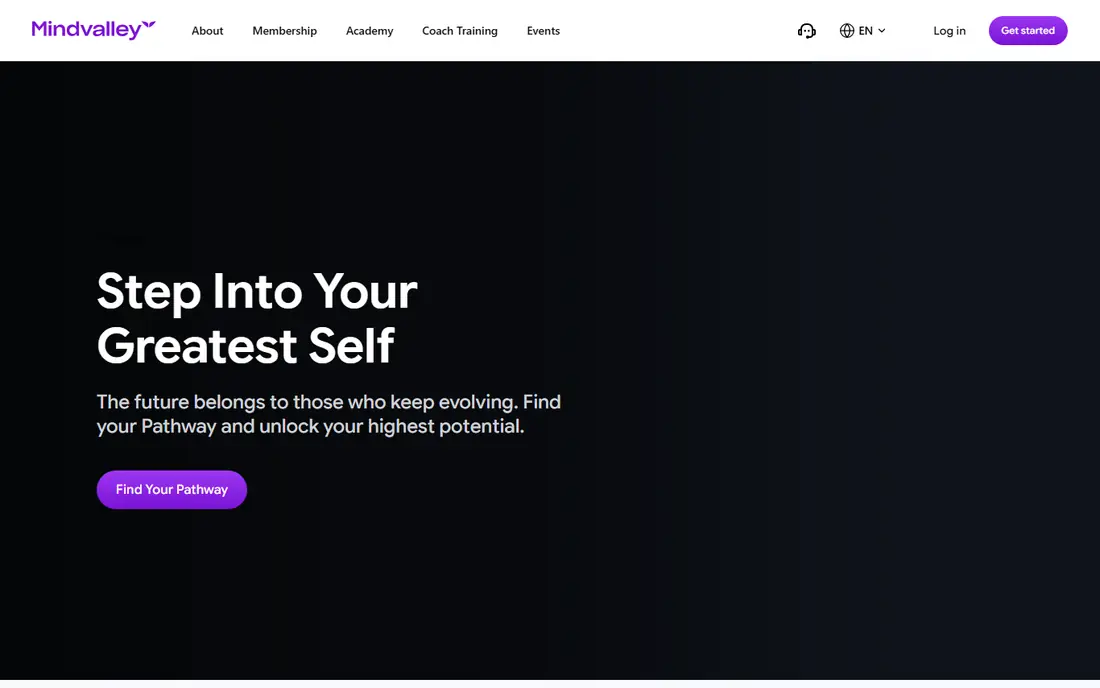
Mindvalley is a course platform for personal growth in the broadest sense. Its quests cover memory, fitness, nutrition, public speaking, money mindset, and spiritual topics, with video lessons released over several weeks. That pacing helps learners who like a daily lesson plus a small task, rather than a long course to finish in one sitting. Community groups and live events add accountability for some members.
The cost is the main barrier. An All Access membership is a yearly commitment, and it only pays off if you finish two or three quests in a year. Some quests are stronger than others, so read the syllabus and teacher background before you start. If you want a broad, video led personal growth program, Mindvalley is worth a trial period, but check the current price and refund terms first.
- Wide range of quests on mind, body, career, and relationships
- Well produced video lessons
- Community events and live sessions
- Annual membership cost is high
- Course quality varies by teacher
- Some content leans on motivational language rather than evidence
Insight Timer is the best free starting point for meditation. Its free library includes guided meditations, talks, music, and sleep content from thousands of teachers, plus a timer for silent practice. That depth means you can try breathwork, body scans, sleep meditations, and short stress resets without paying. The app also includes groups and live sessions, which help some users stay consistent.
The size of the library is also the drawback. Beginners may struggle to choose, and quality varies because many teachers contribute. Start with a short course from a teacher you like, save favourites, and use the timer for a simple daily habit. If cost is a barrier, Insight Timer gives you more free personal growth content than any other tool in this list.
- Very large free library of guided meditations
- Timer and sleep tools
- Teachers from many traditions and styles
- Library size can overwhelm beginners
- Premium features need MemberPlus
- Course quality varies by teacher
Skillshare fits personal growth through practical skills. Classes are usually short, project based, and taught by working practitioners, so you can learn illustration, photography, writing, productivity, or freelance business skills and finish a small project in a weekend. That project focus helps learners who lose motivation in long theory courses. The class catalogue is broad, and the app works well for lunch break learning.
It is not a university platform. Most classes do not offer accredited certificates, and quality varies, so check class reviews and the project brief before you start. A free trial lets you test two or three classes. If your growth goal is a concrete skill you can use at work or in a hobby, Skillshare is a practical, low pressure choice.
- Short project based classes on design, writing, business, and tech
- Learn by making a small project
- New classes added regularly
- No certificates for most classes
- Class quality varies
- Full access needs a subscription after the trial
MasterClass offers a different kind of learning. Lessons are filmed to a high standard, with well known teachers explaining their craft, mindset, and working methods. Topics include writing, cooking, music, business, leadership, and science, so a learner can explore a new interest or deepen an existing one. The lesson structure is clear, with short videos and notes that make it easy to watch in small blocks.
The limit is interaction. You will not get feedback on your work, and some classes inspire more than they train, so you still need practice outside the app. Membership is a yearly cost, and it suits learners who will watch several classes a year. If you learn well from stories, examples, and expert habits, MasterClass is an enjoyable personal growth tool.
- High production video lessons from well known experts
- Wide topics from cooking to leadership
- Workbook style lessons support practice
- No live feedback from teachers
- Membership cost is high for casual use
- Lessons inspire more than they train in some topics
Habitica turns habit building into a role playing game. You create habits, dailies, and to dos, then earn gold, experience, and items when you complete them. You can join a party with friends, take on challenges, and fight bosses together, which adds social accountability to a solo habit. That game layer helps people who start habits and stop after a week, because the streak and the party give a reason to return.
The game style is not for everyone. Some users find the rewards distracting, and the design is simpler than newer habit apps. The free tier covers the core habit system, so you can test it for a month without paying. If you like games and you struggle to keep a habit, Habitica is a fun, free way to build a daily routine.
- Free core habit, daily, and to do lists
- Game rewards make small habits fun
- Parties and challenges add accountability
- Game style may distract some users
- Design feels dated next to newer apps
- Advanced features need a subscription
Day One is a journaling app, and journaling is one of the simplest personal growth tools. You can write a short daily entry, add a photo, tag a mood or topic, and search past entries by date or tag. Over time, that record shows patterns in sleep, stress, work, and relationships that are hard to see day by day. Prompts help if you stare at a blank page, and the app works on phone, tablet, and computer.
It will not teach you a skill or guide a course. Journaling only helps if you write regularly, so set a small rule, such as three lines each evening. A free tier or trial lets you test the layout, and a paid plan adds unlimited journals and media. If reflection is your growth goal, Day One is a calm, private place to build that habit.
- Clean journaling with photos, tags, and location
- Prompts support reflection
- Entries are searchable over years
- Full features need a subscription
- No guided personal growth course
- Journaling needs self discipline to stay regular
How we picked these
We compared official pricing pages, app store listings, course catalogues, and public reviews for tools that support meditation, learning, habits, and reflection. We looked for a clear use case, a usable free tier or trial, regular content updates, and honest limits. We left out tools that could not be verified as active in October 2026, tools focused only on therapy, and tools that require a coach to use. These tools support general wellbeing and learning, and they are not a substitute for medical care or therapy.
How to build a personal growth routine that lasts
Pick one goal, one tool, and one daily time. A routine that is too large will fail in week two, while a small routine can grow over months. Start with ten minutes a day, attach it to an existing habit such as morning coffee or bedtime, and track it simply.
Choose depth over breadth
Using eight tools at once is a common mistake. Choose one tool for your main goal, such as Headspace for meditation or Skillshare for a skill, and use it daily for a month. Add a second tool only when the first habit feels easy. Depth gives you progress you can feel, while breadth gives you many half finished courses.
Review once a week
Set a weekly review in Day One or a notebook. Note what helped, what felt hard, and what you will change next week. A weekly review turns a habit into learning, because you can see which lessons, meditations, or projects actually changed your day. Keep the review short, five minutes is enough.
Protect sleep and attention
Personal growth tools work best when sleep and attention are protected. Use Calm or Insight Timer for a wind down routine, keep phones out of the bedroom if you can, and choose one focused learning block rather than scattered scrolling. Small changes to sleep and focus often help more than a new app.
FAQ
What are the best personal growth apps for beginners?
Headspace is a good first meditation app, Insight Timer is a good free alternative, and Habitica is a good first habit app. Start with one tool and a ten minute daily habit. Once that habit is steady, add a course platform such as Skillshare or Mindvalley for a specific skill.
What is the best online tool for personal growth if I want to learn a skill?
Skillshare suits practical, project based skills such as design, writing, and business. MasterClass suits learning from well known experts across many topics. Mindvalley suits broader life skills such as memory, fitness, and mindset. Choose based on the skill you want, then check the class syllabus before you pay.
Are free personal growth apps good enough?
Yes, for many goals. Insight Timer gives a large free meditation library, and Habitica gives a free habit system. Free tiers help you test a teaching style and build a habit before you pay. Paid plans add depth, offline access, and fuller libraries, but they do not replace a regular routine.
How long does personal growth take with these tools?
Most users need at least a month of regular use to feel a change in a habit, sleep, or skill. Meditation and journaling often show small changes in weeks, while a new skill may take months of practice. Track your routine weekly, and judge a tool after a month, not after three days.
Can personal growth apps replace therapy?
No. These tools support general wellbeing, learning, and habits, but they are not therapy and they do not treat mental health conditions. If you face persistent anxiety, low mood, or sleep problems, speak to a qualified health professional. Use these apps as support, not as a substitute for care.