Best Marketing Platforms for Small Business SEO in 2026: 8 Platforms Compared
Looking for the best marketing platforms for small business SEO? We compare eight SEO platforms for keywords, rankings, audits, and local search for teams.

- Editor's choice
 Semrush
All-round SEO and marketing
Starts at$139 per monthVisit semrush.comFull review - Great alternative
 Ahrefs
Backlink and competitor research
Starts at$29 per monthVisit ahrefs.comFull review - Also consider
 Moz Pro
Easy to use SEO suite
Starts at$49 per monthVisit moz.comFull review
TL;DR:
- Semrush is our pick for most small businesses that want one platform for SEO, content, and competitor research.
- Ahrefs leads on backlink data and competitor analysis, which matters when links are a key ranking factor in your market.
- SE Ranking and Ubersuggest are the best value picks for small teams that need core SEO tools without a large monthly bill.
- Start with one suite, not three, and check whether you also need a local SEO tool for Google Business Profile and map rankings.
Quick comparison
| Tool | Best for | Starts at | Free plan? | |
|---|---|---|---|---|
| Semrush | All-round SEO and marketing | $139 per month | Free trial | Visit |
| Ahrefs | Backlink and competitor research | $29 per month | Yes | Visit |
| Moz Pro | Easy to use SEO suite | $49 per month | Free trial | Visit |
 SE Ranking | Value all-round SEO | See website | Free trial | Visit |
 Ubersuggest | Budget keyword research | $29 per month | Yes | Visit |
 Mangools | Simple keyword research | $49 per month | Yes | Visit |
 Surfer SEO | Content optimization | $59 per month | Free trial | Visit |
 BrightLocal | Local SEO and listings | See website | Free trial | Visit |
The best marketing platforms for small business SEO
Small business SEO comes down to a few jobs: find keywords people search, fix site problems, track rankings, watch competitors, and, for local firms, manage listings and reviews. These platforms cover those jobs at different prices and levels of depth.
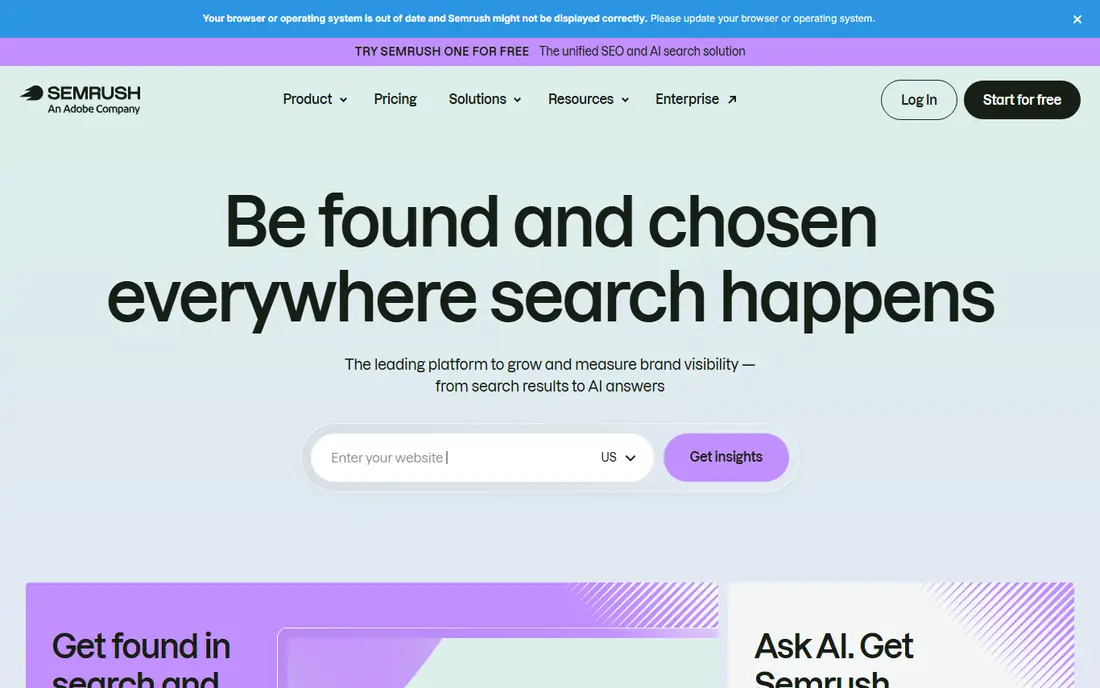
Semrush is the most complete platform on this list for a small business that wants one subscription. Keyword research, site audits, rank tracking, backlink checks, and competitor reports sit in one dashboard, and content tools help turn a keyword into a brief. That breadth saves time when one person handles SEO alongside other marketing work.
The cost and complexity are the trade-offs. The entry plan is not cheap, and new users can feel lost in the number of reports. Start with keyword research, one site audit, and rank tracking for your main pages, then add other tools only when you use them weekly.
- Keyword research, audits, rank tracking, and competitor tools in one place
- Content tools included
- Large keyword database
- Price rises fast for larger teams
- Interface can feel busy for beginners

Ahrefs is best known for backlink data. Its Site Explorer shows which sites link to a competitor, which pages earn the most links, and which keywords drive traffic. That information helps a small business find realistic link and content opportunities instead of guessing.
The starter plan is affordable, but limits apply and larger plans cost much more. Ahrefs also lacks some of the broader marketing tools in Semrush, such as paid advertising reports at the same depth. If links and competitors are your main focus, Ahrefs is our pick.
- Strong backlink index
- Clear competitor reports
- Useful free tools for basic checks
- Higher plans are costly
- Some features need a paid plan to use fully

Moz Pro is a friendly entry point for small teams that want professional SEO data without a steep learning curve. Keyword Explorer, rank tracking, site crawls, and on-page suggestions are easy to find, and reports are simple enough to share with a business owner. Domain Authority is a useful shorthand in client reports, even though it is not a Google ranking factor.
The backlink index is not as deep as Ahrefs, so link-focused teams may need a second tool. For a small business that needs solid keyword, audit, and ranking tools in a calm interface, Moz Pro is a good fit.
- Clear interface
- Keyword research and rank tracking
- Domain Authority metric in reports
- Backlink index is smaller than Ahrefs
- Some data updates feel slower
SE Ranking gives small businesses and freelancers most of the core SEO toolkit at a lower price than the big two. Rank tracking is accurate for daily checks, site audits catch common technical problems, and white-label reports help agencies share results with clients. The 2026 plan rebuild added AI search tracking on higher tiers, which matters as search results change.
The main limit is depth. The keyword and backlink databases are not as large as Semrush or Ahrefs, so very competitive markets may need a second source. For most local and niche businesses, SE Ranking covers the daily jobs well.
- Keyword research, audits, rank tracking, and backlink tools
- White-label reports
- Flexible plans
- Keyword database is smaller than Semrush
- Interface is functional rather than polished
Ubersuggest, from Neil Patel, is built for beginners and solo owners. Keyword ideas, search volume, difficulty scores, and content suggestions are presented in plain terms, and the site audit highlights basic technical issues. The free plan lets a new user test keyword research before paying.
Depth is the trade-off. Backlink analysis and competitor reports are lighter than the leaders, and agencies will outgrow it quickly. For a solo owner doing their own SEO on a tight budget, Ubersuggest is a sensible starting point.
- Simple keyword ideas and content suggestions
- Site audit basics
- Low entry price
- Backlink data is limited
- Reports are less detailed than Semrush or Ahrefs
Mangools is a set of five tools, with KWFinder as the best known, plus SERPChecker, SERPWatcher, LinkMiner, and SiteProfiler. The keyword tool is unusually clear, showing difficulty, trends, and related terms without a cluttered screen. That clarity helps bloggers and small site owners pick keywords they can actually rank for.
It is not a full marketing suite. There is no content optimization tool at the level of Surfer SEO, and backlink data is basic. Pair Mangools with a content tool or a local tool if those jobs matter, or use it alone for keyword-led content.
- Very clear keyword tool
- Rank tracking and site profiler
- Easy to learn
- Smaller feature set than full suites
- Backlink data is basic
Surfer SEO focuses on one job: helping a page rank by comparing it with top-ranking pages for a keyword. Its content editor gives word count, heading, and term guidance, and its audit tool shows what to change on an existing page. For teams that publish regularly, that guidance can lift pages faster than guesswork.
Surfer SEO is not a replacement for Semrush or Ahrefs. It does not provide the same keyword database, backlink index, or site audit depth. Budget for it alongside a research tool, and use it mainly for pages that already target a clear keyword.
- Data-driven content editor
- Clear on-page guidance
- Content audit tools
- Not a full SEO suite
- Needs a research tool alongside it for keywords and links
BrightLocal is the specialist for businesses that depend on local search. It tracks map and local pack rankings, checks listings across directories, audits Google Business Profile details, and helps manage reviews. For a plumber, dentist, restaurant, or shop, those local signals matter more than national keyword volume.
General SEO tools still matter for the website itself, so BrightLocal works best alongside Semrush, Moz Pro, or SE Ranking. If your customers are mainly local, start with BrightLocal plus one general suite, and check local rankings weekly.
- Local rank tracking
- Citation and listing checks
- Review management tools
- Not a general SEO suite
- Best for businesses with a local presence
How we picked these
We compared official pricing pages, feature lists, and public reviews for SEO platforms available in October 2026. We required a real platform with keyword research, rank tracking, or audit tools, and a plan suited to a small business budget. We favored platforms with a free plan or trial, clear pricing, and tools for local search where relevant. We used See website for prices that vary by plan or region rather than inventing a figure.
How to choose an SEO platform for a small business
Pick by the job you will do every week, not by the longest feature list. Most small businesses need keyword research, one site audit per month, rank tracking for a short list of pages, and, for local firms, listing checks.
Start with one suite and a short keyword list
Choose Semrush, Moz Pro, or SE Ranking as the main tool, then list 20 to 50 keywords that match real services and locations. Track those keywords, fix the audit issues that block crawling, and publish or improve one page per keyword group.
Add a specialist only when needed
Add Surfer SEO when content output grows, BrightLocal when local rankings matter, and Ahrefs when backlinks become a priority. Each extra tool should replace guesswork in a specific job, not just add another dashboard to check.
Check limits before you pay
Plans limit tracked keywords, crawled pages, and users. Check those limits against your site size and team size, and check whether a trial needs a card. A cheaper plan that covers your actual limits is better than a large plan you never use.
FAQ
Which SEO platform is best for a small business?
Semrush is the best all-round choice for most small businesses because it covers keywords, audits, rankings, and competitors in one place. Ahrefs is better for backlink work, Moz Pro is easier to learn, and SE Ranking offers strong value for tighter budgets.
Can I do SEO with free tools only?
Yes, for basics. Google Search Console, Google Business Profile, and free plans from Ahrefs, Ubersuggest, and Mangools cover keyword checks and site health at a basic level. Paid tools become useful when you need deeper keyword data, regular rank tracking, and competitor reports.
How much should a small business spend on SEO software?
That depends on site size and competition, but many small businesses start with one suite in the $29 to $139 per month range. Add local or content tools only when those jobs are regular work, and review the subscription every few months.
Is local SEO different from general SEO?
Yes. Local SEO focuses on Google Business Profile, map rankings, listings, and reviews for customers near you. General SEO focuses on website pages, keywords, and links. A local business usually needs both, which is why BrightLocal pairs well with a general suite.
How long does SEO take to show results?
SEO is usually a months-long effort, not a quick fix. Technical fixes can help fast, but ranking gains for competitive keywords often take several months of steady content, links, and site improvements. Track rankings and traffic monthly, not daily.