Best Marketing Planning Software in 2026: 8 Tools Compared
Compare the best marketing planning software for campaigns, budgets, and content calendars, with pricing, free plans, and planning tips for teams in 2026.

- Editor's choice
 Asana
Campaign planning and approvals
Starts at$10.99 per user per monthVisit asana.comFull review - Great alternative
 monday.com
Visual dashboards and boards
Starts at$9 per seat per monthVisit monday.comFull review - Also consider
 Wrike
Creative intake and proofing
Starts at$10 per user per monthVisit wrike.comFull review
TL;DR:
- Asana is the safest first pick for campaign planning, with timelines, approvals, and goals that marketing teams learn fast.
- monday.com suits visual planners who want boards and dashboards that leadership can read at a glance.
- Wrike adds creative intake and proofing for teams that handle many requests and assets.
- ClickUp and Airtable suit budget-conscious teams that want many features or database flexibility for less.
- Smartsheet, Teamwork.com, and Hive cover spreadsheet-style planning, agency client work, and all-in-one team chat.
Quick comparison
| Tool | Best for | Starts at | Free plan? | |
|---|---|---|---|---|
| Asana | Campaign planning and approvals | $10.99 per user per month | Yes | Visit |
| monday.com | Visual dashboards and boards | $9 per seat per month | Yes | Visit |
| Wrike | Creative intake and proofing | $10 per user per month | Yes | Visit |
 ClickUp | Budget teams wanting one workspace | $7 per user per month | Yes | Visit |
 Airtable | Content databases and workflows | $20 per user per month | Yes | Visit |
 Smartsheet | Spreadsheet-style planning | $9 per member per month | Free trial | Visit |
 Teamwork.com | Agencies and client work | See website | Yes | Visit |
 Hive | Chat, time tracking, and PM together | See website | Yes | Visit |
The best marketing planning software
Marketing planning is more than a task list. A good tool holds the annual plan, the campaign calendar, the budget, the content pipeline, and the approvals, so a launch does not depend on a spreadsheet that only one person understands. The eight tools below each handle that job from a different angle.
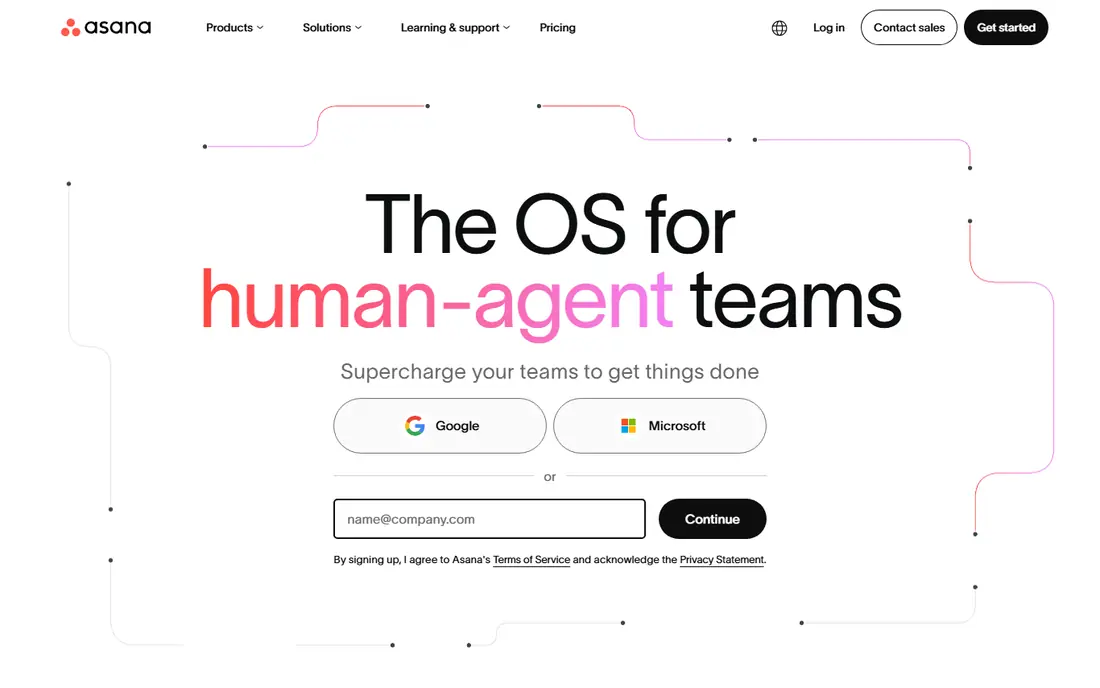
Asana is the safest first look for a marketing team that has outgrown spreadsheets and chat threads. A campaign becomes a project, each deliverable becomes a task with an owner and due date, and dependencies show who is blocking whom. Goals link campaigns to annual targets, so a quarterly review can show progress without a separate report.
Pricing starts with a free Personal plan for one or two people, then Starter at 10.99 dollars per user per month billed annually. Marketers who want portfolios, workload views, and approvals across several campaigns will end up on Advanced at 24.99 dollars, so budget for that tier rather than the entry price when you plan for a full team.
- Clean timeline and board views
- Goals and portfolios for annual planning
- Easy adoption for non-technical staff
- Free plan covers only one or two people
- Portfolio features sit on the Advanced tier
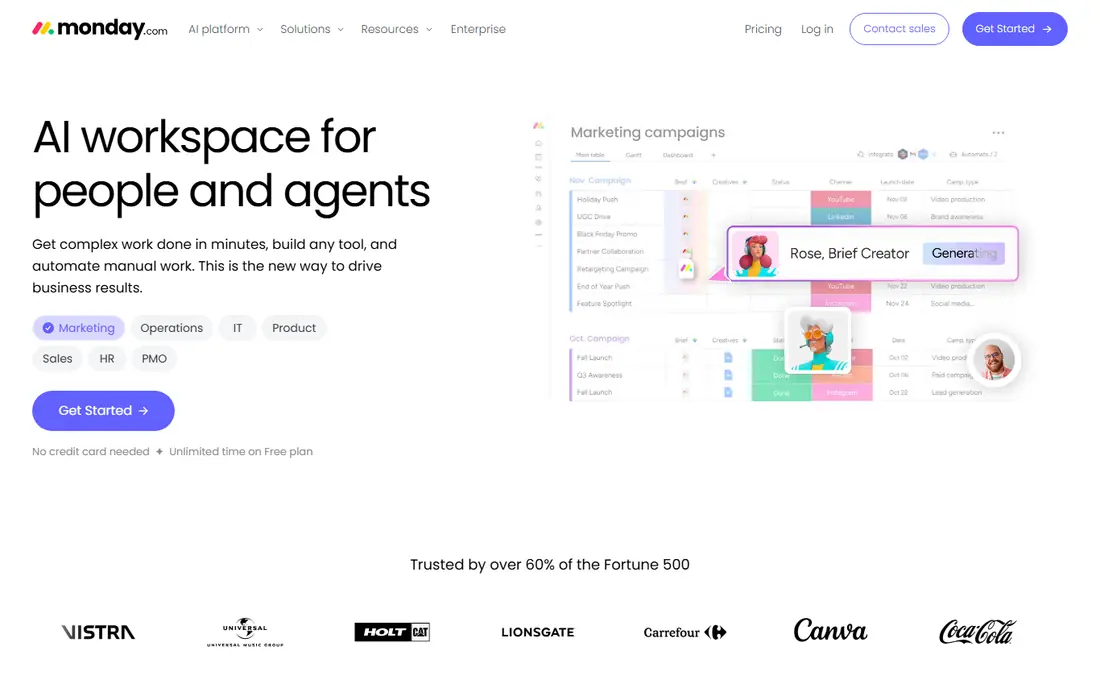
monday.com suits marketing teams that plan visually and report to leadership often. Campaign boards show status, owner, budget, and deadline in colour, and dashboards roll those boards into charts that a director can read without opening every project. That visual reporting is why many marketing managers prefer it to a plain task list.
Basic pricing starts at 9 dollars per seat per month billed annually, with a minimum seat count, and the free plan covers only two seats. Teams should price their real seat count, including part-time contributors who need access, before comparing monday.com with Asana on cost alone.
- Visual boards that are easy to scan
- Dashboards for leadership reporting
- Fast onboarding
- Seat bundles with a minimum
- Free plan covers only up to two seats

Wrike is the pick when marketing work arrives as requests, not just as tasks on a calendar. Intake forms turn a brief into a tracked job, proofing lets reviewers comment on an asset itself, and approvals move work forward without a chain of emails. That workflow matters for in-house creative teams and agencies that handle dozens of assets per campaign.
The Team plan starts at 10 dollars per user per month billed annually, with a free plan for small teams. Setup takes more planning than Asana or monday.com, and the most useful automation and reporting features sit higher, so Wrike fits mid-sized and larger marketing teams better than a three-person startup.
- Request forms for creative briefs
- Proofing and approvals on assets
- Strong reporting for larger teams
- Learning curve for smaller teams
- Advanced features sit on higher tiers
ClickUp gives marketing teams the most features per dollar on this list. Docs hold briefs, tasks hold deliverables, dashboards show campaign progress, and chat keeps discussion beside the work. The free plan allows unlimited members, which makes it easy to roll out to a whole team, including freelancers, without an immediate bill.
Unlimited pricing starts at 7 dollars per user per month billed annually, which undercuts most rivals. The catch is complexity. ClickUp rewards teams that keep setup simple and punishes teams that turn on every feature at once, so start with one campaign template and add features only when a real need appears.
- Docs, tasks, chat, and dashboards in one workspace
- Free plan with unlimited members
- Low paid price
- Setup can feel complex
- Breadth can slow teams that only need a calendar
Airtable suits marketing teams that plan in data, not just in tasks. A campaign table can link to a content table, an asset table, and a budget table, so changing a launch date updates every view that uses it. Calendar, kanban, and gallery views let the same data serve planners, writers, and designers without duplicate spreadsheets.
Team pricing starts at 20 dollars per user per month billed annually, with a free plan for small teams. That price and the need for careful database design make Airtable a better fit for content-heavy teams than for teams that only need a simple campaign calendar. When the data model is right, though, it replaces several spreadsheets at once.
- Linked tables for campaigns, content, and assets
- Calendar, kanban, and gallery views
- Strong automations
- Higher paid pricing
- Needs database design discipline
Smartsheet is for marketing teams that run the business in spreadsheets and want structure without losing the grid. Rows hold tasks, columns hold owners, dates, and budgets, and Gantt, calendar, and card views sit on top of the same data. That familiarity speeds adoption for teams that already plan in Excel or Google Sheets.
Pro pricing starts at 9 dollars per member per month billed annually, with a 30-day free trial instead of a free plan. Smartsheet lacks the visual polish of monday.com and the creative proofing of Wrike, but for operations-minded marketers who think in rows and formulas, it is a natural step up from a plain spreadsheet.
- Familiar spreadsheet interface with project controls
- Gantt and card views
- Strong reporting
- No free plan, only a trial
- Interface feels less visual than monday.com
Teamwork.com suits agencies and in-house teams that bill clients for marketing work. Projects hold tasks and milestones, time tracking records billable hours, and workload views show who is overloaded before a deadline slips. That combination of planning and commercial tracking is why agencies choose it over a pure task tool.
Pricing is listed on the vendor site and varies by plan, so we list it as See website rather than quoting a tier that may change. The free plan covers small teams getting started. If you do not bill clients, that extra commercial depth may be more than you need, but for agency work it is the point.
- Client projects, time tracking, and billing in one place
- Workload views
- Free plan for small teams
- Pricing varies by plan and needs checking
- Broader scope than a pure campaign planner
Hive is the all-in-one pick for marketing teams that want chat, time tracking, and project management without three separate apps. Projects offer list, board, calendar, and Gantt views, built-in chat keeps discussion beside tasks, and time tracking shows where hours actually go. That single workspace appeals to small teams tired of switching tools.
Pricing is listed on the vendor site, so check the current plans before comparing Hive with ClickUp on cost. The integration library is smaller than Asana, which may matter for teams tied to specific marketing tools. For a team that wants one home for planning, discussion, and time, Hive is worth a trial.
- Projects, chat, and time tracking in one workspace
- Many project views
- Free plan available
- Pricing needs checking on the vendor site
- Smaller integration library than Asana
How we picked these
We compared official pricing pages, feature pages, and public reviews for tools that marketing teams use for campaign, content, and budget planning in October 2026. We favoured tools with a free plan or trial, a current product, and a clear marketing strength, such as approvals, proofing, content databases, or agency billing. We noted free plan limits and seat minimums, because those details change the real cost for small marketing teams.
How to plan marketing work in one tool
Start with the annual plan, not with a single campaign. Map quarters, major launches, and always-on content first, then break each launch into deliverables with owners and dates. A tool that only holds this week's tasks will not help you spot a clash between two launches in the same month.
Next, add budget and approvals to the same workflow. A campaign task should show its budget, its asset, and its approver, so finance and legal do not become a separate email chain. Finally, run a real campaign in your top two tools for a full cycle, from brief to report, and pick the one your team actually updates when work gets busy.
FAQ
What is the best marketing planning software for a small team?
Asana and ClickUp are strong small-team picks, with Asana offering clearer structure and ClickUp offering more features for less money. Trello-style simplicity may suit a very small team, but a growing team will outgrow a board-only tool fast.
Which marketing planning tool is best for agencies?
Teamwork.com suits agencies that need client projects, time tracking, and billing together. Wrike also fits agencies with heavy creative intake and proofing needs, while Asana works well for agencies that mainly need clear campaign timelines.
Is there free marketing planning software?
Yes, Asana, monday.com, ClickUp, Airtable, and Hive all offer free plans, though most limit team size or features. A free plan is enough to test a tool on one campaign, but a full team usually needs a paid plan for portfolios, workload, and advanced reporting.
What is the difference between marketing planning software and project management software?
Marketing planning software adds campaign calendars, content pipelines, budgets, and approvals on top of general project management. General project tools can handle marketing work, but they may lack proofing, intake forms, or content databases that marketing teams use daily.
How much does marketing planning software cost?
Entry paid plans on this list range from about 7 to 20 dollars per user per month billed annually, with higher tiers for portfolios, workload, and advanced reporting. Always price the tier that includes the features you need, and check seat minimums, since those change the total bill.