Best LLM SEO Analysis Software in 2026: 8 Tools Compared
Compare the best LLM SEO analysis software for 2026, from Profound and Peec AI to Otterly and Scrunch, with engine coverage and pricing notes for SEO teams.

- Editor's choice
 Profound
Enterprise LLM visibility
Starts atSee websiteVisit tryprofound.comFull review - Great alternative
 Peec AI
Agencies and multi-client teams
Starts atSee websiteVisit peec.aiFull review - Also consider
 Otterly AI
Small teams on a budget
Starts at$29 per monthVisit otterly.aiFull review
TL;DR:
- Profound offers the broadest engine coverage, but its pricing is now quote-based for larger plans.
- Otterly AI is the cheapest credible entry point for small teams that want regular LLM visibility checks.
- Peec AI suits agencies with multiple clients, thanks to multi-client workspaces and unlimited seats on some plans.
- Scrunch AI stands out for citation analysis and AI crawler data, not just mention tracking.
- Engine coverage varies by plan, so confirm which engines are included at the price you will actually pay.
Quick comparison
| Tool | Best for | Starts at | Free plan? | |
|---|---|---|---|---|
| Profound | Enterprise LLM visibility | See website | Free trial | Visit |
| Peec AI | Agencies and multi-client teams | See website | Free trial | Visit |
| Otterly AI | Small teams on a budget | $29 per month | Free trial | Visit |
 Scrunch AI | Citation and crawler analysis | See website | Free trial | Visit |
 AthenaHQ | Mid-market teams wanting actions | See website | Free trial | Visit |
 Semrush AI Toolkit | Existing Semrush users | See website | Free trial | Visit |
 Ahrefs Brand Radar | Existing Ahrefs users | See website | No | Visit |
 ZipTie | Simple small-team tracking | See website | Free trial | Visit |
The best LLM SEO analysis software
We compared official feature pages, pricing pages, and public reviews, and we focused on which AI engines each tool tracks, how it reports citations and competitors, and whether it helps you act on the findings.
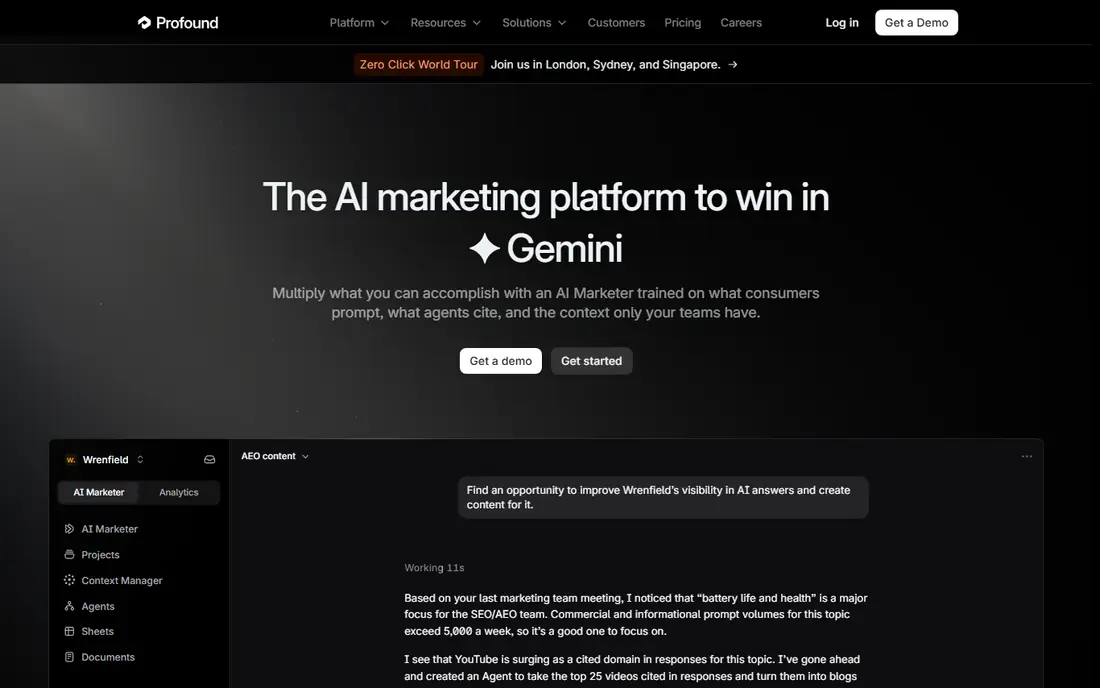
Profound is the most complete LLM visibility platform on this list, and it is the one larger brands tend to shortlist first. It tracks visibility across major answer engines, including ChatGPT, Perplexity, Google AI Overviews and AI Mode, Gemini, and others depending on plan, and it connects that data to competitor benchmarking and citation analysis. A content layer can then suggest optimizations based on what the tracking reveals.
The catch is price and access. Profound has moved toward trial plus custom enterprise pricing, so small teams cannot simply pick a low monthly plan and start. If you run a serious program across many prompts and engines, and you need historical data and broad coverage, Profound is still the benchmark. Smaller teams should start cheaper and upgrade later.
- Tracks many major AI answer engines
- Citation and competitor benchmarking
- Content tools based on tracking data
- Pricing is quote-based on larger plans
- Entry trial is limited in prompts and engines

Peec AI is built with agencies in mind. You can manage multiple clients in separate workspaces, track prompts daily, and compare your visibility with competitors over time. Unlimited seats on some plans make it easier to share dashboards with clients and colleagues without paying per person.
The limit to watch is model coverage per plan. Self-serve plans let you pick a set number of models, with broader coverage on enterprise plans, so check that your key engines are included before you buy. For agencies that need tidy client reporting, Peec AI is a strong, practical choice.
- Multi-client workspaces for agencies
- Clean prompt and visibility analytics
- Unlimited seats on some plans
- Self-serve plans cover a limited number of models
- Pricing is not always shown to logged-out visitors
Otterly AI is the best entry point for teams that want real LLM tracking without an enterprise budget. The entry plan covers core engines and a set number of prompts, and its citation reports show which sources AI answers link to. Pricing is transparent compared with several rivals, which makes budgeting easier.
Coverage is the trade-off. Extra engines such as Claude are add-ons, and refresh frequency is not daily on every plan. If you need daily tracking across every engine, you will pay more or need a larger tool. For a first LLM visibility program, Otterly AI gives you useful data at a fair price.
- Low entry price
- Tracks major engines including ChatGPT, AI Overviews, and Perplexity
- Clear citation reports
- Broader engine coverage needs paid add-ons
- Refresh cycles are weekly on some plans
Scrunch AI goes deeper than a simple mention count. It shows which sources AI answers cite, where competitors win citations, and how AI crawlers interact with your site. Persona-based prompt testing lets you check how different audience types might surface your brand, which is useful for content planning.
That depth costs more and needs more setup. Scrunch is not the cheapest way to check whether ChatGPT mentions you, and small teams may find the reporting more detailed than they need. For technical and content teams that want to fix citation gaps, not just watch them, Scrunch is a strong pick.
- Detailed citation and source analysis
- AI crawler analytics
- Persona-based prompt testing
- Entry price is higher than budget trackers
- Setup takes more thought than a simple mention tracker
AthenaHQ positions itself between budget trackers and enterprise platforms. It tracks a broad set of engines, links AI visibility to traffic data, and prioritizes fixes that should improve entity signals and citations. That action layer matters, since tracking alone does not improve rankings in AI answers.
Pricing is the main barrier. The entry tier is well above budget tools, and credit-based plans need watching so you do not run out mid-month. Mid-market teams that want both measurement and a clear fix list will find AthenaHQ worth the cost, while smaller teams may prefer Otterly AI first.
- Broad engine coverage including Claude
- Analytics tied to traffic and attribution
- Action recommendations
- Entry price is high for small teams
- Credit-based pricing needs careful monitoring
Semrush AI Toolkit is honest about what it is: a general SEO platform with a dedicated AI visibility feature, rather than a tool built only for LLM tracking. That is a strength if you already pay for Semrush, since you can check AI Overviews, ChatGPT, and other engines alongside keyword rankings, backlinks, and site audits in one place.
The limit is focus. Dedicated trackers often offer deeper prompt, citation, and crawler detail than an add-on, and Semrush pricing is per domain, so multi-brand teams should check the total cost. If Semrush is already your SEO home, adding the AI Toolkit is the simplest way to start LLM analysis.
- AI visibility inside a familiar SEO suite
- Citation gap analysis against Google rankings
- No separate tool to learn
- It is a general SEO tool with a documented AI visibility add-on, not a dedicated LLM tracker
- Priced per domain
Ahrefs Brand Radar follows a similar pattern to Semrush: a strong general SEO platform with an AI visibility add-on. It tracks brand mentions in AI answers, including ChatGPT, AI Overviews, and Perplexity, and it pairs that data with the backlink and keyword data Ahrefs is known for. That combination helps teams see whether AI mentions line up with search authority.
Cost is the catch, since Brand Radar is an add-on per index on top of a base Ahrefs plan, which puts it out of reach for very small teams. For teams already paying for Ahrefs, though, it is a natural way to add LLM analysis without adopting another platform.
- AI mention data alongside backlink and ranking data
- Prompts grounded in real query data
- Trusted SEO dataset
- It is a general SEO tool with a documented AI feature, not a dedicated LLM tracker
- Add-on cost sits on top of a base plan
ZipTie appeals to small teams that want LLM tracking without a complex platform. Setup is quick, dashboards are easy to read, and it covers the major engines most teams care about first. That simplicity makes it a good second choice behind Otterly AI for budget buyers.
The trade-off is depth. ZipTie does not match the citation, crawler, and content features of larger tools, and public documentation is thinner. If you need basic, regular visibility checks and a clean report, ZipTie delivers. If you need deep citation repair workflows, look at Scrunch or Profound instead.
- Simple setup and clear dashboards
- Tracks major AI engines
- Lower price than enterprise tools
- Fewer advanced citation and crawler features than Scrunch or Profound
- Smaller company with less public documentation
How we picked these
We compared official feature pages, pricing pages, and public reviews, and we only included tools with a documented LLM or AI search visibility feature. General SEO tools are labeled as such in their write-ups, and we did not pad the list with unrelated rank trackers. We favored tools available in October 2026 with clear engine coverage, citation reporting, and competitor comparison. We did not claim hands-on testing, and we treated pricing as changeable, since several vendors have changed plans during 2026.
How to use LLM SEO analysis well
Pick prompts that match real buyer questions
Track prompts your buyers actually ask, not just your brand name. Include comparison, how-to, and best-option questions, since those are where AI answers shape decisions. Review the prompt list monthly and replace prompts that no longer reflect search demand.
Fix citations, not just mentions
A mention without a citation rarely drives traffic. Check which sources AI answers cite, improve those pages with clear facts, structured data, and direct answers, and earn links from sources AI systems already trust. Repeat the check after publishing to see whether citations move.
Compare with competitors every month
LLM visibility is relative: gaining mentions matters less if competitors gain faster. Compare your share of answers, citation sources, and prompt coverage with two or three direct rivals, and focus content work on prompts where a rival wins consistently.
FAQ
What is LLM SEO analysis software?
It tracks how large language models and AI answer engines mention, cite, and recommend your brand in response to prompts. Unlike classic rank tracking, it measures presence inside AI-generated answers, not just positions in a list of links.
Which AI engines should a tool track?
At minimum, check ChatGPT, Google AI Overviews and AI Mode, Perplexity, and Gemini. Claude, Copilot, and Grok matter for some audiences, so confirm they are included at your plan level, not just on the vendor homepage.
Is a dedicated LLM tracker better than a Semrush or Ahrefs add-on?
A dedicated tracker usually offers deeper prompt, citation, and crawler data. An add-on is better if you already use that SEO suite and want AI data alongside rankings and backlinks without learning a new tool.
How much does LLM SEO analysis software cost?
Entry prices range from about $29 per month for budget trackers to several hundred dollars per month for mid-market tools, with enterprise platforms priced by quote. Check prompt limits, engine coverage, and refresh frequency, since those drive the real cost.
Can LLM tools improve my AI visibility?
They can show where you are missing and which sources win citations, but they do not change AI answers by themselves. You still need better content, clearer facts, structured data, and trusted third-party mentions to earn citations.
How often should I check LLM visibility?
Weekly checks suit most teams, with monthly competitor reviews. Daily tracking helps during launches or reputation issues, but weekly trends are usually enough to guide content work without creating noise.