Best Lead Generation Tools for Small Businesses in 2026: 9 Tools Compared
Compare the best lead generation tools for small businesses in 2026, from HubSpot and Apollo to Lusha, Hunter and OptinMonster, with pricing and limits.

- Editor's choice
 HubSpot
Inbound leads and CRM
Starts atSee websiteVisit hubspot.comFull review - Great alternative
 Apollo.io
Outbound prospecting
Starts at$49 per monthVisit apollo.ioFull review - Also consider
 Lusha
Quick contact lookup
Starts atSee websiteVisit lusha.comFull review
TL;DR:
- HubSpot suits inbound lead capture and CRM follow-up, while Apollo suits outbound prospecting with data and sequences in one tool.
- Lusha and Hunter suit quick contact lookup on a small budget, but credit limits matter once you build larger lists.
- Leadfeeder suits website visitor identification, while OptinMonster suits turning existing site traffic into leads.
- Credit-based pricing can look cheap until you scale, so track cost per verified lead, not only the monthly plan price.
- Always follow consent, privacy and email rules for your market, because purchased or scraped contact data carries compliance risk.
Quick comparison
| Tool | Best for | Starts at | Free plan? | |
|---|---|---|---|---|
| HubSpot | Inbound leads and CRM | See website | Yes | Visit |
| Apollo.io | Outbound prospecting | $49 per month | Yes | Visit |
| Lusha | Quick contact lookup | See website | Yes | Visit |
 Hunter | Email finding and verification | $34 per month | Yes | Visit |
 Leadfeeder | Website visitor identification | See website | Yes | Visit |
 OptinMonster | Website lead capture | See website | No | Visit |
 Pipedrive | Pipeline and lead tracking | See website | Free trial | Visit |
 Zoho CRM | Affordable small business CRM | See website | Yes | Visit |
 Freshsales | CRM with lead scoring | See website | Yes | Visit |
The best lead generation tools for small businesses
We compared lead generation tools that small businesses can actually run without a large sales team in October 2026. The list covers inbound capture, outbound data, website visitor identification and CRM follow-up, because lead generation fails when capture, data and follow-up sit in separate silos. Prices and credit limits change often, so confirm the current plan before you buy.
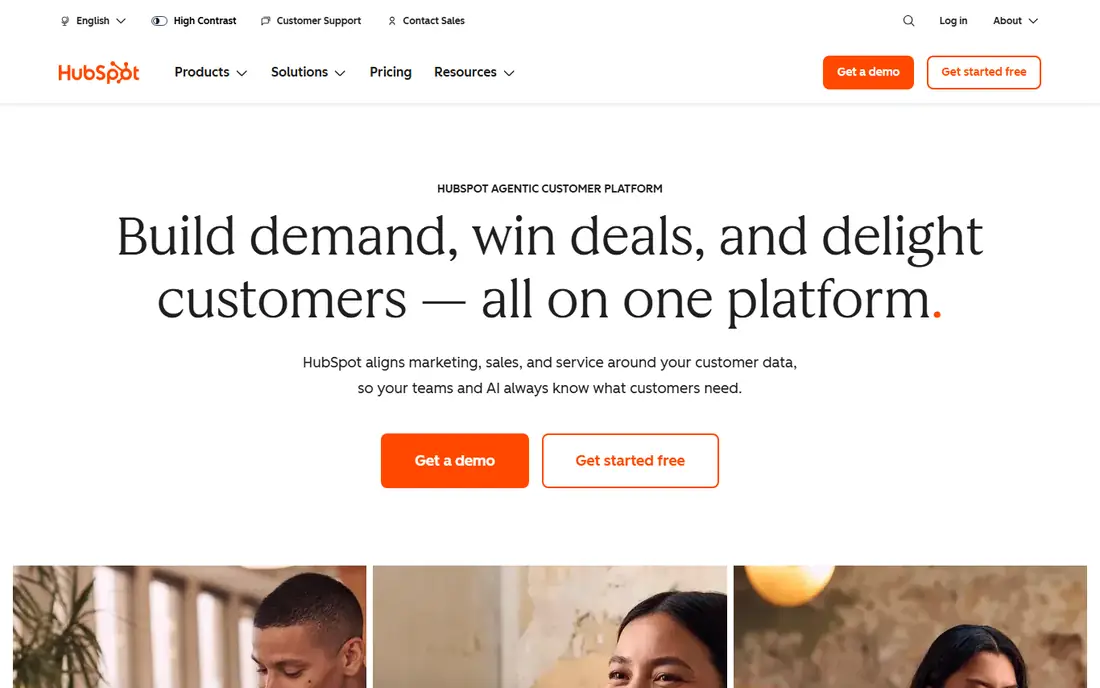
HubSpot is the most complete starting point for small businesses that generate leads from their own website, content and ads. The free CRM includes contact records, forms, live chat and deal tracking, so a new lead does not sit in a spreadsheet. As volume grows, paid hubs add email marketing, automation and reporting without forcing a move to a new CRM.
The cost curve is the watch point. Free tools are genuinely useful, but paid marketing tiers can rise faster than a small budget expects, especially with more contacts and seats. Setup also takes thought, because forms, pipelines and lead stages need to match how your team actually sells. For inbound-led businesses, HubSpot is still the safest foundation on this list.
- Free CRM with forms, live chat and lead tracking
- Strong marketing and sales integration
- Scalable as a team grows
- Paid Marketing Hub tiers rise quickly
- Setup takes time
- Some advanced features need higher plans
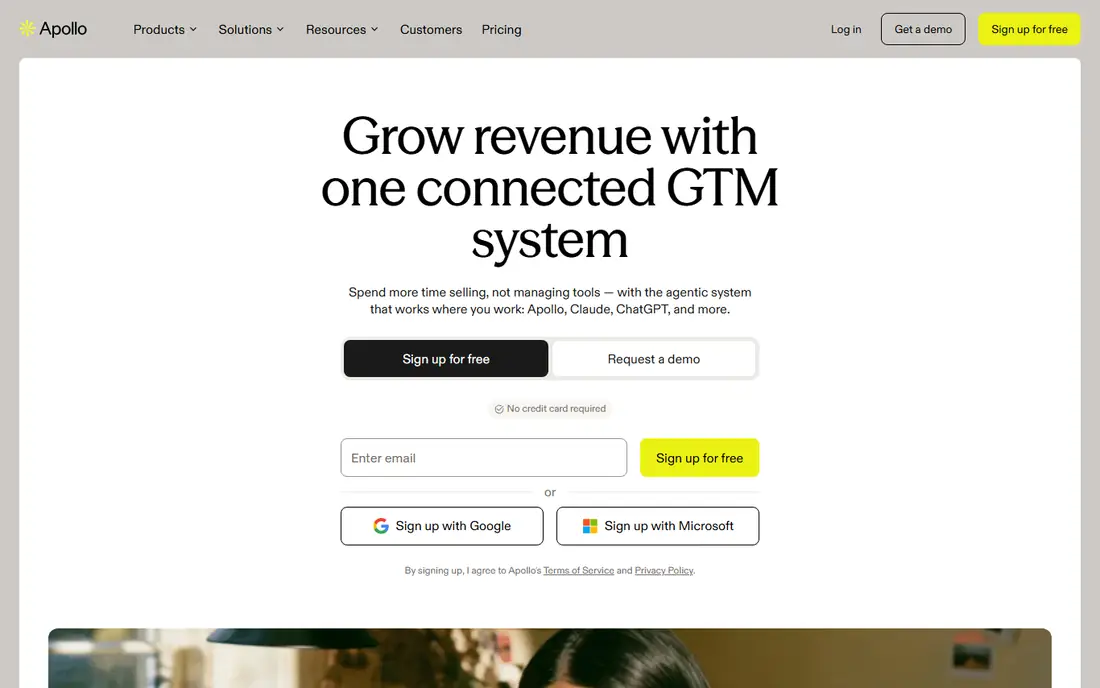
Apollo.io combines a B2B database with prospecting sequences, which makes it useful for small teams that do outbound sales without buying three separate tools. You can filter by role, industry, company size and technology, build a list, verify contacts and run follow-up sequences from the same workspace. The free tier lets a small team test filters before paying.
Credits are the limit. Free and low plans include a set number of credits, and larger lists burn through them quickly. Data accuracy also varies, so verify key contacts before a high-value outreach. Used carefully, with consent and email rules in mind, Apollo is strong value for outbound-led small businesses.
- Large B2B contact database
- Filters, sequences and CRM sync in one tool
- Free tier for small tests
- Credit limits shape real volume
- Data accuracy varies by record
- Outbound email needs careful compliance

Lusha suits sellers who already know who they want to reach and need a verified email or phone number quickly. The browser extension shows contact details while you browse LinkedIn or company sites, which saves time compared with manual research. For solo sellers and small teams, that speed is the main appeal.
It is a lookup tool, not a full CRM or sequence platform, so you still need a place to track follow-up. Credit limits also shape how many lookups you can do each month, and phone coverage varies by country. Pair Lusha with HubSpot, Pipedrive or Zoho CRM, and verify contacts before a campaign, rather than treating every result as ready to email.
- Fast LinkedIn and web lookup
- Direct emails and phones for many contacts
- Simple browser extension
- Credit limits on free and low plans
- Phone data varies by market
- Not a full outreach platform by itself
Hunter is the simplest tool on this list for one job: finding and verifying professional email addresses from a company domain. Enter a domain, see likely email patterns and verified addresses, and check a list before you send. That focus makes it easy to learn and cheap to test for small outreach campaigns.
The limit is scope. Hunter does not offer the deep company database, phone data or full sequences of Apollo, and free searches run out quickly. Verification also checks deliverability, not permission to email, so compliance still rests with you. For email-first small businesses on a budget, Hunter is a dependable, narrow tool.
- Domain search for company emails
- Email verification
- Simple campaigns for small outreach
- Email-only focus
- Free searches are limited
- Verification does not guarantee a reply or consent
Leadfeeder, now part of Dealfront in some markets, turns anonymous website traffic into company-level leads. When a business visits your site, Leadfeeder can match the visit to a company, show which pages were viewed, and push that lead into your CRM. That warm signal is often more valuable than a cold list, because the visitor already showed interest.
Identification is usually at company level, not at the named person level, so sales still need to find the right contact. Small sites with low traffic will also see fewer matches, which limits value. Leadfeeder suits B2B small businesses with steady website traffic and a sales follow-up process, not businesses that rely only on cold outreach.
- Identifies companies visiting your website
- Integrates with CRMs
- Helps sales follow up warm traffic
- Identification is company-level, not individual in many cases
- Smaller sites get fewer matches
- Paid plans start higher
OptinMonster helps small businesses convert existing website visitors into leads. You can build popups, slide-ins, floating bars and inline forms, target them by page, exit intent or behaviour, and test offers to see what converts. For sites with steady traffic but weak capture, that testing loop can lift lead volume without buying more ads.
It needs traffic to work. A new site with few visitors will gain little from even the best popup, and aggressive popups can harm trust if overused. There is also no standing free plan in most cases, so budget for a paid tier. Use OptinMonster when you already have visitors and a clear lead magnet, and keep forms short and honest.
- Popups, slide-ins and forms for lead capture
- Targeting by behaviour and page
- A/B testing for offers
- No free plan in most cases
- Popup overuse can annoy visitors
- Needs traffic to be useful
Pipedrive is a CRM first, but its pipeline view helps small teams turn leads into deals without losing follow-ups. Leads enter through forms, chatbots or imports, then move through clear stages with activities and reminders. That visibility matters, because many small businesses lose leads through slow follow-up rather than through a lack of leads.
Lead capture add-ons, such as LeadBooster, add cost, and there is no standing free tier beyond a trial. Pipedrive suits small sales teams who already generate leads and need a simple, visual way to work them. If you need inbound marketing at scale, HubSpot may fit better. If you need pipeline discipline, Pipedrive is easier to adopt.
- Clear visual pipeline
- LeadBooster add-ons for capture and chat
- Easy for small sales teams
- Lead generation features often need add-ons
- No free tier beyond a trial
- Reporting depth varies by plan
Zoho CRM offers a free tier for very small teams, with lead capture, workflows and scoring at a price that undercuts many rivals. Forms, web-to-lead capture and automation help a small business collect and route leads without a separate tool for each step. Integration with other Zoho apps, such as email and books, is a bonus for teams already in that ecosystem.
The interface can feel busy, and customising pipelines, fields and workflows takes time. Paid tiers open up deeper automation and analytics, so the free tier is a starting point rather than a full growth platform. For budget-conscious small businesses that want CRM plus lead capture in one place, Zoho CRM is a strong, if less polished, alternative to HubSpot.
- Free tier for small teams
- Forms, workflows and lead scoring
- Wide Zoho app integration
- Interface can feel busy
- Setup and customisation take time
- Best features need paid tiers
Freshsales, from Freshworks, combines CRM with built-in phone, email and chat, so small teams can contact leads without stitching together several tools. Lead scoring helps prioritise follow-up, and the interface is approachable for teams new to CRM. That all-in-one contact approach suits service businesses that respond quickly to enquiries.
Free access is limited, and AI scoring and deeper automation sit on paid plans. The app marketplace is also smaller than HubSpot, which matters if you rely on niche integrations. For small teams that want calling and email inside the CRM, Freshsales is a practical trial. For deep marketing automation, HubSpot or Zoho may offer more room to grow.
- Built-in phone, email and chat
- AI lead scoring on higher plans
- Simple setup for small teams
- Free tier is limited
- Advanced scoring and automation need paid plans
- Smaller marketplace than HubSpot
How we picked these
We compared official feature and pricing pages, free tier terms and public documentation in October 2026, and we required a tool that a small business can run without an enterprise contract. We covered inbound capture, outbound data, visitor identification and CRM follow-up, because a lead tool that only finds names does not close deals. Tools with no clear small business plan, or no official homepage, were left out.
How to choose a lead tool without wasting budget
Start from where leads already come from
If leads come from your website, start with HubSpot, OptinMonster or Zoho CRM. If leads come from outbound prospecting, start with Apollo, Lusha or Hunter. If leads come from website visits you cannot identify, test Leadfeeder. Buying an outbound database when your problem is website capture wastes money.
Track cost per qualified lead, not cost per credit
Credits, seats and contact limits all hide the real cost. Track how many credits become verified contacts, how many contacts become conversations, and how many conversations become customers. A cheap credit that never replies is more expensive than a dearer lead that books a call.
Fix follow-up before you buy more leads
Set a response time, a pipeline stage for every lead and a follow-up sequence before you scale volume. A CRM such as HubSpot, Pipedrive, Zoho CRM or Freshsales helps here, even on a free or low tier. More leads without follow-up only create a larger pile of missed chances.
FAQ
What are the best b2b lead generation companies for small businesses?
Apollo.io, Lusha and Hunter are the most practical B2B data options for small teams, because they offer self-serve plans and free tiers. Larger enterprise data providers exist, but their contracts and prices rarely fit a small business budget.
What is the best lead generation software for a small team?
HubSpot suits inbound teams that need CRM plus marketing in one place, while Apollo suits outbound teams that need data plus sequences. Pipedrive, Zoho CRM and Freshsales suit teams that mainly need pipeline discipline and follow-up.
What are the best lead generation services for website traffic?
OptinMonster suits capture from existing traffic, with forms, popups and testing. Leadfeeder suits identifying companies behind that traffic, so sales can follow up warm visits rather than cold lists.
What are the best tools for lead generation on a budget?
Hunter and Lusha offer low-cost lookup starting points, and HubSpot and Zoho CRM offer free CRM tiers. Start with one capture tool and one data tool, track cost per qualified lead, and add tools only when a clear gap appears.
How do I avoid bad lead data?
Verify emails before sending, check a sample of records by hand, and remove bounces and wrong roles quickly. Treat any database as a starting point, not as verified truth, and follow consent and privacy rules for email and phone outreach.
Should a small business buy leads or generate its own?
Own generation through content, referrals, website capture and targeted outbound usually builds better long-term value than buying a generic list. Bought lists often contain stale data and compliance risk, while own leads arrive with context and intent.