Best Email Outreach Software in 2026: 8 Tools Compared
Compare the best email outreach software in 2026, from Instantly and Smartlead to Apollo and Lemlist, with pricing, deliverability, and fit. See our top pick.

- Editor's choice
 Instantly
High-volume cold email
Starts at$47 per monthVisit instantly.aiFull review - Great alternative
 Smartlead
Agencies with many inboxes
Starts at$39 per monthVisit smartlead.aiFull review - Also consider
 Apollo
Data plus outreach in one place
Starts atFreeVisit apollo.ioFull review
TL;DR:
- Email outreach tools differ mainly in billing: flat volume plans suit solo senders, while per-seat plans suit larger sales teams.
- Instantly and Smartlead suit high-volume cold email with unlimited inboxes, while Apollo suits teams that also need lead data.
- Lemlist suits multichannel sequences that mix email with LinkedIn steps.
- Deliverability depends more on list quality, warmup, and domain setup than on any single tool.
- Follow anti-spam law, honour opt-outs fast, and only email business contacts with a lawful basis.
Quick comparison
| Tool | Best for | Starts at | Free plan? | |
|---|---|---|---|---|
| Instantly | High-volume cold email | $47 per month | No | Visit |
| Smartlead | Agencies with many inboxes | $39 per month | No | Visit |
| Apollo | Data plus outreach in one place | Free | Yes | Visit |
 Lemlist | Email plus LinkedIn sequences | $69 per month | No | Visit |
 Reply.io | SDR teams, multichannel | $59 per month | Free trial | Visit |
 Woodpecker | Small teams, careful sending | $35 per month | Free trial | Visit |
 Saleshandy | Budget cold email | $41 per month | Free trial | Visit |
 Snov.io | Data-heavy, low-volume outreach | $39 per month | Yes | Visit |
The best email outreach software
Email outreach software sends sequences, tracks replies, and manages follow-ups. The best pick depends on team size, inbox count, and whether you already have lead data.

Instantly is built for senders who run many inboxes at volume. Flat pricing means adding inboxes does not multiply the bill in the same way as per-seat tools, and the built-in warmup network helps new domains build sending reputation. The unified inbox, called Unibox, keeps replies from many inboxes in one place.
The base plan is not the whole stack. Lead data, verification, and CRM add-ons cost extra, and the entry price varies by billing period, so check the current pricing page before you budget. For solo founders and agencies sending at scale, Instantly remains a strong, focused pick.
- Flat pricing with unlimited inboxes on paid plans
- Built-in warmup
- Unified inbox for replies
- Lead database and CRM features cost extra
- Pricing tiers changed often in 2026
- Needs care with domain setup
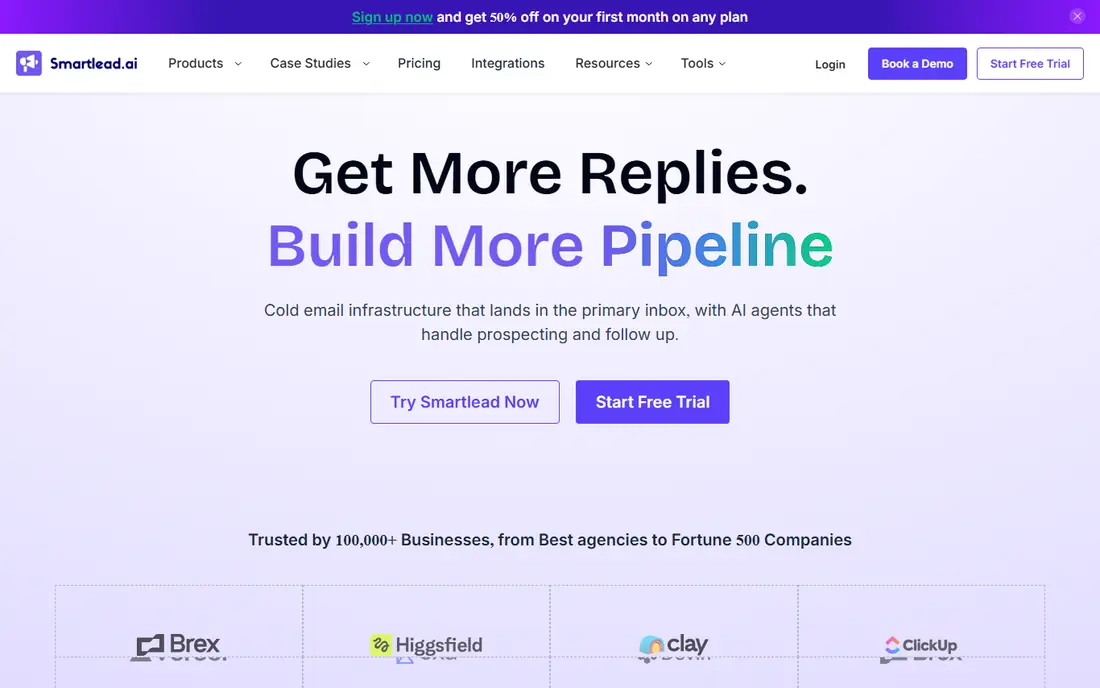
Smartlead competes directly with Instantly for agencies and high-volume senders. It offers unlimited inboxes on flat plans, warmup, and a master inbox for replies across clients. Agency features, including client management and white-label options on higher plans, suit teams that run outreach for others.
Real costs rise with add-ons for mailboxes, servers, and delivery services, so a small sticker price can grow. For an agency managing many client domains, the flat model still beats per-seat pricing. For a solo sender with one domain, compare it with Instantly on total features, not just entry price.
- Flat pricing with unlimited inboxes
- Deliverability tools and master inbox
- Agency and white-label options
- Add-ons such as extra mailboxes and delivery services raise the total
- Setup takes care for large teams

Apollo is the all-in-one pick: find contacts, verify them, and run sequences without a second tool. The free plan lets a solo founder test data quality and sending before paying, and the database covers many B2B roles and companies. For teams that lack a lead list, that combination saves a separate data subscription.
Per-seat billing is the trade. A team of five pays five seats, and credit overages for contacts and enrichment add up. Apollo is best for teams that value data and outreach in one place and can manage credits. If you already have clean lists, a flat sender may be cheaper.
- Large contact database built in
- Free plan for testing
- Sequences, enrichment, and CRM links in one tool
- Per-seat pricing grows with team size
- Credits limit data use
- Advanced plans cost far more than entry
Lemlist suits teams that want email and LinkedIn in one sequence. You can start with an email, add a LinkedIn visit or message, and keep follow-ups in the same flow. Personalisation features, including custom images and landing pages, help messages feel less templated.
Pricing is per user, and extra senders add cost, so a larger team will pay more than on a flat plan. The entry plan also lacks some multichannel depth, so check which tier your sequence needs. For SDR teams that live on both email and LinkedIn, Lemlist is a natural fit.
- Multichannel sequences with LinkedIn steps
- Personalisation with images and video
- Built-in warmup tool
- Per-user pricing
- Extra senders cost more
- Best value needs the higher multichannel plan
Reply.io is a full sales engagement platform, not just a cold email sender. It combines email, LinkedIn, calls, and SMS in one sequence, with reporting that shows which step drives replies. CRM links to Salesforce and HubSpot suit teams that need pipeline data to stay in sync.
That breadth costs more and feels heavy for a solo founder who only needs email. Per-user pricing also grows with headcount. For an SDR team that runs true multichannel plays and needs reporting, Reply.io is a solid, professional pick.
- Email, calls, LinkedIn, and SMS in one sequence
- Strong reporting
- CRM integrations
- Per-user pricing
- Add-ons at scale
- Can feel heavy for a solo sender
Woodpecker suits small teams that send carefully and want clear pricing. It prices by prospects contacted, rather than by seats alone, and it puts warmup, bounce handling, and deliverability front and centre. The interface is simpler than enterprise platforms, which helps a small team get started fast.
Multichannel work is thinner, with LinkedIn as an add-on rather than a core strength. Very high-volume agencies may also prefer a flat unlimited-inbox tool. For a small team that values clean sending and honest deliverability tools, Woodpecker is a calm, dependable choice.
- Clear per-prospect pricing
- Warmup and deliverability focus
- Simple interface for small teams
- Limited multichannel depth
- LinkedIn features need an add-on
- Less suited to very high volume
Saleshandy is a budget-friendly sender for teams that need the basics done well. Sequences, tracking, and reply handling are straightforward, and lead finder and verification options help teams without a separate data tool. Entry pricing is lower than many rivals, which suits freelancers and small agencies.
Advanced agency, multichannel, and reporting features are thinner than on Instantly, Smartlead, or Reply.io. Verification also costs extra at volume. For a small team on a tight budget that mainly needs email, Saleshandy offers good value. For complex multichannel plays, look at Lemlist or Reply.io.
- Low entry price
- Lead finder and verification options
- Simple sequences for small teams
- Fewer advanced agency features
- Verification add-on costs extra
- Smaller ecosystem than Apollo
Snov.io suits teams that need data and outreach together but send at modest volume. Its finder and verifier help build lists, and drip campaigns handle follow-ups without a separate tool. A free plan covers small tests, which is useful for freelancers and founders.
Credit pricing is the catch. Each contact, verification, and email can draw credits, so a large list costs more than the entry price suggests. Sending volume is also lower than on flat unlimited-inbox tools. For data-heavy, low-volume outreach, Snov.io is a practical all-in-one. For high volume, pair a data tool with Instantly or Smartlead.
- Email finder and verifier built in
- Free plan for small lists
- Drip campaigns and CRM links
- Credit-based pricing can confuse budgeting
- Sending volume lower than flat tools
- Interface feels busy
How we picked these
We compared official pricing pages, feature docs, and independent pricing checks from August to October 2026 for outreach tools that were active and sold in the United States. We required real sequence sending, reply tracking, and deliverability help, not just a contact database. We favoured tools with clear billing models, warmup or deliverability features, and a real user base.
We did not invent total costs, since add-ons, seats, and credits change the bill. Entry prices shown are monthly billing figures where available, and yearly billing is usually lower. Always check the current pricing page before you commit.
How to run outreach that actually gets replies
Start with list quality. Verify emails, remove stale contacts, and target a narrow audience with a clear reason to reply. Set up a separate sending domain, warm it up gradually, and add SPF, DKIM, and DMARC records before you send at volume. A clean list on a warmed domain will beat a large list on a cold domain every time.
Keep messages short, specific, and human. One clear ask beats three asks, and a follow-up that adds value beats a repeat of the first email. Track reply rate and bounce rate, not just open rate, and pause any sequence with high bounces. Honour opt-outs at once, and follow CAN-SPAM and other applicable law for business email.
FAQ
What is email outreach software?
It is software that sends personalised email sequences, manages follow-ups, and tracks replies and meetings. It differs from a CRM, which stores relationships after they start, and from a newsletter tool, which sends bulk mail to subscribers. Outreach tools focus on starting new business conversations.
Is Instantly or Smartlead better for agencies?
Both use flat pricing with unlimited inboxes, so both suit agencies. Instantly has a large warmup network and a unified inbox, while Smartlead has strong agency, white-label, and master inbox features. Compare add-on costs for mailboxes and delivery services, since those decide the real monthly total.
Can I use Apollo for free?
Yes, Apollo offers a free plan with limited credits and sending, which is enough to test data quality and basic sequences. Paid plans add more credits, seats, and features. If you need high volume or a large team, budget for per-seat pricing and credit overages.
How many emails should I send per day per inbox?
Start low, often 20 to 40 per day on a warmed domain, and increase slowly while watching bounce and reply rates. New domains need warmup before volume. Sending hundreds per day from a fresh inbox is a fast way to harm deliverability and land in spam.
Do I need LinkedIn steps in my outreach sequence?
Not always. Email alone works for many B2B offers, especially with a clean list and a clear ask. LinkedIn steps help when your buyers are active there and when email replies are low. Lemlist and Reply.io suit multichannel plays, while Instantly and Smartlead suit email-first volume.