Best Email Marketing Platforms for Startups in 2026: 9 Platforms Compared
Compare the best email marketing platforms for startups. We review 9 tools on free plans, automation, pricing, and startup-friendly features for new founders.

- Editor's choice
 Mailchimp
All-round startup marketing
Starts at$13 per monthVisit mailchimp.comFull review - Great alternative
 Brevo
Value and unlimited contacts
Starts at$9 per monthVisit brevo.comFull review - Also consider
 MailerLite
Simple newsletters
Starts at$12 per monthVisit mailerlite.comFull review
TL;DR:
- Brevo and MailerLite give startups the best value early, with generous free plans and low paid entry prices.
- Mailchimp remains the safest all-rounder for startups that need many integrations and a familiar interface.
- Kit suits creators and newsletter-led startups, with a free plan up to 10,000 subscribers and strong automation.
- ActiveCampaign is the pick when automation depth matters more than lowest price, while Beehiiv suits newsletter growth.
Quick comparison
| Tool | Best for | Starts at | Free plan? | |
|---|---|---|---|---|
| Mailchimp | All-round startup marketing | $13 per month | Yes | Visit |
| Brevo | Value and unlimited contacts | $9 per month | Yes | Visit |
| MailerLite | Simple newsletters | $12 per month | Yes | Visit |
 Kit | Creators and newsletters | $29 per month | Yes | Visit |
 ActiveCampaign | Deep automation | $15 per month | Free trial | Visit |
 Constant Contact | Beginners and local startups | $12 per month | Free trial | Visit |
 GetResponse | Funnels and webinars | $16 per month | Free trial | Visit |
 Beehiiv | Newsletter growth | $43 per month | Yes | Visit |
 Sender | Budget automation | $7 per month | Yes | Visit |
The best email marketing platforms for startups
A startup email tool must do more than send a newsletter. It should capture signups, welcome new users, recover abandoned carts or trials, and show which messages lead to signups and sales. The best email marketing software for startups keeps costs low while the list is small, then scales without forcing a painful migration. We compared official pricing pages and plan features for the platforms below, focusing on free limits, automation, deliverability tools, and how pricing grows with contacts.

Mailchimp is the default many startups know first, and that familiarity is a real advantage. Templates are polished, the drag-and-drop builder is easy, and integrations cover ecommerce, CRM, and website tools that startups already use. Paid plans start at $13 per month, and journeys cover welcome emails, abandoned carts, and post-purchase follow-ups without extra software. Reporting is also clear enough for a founder to see opens, clicks, and revenue per campaign.
The catch is scale. The free plan covers only a small contact count with limited sends, and paid tiers climb as contacts grow, with Premium far above Standard. Startups with a fast-growing list should model costs at 5,000 and 10,000 contacts before committing. For a startup that wants one familiar tool for email, landing pages, and basic automation, Mailchimp remains a safe and capable choice.
- Widest integration range
- Polished templates and journeys
- Strong reporting
- Free plan limits are tight
- Costs climb steeply as contacts grow
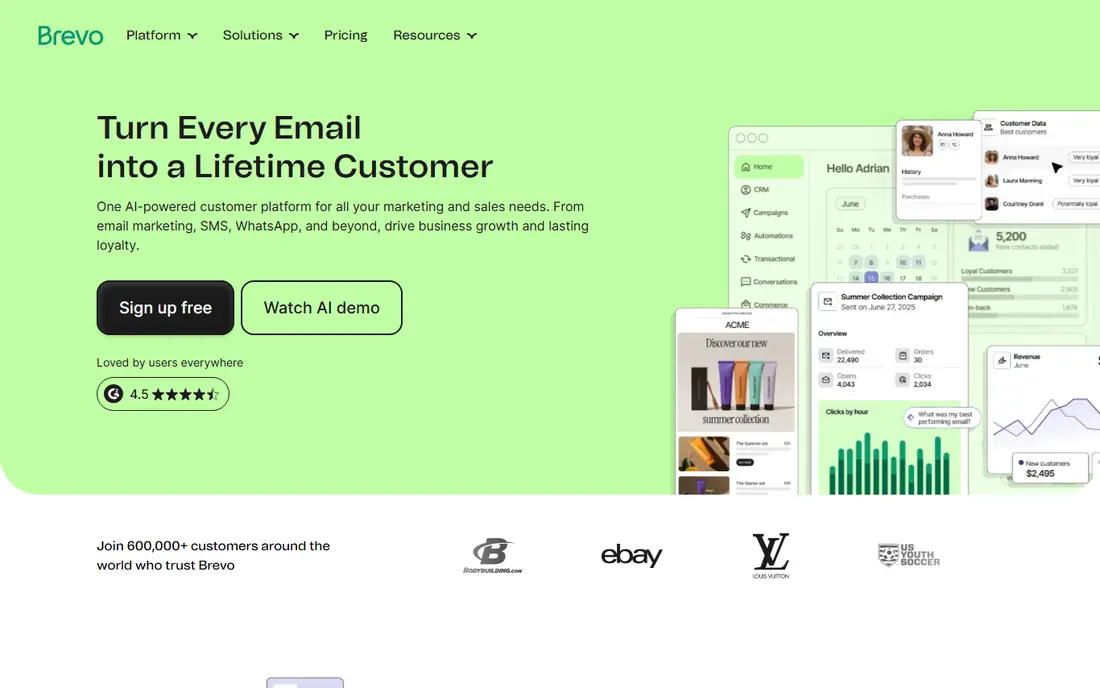
Brevo, formerly Sendinblue, is built around a pricing model startups love: you pay for emails sent, not for contacts stored. The free plan allows unlimited contacts with 300 emails per day, which suits a startup sending a weekly newsletter to a growing list. Paid plans start at $9 per month, and higher plans add automation, A/B testing, and landing pages. SMS, WhatsApp, and a simple CRM sit in the same account, so a small team can run more marketing from one login.
Design is the main compromise. Templates and the editor are solid but less polished than Mailchimp or Flodesk, and the daily cap on the free plan can frustrate a startup sending a large launch email at once. For a startup that values list growth without a rising per-contact bill, Brevo is one of the best value picks available.
- Unlimited contacts on free plan
- Pricing based on sends, not contacts
- SMS and CRM included
- Template design is less polished than Mailchimp
- Daily send cap on free plan
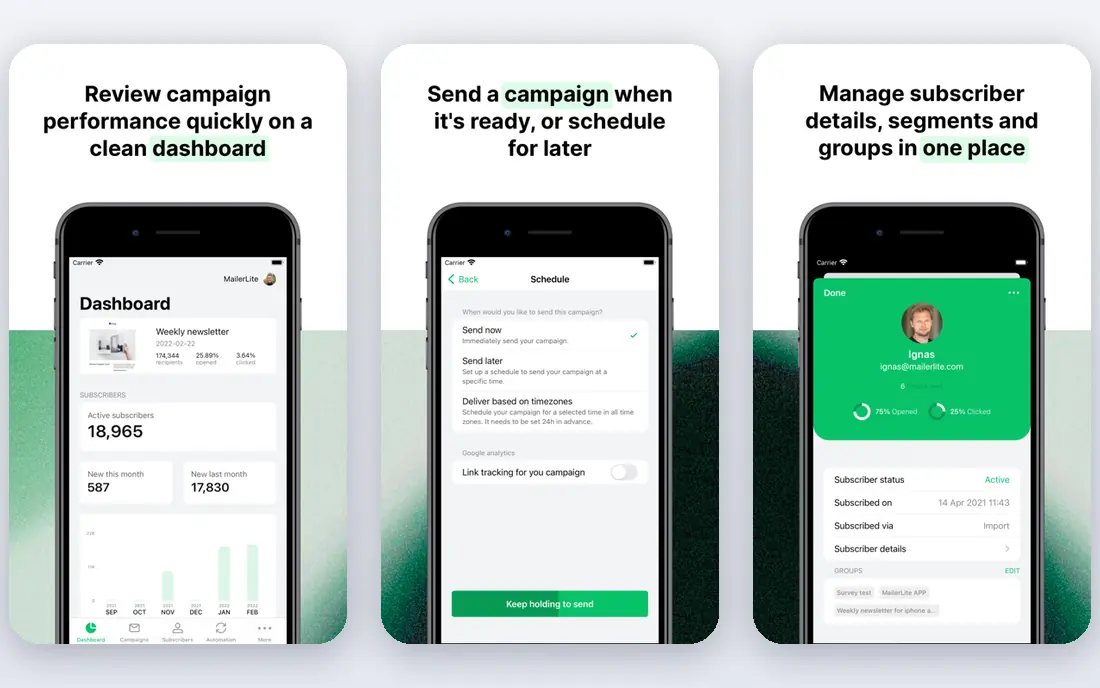
MailerLite is the calm, simple option for startups that want newsletters without a steep learning curve. The editor is clean, automation covers welcome sequences and basic triggers, and landing pages and signup forms are included without extra tools. Paid plans start around $12 per month, and the interface stays focused on sending good emails rather than managing a full marketing suite. Small teams often launch their first campaign on MailerLite in an afternoon.
The free plan changed in 2026 and is now smaller than it once was, so startups should check current limits before relying on it. MailerLite also reviews new accounts, which can delay a first send by a day or more. For a startup that wants simple, affordable email with room to add automation later, MailerLite is a strong and low-stress choice.
- Clean and easy editor
- Landing pages and automation included
- Low paid entry price
- Free plan is now limited
- Approval process can delay first sends
Kit, formerly ConvertKit, is built for creators and newsletter-led startups. The free plan covers up to 10,000 subscribers with unlimited landing pages, forms, and broadcasts, which is unusually generous. Tag-based management means a subscriber is counted once even if they join several forms, and visual automations handle welcome sequences, course launches, and paid newsletters. Creators can also sell digital products and paid subscriptions from the same account.
The trade-off is design and price. Email templates are simpler and more text-focused than Mailchimp, which suits newsletters but less so for image-heavy retail campaigns. Paid Creator plans start around $29 to $33 per month depending on billing, higher than Brevo or Sender. For a startup built around an audience, a newsletter, or a course, Kit is often the best long-term home for that list.
- Free plan up to 10,000 subscribers
- Tag-based subscriber management
- Paid newsletters and products
- Design tools are simpler than Mailchimp
- Paid plans start higher than budget rivals
ActiveCampaign is the pick when a startup needs automation that goes beyond welcome emails. The visual builder handles branching logic, lead scoring, site tracking, and CRM tasks in one flow, so a trial signup can trigger a tailored sequence based on actions taken. Paid plans start at $15 per month on annual billing, and segmentation is detailed enough for B2B startups with several buyer types. Reporting also links email activity to deals and revenue more clearly than simpler tools.
That power comes with complexity. There is no free plan, only a 14-day trial, and new users need time to learn the builder and set up tracking correctly. Small teams that only send a monthly newsletter will not use enough of ActiveCampaign to justify it. For a startup where lifecycle email drives trials and sales, ActiveCampaign is worth the learning curve.
- Strongest automation builder in this list
- CRM and site tracking
- Detailed segmentation
- No free plan, only a trial
- Learning curve is higher than simpler tools
Constant Contact is built for owners who want email done simply and reliably. Templates are clear, the editor is forgiving, and tools for events, social posting, and surveys sit alongside email. Paid plans start at $12 per month for the Lite plan, and support is known for being helpful to non-technical users. Local startups, nonprofits, and service businesses often find it the least intimidating tool in this list.
Automation is lighter than ActiveCampaign or Kit, and there is no free plan, only a trial. Costs also rise with contacts, so a fast-growing list should compare Brevo before committing. For a startup founder who wants to send a professional newsletter without learning marketing software, Constant Contact is a dependable choice.
- Very easy for beginners
- Event and social tools
- Helpful support
- No free plan
- Automation is lighter than ActiveCampaign
GetResponse suits startups that sell through funnels and live events. Alongside email, it includes landing pages, signup funnels, webinars, and autoresponders, so a course or product launch can run from one account. Paid plans start around $16 per month, and automation covers welcome series, cart recovery, and webinar reminders. Ecommerce integrations also help store owners link campaigns to sales.
The interface packs many features into one dashboard, which can feel busy for a beginner who only wants newsletters. There is no permanent free plan, only a trial, so startups should test funnel features during that window. For a startup that plans launches, webinars, and paid courses, GetResponse offers more in one subscription than most rivals.
- Funnels, landing pages, and webinars in one account
- Solid automation
- Ecommerce integrations
- Interface can feel busy
- Free trial only, no permanent free plan
Beehiiv is a newsletter platform first, and that focus shows in its growth tools. The free plan covers up to 2,500 subscribers, and paid Scale plans start around $43 per month on annual billing. Referral programs, recommendations from other newsletters, and an ad network help a newsletter grow without paid ads. Writing and publishing feel clean, and paid subscriptions can be offered with no platform take on some plans.
Beehiiv is less suited to complex ecommerce automation than Mailchimp or ActiveCampaign, and paid pricing is higher than budget email tools. Startups that run a media brand, a paid newsletter, or a content-led business will get the most value. For a general startup that needs carts, CRM, and deep automation, a broader platform is a better fit.
- Free plan up to 2,500 subscribers
- Referral and ad network for growth
- Clean newsletter design
- Paid plans are pricier than general email tools
- Less suited to ecommerce automation
Sender is the budget pick that still includes automation. The free plan covers 2,500 subscribers and 15,000 emails per month, and paid plans start at $7 per month, which is lower than almost every rival here. Automation, transactional email, and landing pages are included, so a startup can run welcome sequences and order emails without paying for a second tool. That combination makes Sender ideal for bootstrapped startups watching every dollar.
The limits are ecosystem and design. Integrations are fewer than Mailchimp, and templates are solid but not as extensive. Sender is also less known, so community tutorials are thinner. For a startup that needs low cost and real automation from day one, Sender is hard to beat on value alone.
- Very low paid entry price
- Generous free plan
- Automation included on free plan
- Smaller integration range
- Template library is thinner than leaders
How we picked these
We compared official pricing pages, free plan limits, and automation features for platforms that a startup can launch without enterprise sales. We favored tools with a free plan or trial, clear contact or send-based pricing, and features for signup, welcome, and lifecycle email. We left out developer-only sending APIs and enterprise marketing clouds, since they do not fit a startup team buying its first email tool.
How to choose for your startup
Start with list size and sending pattern. If you have a large list but send rarely, Brevo pricing based on sends will beat per-contact pricing. If you send often to a small list, a per-contact tool such as MailerLite or Sender may cost less. If your business is a newsletter or creator product, Kit or Beehiiv fits the workflow better than a general marketing suite.
Next, test deliverability basics before you scale. Set up a custom sending domain, add SPF, DKIM, and DMARC records as the platform guides, and warm up a new domain with engaged subscribers first. Avoid buying lists, since that harms deliverability and can get an account suspended. A platform with good signup forms, double opt-in, and bounce handling will protect your sender reputation as you grow.
A starter email plan
Launch with one signup form, one welcome sequence of three to five emails, and one monthly newsletter. Measure opens, clicks, and unsubscribes, and ask new subscribers what they want to hear about. Add automation only when a clear trigger exists, such as a trial signup, an abandoned cart, or a purchase. A small list that trusts your emails is worth more than a large list that ignores them.
FAQ
What is the best email marketing platform for startups?
The best email marketing platform for startups depends on budget and business model. Brevo and Sender offer the best value, Mailchimp offers the widest integrations, Kit suits creators, and ActiveCampaign suits automation-heavy B2B startups. The best email marketing software for startups is the one that fits your list size and sending pattern without forcing a migration in a year.
Is there a free email marketing platform for startups?
Yes, Brevo, MailerLite, Kit, Beehiiv, and Sender all offer free plans, though limits differ. Brevo allows unlimited contacts with a daily send cap, Kit allows up to 10,000 subscribers, and Sender allows 2,500 subscribers with 15,000 emails per month. Check current free limits on the vendor site, since they change often.
How much should a startup pay for email marketing?
Most startups can start free or for $7 to $16 per month, and costs rise with contacts or sends as the list grows. Model costs at your expected list size in 12 months, not just today, since per-contact pricing climbs fastest. A platform that looks cheap at 500 contacts can become expensive at 10,000 contacts.
Does email marketing still work for startups?
Yes, email remains one of the highest-return channels for startups because you own the list and can reach subscribers without paying for ads each time. It works best for onboarding, retention, launches, and repeat sales, rather than cold outreach. Focus on permission, relevance, and useful content, and email will compound as your list grows.
Should a startup use Mailchimp or Kit?
Choose Mailchimp if you run a business that needs ecommerce, many integrations, and polished design-led campaigns. Choose Kit if you are a creator or newsletter-led startup that needs tag-based subscribers, visual automations, and a generous free plan. Both offer free plans, so test signup forms and automation on each before deciding.