Best Email Marketing Platforms for Nonprofits in 2026: 8 Platforms Compared
Compare the best email marketing platforms for nonprofits in 2026, with nonprofit discounts, free plans, donor tools, and pricing for small teams today.

- Editor's choice
 MailerLite
Affordable automation
Starts at$12 per monthVisit mailerlite.comFull review - Great alternative
 Constant Contact
Events and support
Starts at$12 per monthVisit constantcontact.comFull review - Also consider
 Mailchimp
Integrations and design
Starts at$13 per monthVisit mailchimp.comFull review
TL;DR:
- MailerLite and Brevo offer the best balance of low cost and automation for small nonprofits.
- Constant Contact suits nonprofits that run events and want phone support, but it has no permanent free plan.
- Mailchimp suits teams that need many integrations, but its discount is smaller and costs rise fast as lists grow.
- Always apply for the nonprofit discount before you pay, since many vendors will not apply it retroactively.
Quick comparison
| Tool | Best for | Starts at | Free plan? | |
|---|---|---|---|---|
| MailerLite | Affordable automation | $12 per month | Yes | Visit |
| Constant Contact | Events and support | $12 per month | No | Visit |
| Mailchimp | Integrations and design | $13 per month | Yes | Visit |
 Brevo | Large lists, low sending | $9 per month | Yes | Visit |
 ActiveCampaign | Advanced automation and CRM | $19 per month | No | Visit |
 GetResponse | Discount via TechSoup | $19 per month | Yes | Visit |
 Moosend | Low-cost automation | $9 per month | No | Visit |
 Zeffy | Free donor email | Free | Yes | Visit |
The best email marketing platforms for nonprofits
We compared official pricing pages, nonprofit discount pages, free plan limits, and donor and event features. Nonprofits need different things from businesses: low cost, simple list management, donor segmentation, event invites, and clear reporting for boards and funders.
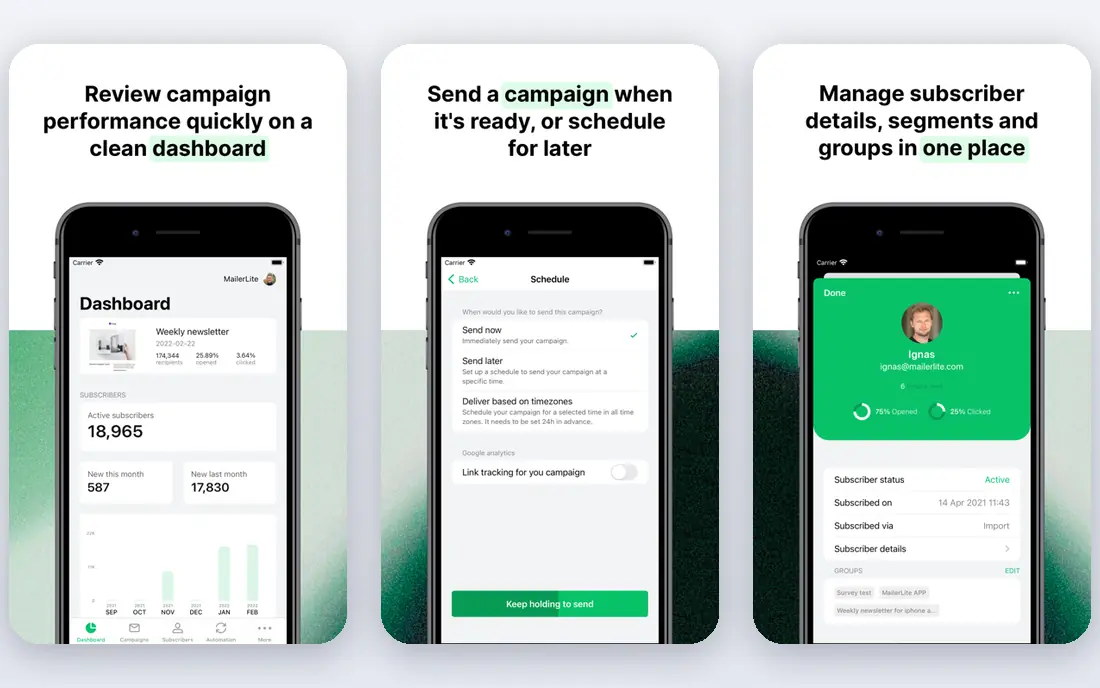
MailerLite is our pick for many small nonprofits because it combines a usable free plan with affordable paid plans and a 30 percent nonprofit discount. You can build welcome sequences for new donors, segment by giving history, and send newsletters without learning a complex system. The editor is clean, and automation is easier to set up than in larger platforms.
The free plan limits sends and some templates, so growing lists will need a paid plan. Still, the price jump is gentler than Mailchimp for the same list size, and the discount helps. If your team is small and you want automation without a steep learning curve, MailerLite is a strong starting point.
- Free plan for up to 1,000 contacts
- 30 percent nonprofit discount on paid plans
- Strong automation and segmentation
- Template choice is smaller on the free plan
- Support is mainly online
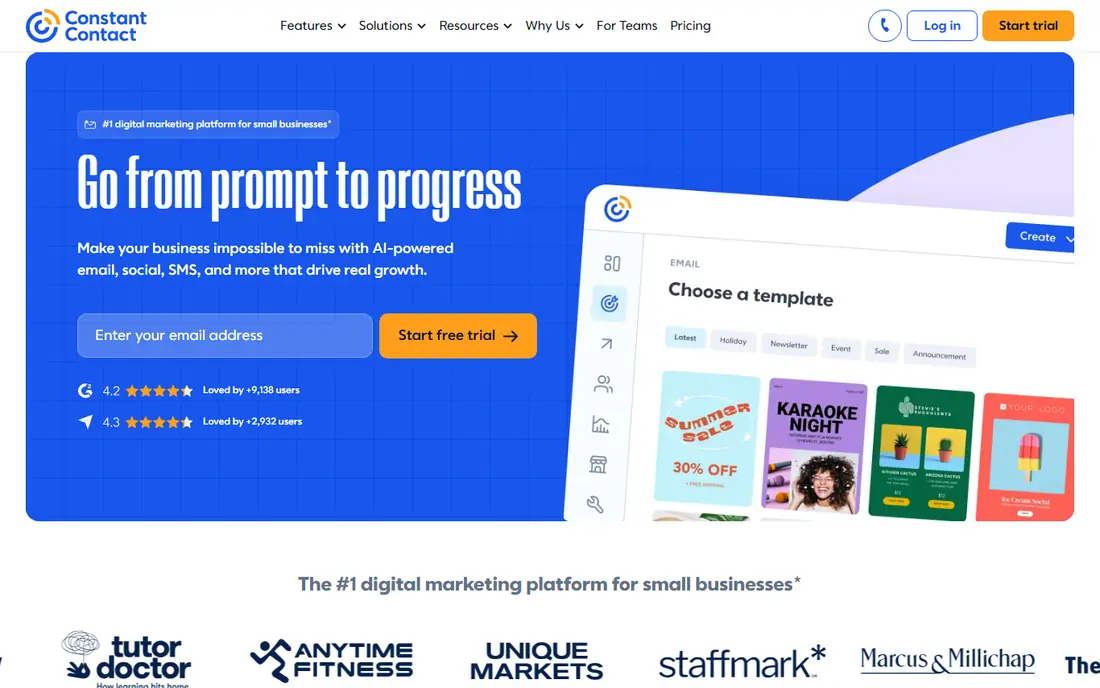
Constant Contact suits nonprofits that run galas, classes, and community events. Its event tools handle invites, registration, and reminders in the same system as email, which saves time for event-heavy teams. Phone support is also a real plus for teams without a dedicated marketer.
The lack of a free plan is the main drawback. You get a 30 day trial, then you pay, and the nonprofit discount of up to 30 percent often requires annual prepayment. If events and support matter more than a free tier, Constant Contact is worth it. If budget is tight, start with a free plan elsewhere.
- 600 plus templates including nonprofit designs
- Event registration tools
- Phone support
- Up to 30 percent nonprofit discount
- No permanent free plan, only a trial
- Costs rise with list size

Mailchimp is the best-known option, and its integration library is hard to match. It connects with donation platforms, CRMs, and websites that many nonprofits already use, and its automation supports multi-step donor journeys. Design tools are also strong, with many templates and a flexible editor.
The nonprofit discount is only 15 percent on paid plans, the smallest among major platforms here, and pricing is contact-based, so costs rise fast. A list that grows from 500 to 5,000 contacts can see a large price increase. Mailchimp makes sense if you need its integrations or your team already knows it, but check the price at your future list size, not just today.
- Large integration library
- Strong design and automation tools
- Free plan for small lists
- Only 15 percent nonprofit discount
- Costs jump sharply as lists grow
Brevo, formerly Sendinblue, suits nonprofits with large contact lists that email infrequently. Because pricing is based on send volume rather than contact count, a large donor list that gets a monthly newsletter can be cheaper here than on contact-based platforms. The free plan allows 300 emails per day, which works for small campaigns.
The free daily cap limits large blasts, and the template set is less polished than Mailchimp. Brevo also offers a 15 percent nonprofit discount on some plans. If you send monthly rather than weekly, and your list is large, Brevo can save real money.
- Pricing based on sends, not contacts
- Free plan with 300 emails per day
- Email, SMS, and CRM in one place
- Daily send cap on the free plan
- Design tools are simpler than Mailchimp
ActiveCampaign is for nonprofits with a dedicated marketer who wants advanced automation. You can build donor journeys based on giving, volunteering, event attendance, and email engagement, and the built-in CRM keeps that data in one place. Segmentation is deeper than in simpler tools.
That power comes with cost and complexity. Paid plans start higher, there is no permanent free plan, and setup takes time. If your team sends a simple monthly newsletter, ActiveCampaign is more than you need. If you run multi-step fundraising campaigns, it can pay for itself.
- Deep automation and CRM
- Strong segmentation for donors and volunteers
- 20 percent nonprofit discount
- Higher price and steeper learning curve
- Overkill for a simple newsletter
GetResponse offers one of the largest nonprofit discounts, up to 50 percent via TechSoup for eligible organizations, though you should verify current terms on both sites. The platform covers email, SMS, landing pages, and webinars, which suits nonprofits that run online events and courses.
The full feature set can feel broad if you only need email. Pricing also varies by list size, so check your tier. For eligible nonprofits that can claim the TechSoup discount, GetResponse becomes much more competitive than its list price suggests.
- Up to 50 percent discount via TechSoup for eligible nonprofits
- Email, SMS, and webinars
- Strong automation
- Discount terms must be verified
- Webinar features may go unused
Moosend is a low-cost alternative for nonprofits that want automation without a high monthly bill. Starting prices are lower than many rivals, and the 25 percent nonprofit discount brings them down further. Templates cover common nonprofit uses, and automation is straightforward to set up.
There is no permanent free plan, only a 30 day trial, and integrations are fewer than Mailchimp or ActiveCampaign. If your main need is affordable, well-designed email automation and you do not need a large app ecosystem, Moosend is a solid choice.
- Low starting price
- 25 percent nonprofit discount
- Easy automation and templates
- No permanent free plan, only a trial
- Smaller integration set than Mailchimp
Zeffy is different from the rest because it is free for nonprofits, funded by optional donor tips rather than subscription fees. It combines fundraising, donor management, and email, so a small nonprofit can send donor updates without paying for a separate email tool. That model is attractive for very small teams.
The limits matter. Zeffy caps recipients per blast and lacks the behavior-triggered automation found in Mailchimp or ActiveCampaign. It is best as a free donor communication tool for small nonprofits, not as a full marketing automation platform for large campaigns.
- Fully free for eligible nonprofits
- Donor management and fundraising built in
- Email for donor communication
- Blast cap per send
- No behavior-triggered automation like larger platforms
How we picked these
We compared official pricing and nonprofit discount pages, free plan limits, automation, segmentation, and donor or event features. We favored platforms with a published nonprofit discount or a genuinely free plan, and we included both simple newsletter tools and advanced CRM options so different team sizes are covered.
How to choose an email platform for your nonprofit
Start with list size and sending frequency, since those two factors drive price more than feature lists. A contact-based platform can become expensive as your list grows, while a send-based platform such as Brevo may be cheaper for infrequent mailings. Next, check the nonprofit discount process: some vendors need a 501(c)(3) letter before purchase, and some will not apply the discount retroactively.
Then test the editor and automation with a real campaign. Send a test newsletter, build a welcome sequence, and segment by donor status. Check deliverability, reporting, and how easily a new staff member or volunteer can learn the tool, since nonprofit teams often change. Finally, confirm data handling and opt-in practices, since donor trust depends on clear consent and privacy.
FAQ
What is the best email marketing platform for nonprofits?
MailerLite is our pick for many small nonprofits for its balance of price, automation, and discount. Constant Contact suits event-heavy teams, and Brevo suits large lists with infrequent sending.
What is the best email service for nonprofits that is free?
Zeffy is free for eligible nonprofits, while MailerLite, Mailchimp, and Brevo offer free plans with limits. Check contact and send caps before you choose.
How do nonprofit discounts work?
Most vendors ask for proof of nonprofit status, such as a 501(c)(3) letter, and apply a percentage discount to paid plans. Discounts range from 15 percent at Mailchimp to 30 percent at MailerLite and Constant Contact, and up to 50 percent at GetResponse via TechSoup.
What is the best email newsletter service for nonprofits?
For a simple newsletter, MailerLite or Brevo are easy and affordable. For event invites and phone support, Constant Contact is stronger. For advanced donor journeys, ActiveCampaign is deeper.
Do I need a CRM with my email platform?
Not always. Small nonprofits can manage with segments and tags inside an email tool. Larger teams that track giving, volunteering, and events in detail benefit from a CRM such as ActiveCampaign or Zeffy donor tools.
How often should a nonprofit email donors?
Most nonprofits do well with one to two emails per month plus event or campaign messages, with clear opt-outs. Too many emails can raise unsubscribes, while too few can weaken donor connection.