Best Daily Rank Tracking Service in 2026: 9 Tools Compared
Looking for the best daily rank tracking service? We compare 9 tools, plus the best daily rank tracking tools for agencies, on daily updates and cost.

- Editor's choice
 SE Ranking
Best value daily tracking
Starts at$129 per monthVisit seranking.comFull review - Great alternative
 Semrush
Daily tracking in a full suite
Starts at$139 per monthVisit semrush.comFull review - Also consider
 AccuRanker
Fast daily and on-demand tracking
Starts at$224 per monthVisit accuranker.comFull review
TL;DR:
- SE Ranking offers the most daily-tracked keywords per dollar at entry level in recent comparisons, with 2,000 keywords on its Core plan.
- Semrush and AccuRanker suit teams that need daily tracking inside a larger suite or with on-demand refreshes and strong reporting.
- Nightwatch, Wincher and Advanced Web Ranking suit agencies and small teams that want daily updates without a full SEO suite.
- Serpstat, Mangools SERPWatcher and Google Search Console cover lower budgets, but check update frequency carefully, since some plans update weekly.
- Daily tracking is only useful if you act on it, so pick a tool whose alerts, competitor tracking and reports match how your team actually works.
Quick comparison
| Tool | Best for | Starts at | Free plan? | |
|---|---|---|---|---|
| SE Ranking | Best value daily tracking | $129 per month | Free trial | Visit |
| Semrush | Daily tracking in a full suite | $139 per month | Free trial | Visit |
| AccuRanker | Fast daily and on-demand tracking | $224 per month | Free trial | Visit |
 Nightwatch | Daily local and AI tracking | See website | Free trial | Visit |
 Wincher | Simple daily tracking | $49 per month | Free trial | Visit |
 Advanced Web Ranking | Large-scale daily tracking | $139 per month | Free trial | Visit |
 Serpstat | Daily tracking plus PPC data | $69 per month | Free trial | Visit |
 Mangools SERPWatcher | Beginner-friendly tracking | See website | Free trial | Visit |
 Google Search Console | Free baseline data | Free | Yes | Visit |
The best daily rank tracking service
Daily rank tracking means your positions are checked every day, not once a week, so you can spot a drop, a competitor move or a search feature change while it is still fresh. The tools below all offer daily updates on at least their main plans, except where we flag a weekly default that needs a higher plan. Keyword allowances, locations and devices all affect the real cost, so compare those limits alongside the monthly price.
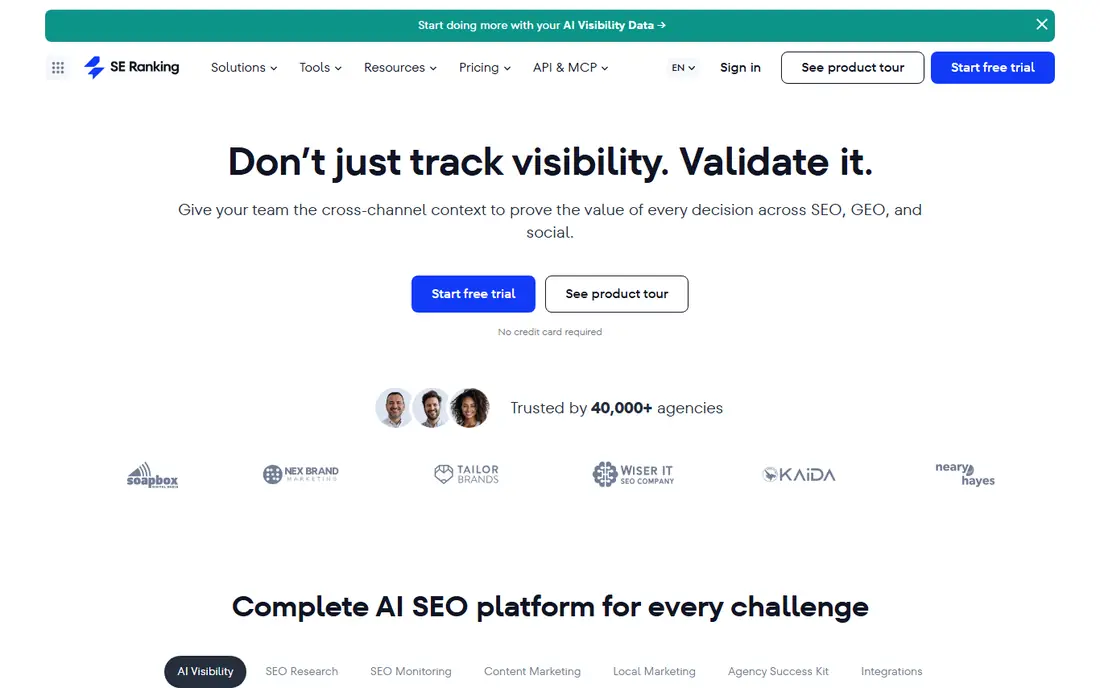
SE Ranking is our pick for most teams that want daily tracking at volume without paying for an enterprise suite. Recent comparisons list the Core plan at 129 dollars a month, or about 103 dollars a month billed annually, with 2,000 keywords tracked daily. SE Ranking also covers a wide range of SERP features, local tracking and competitor tracking in the same plan.
The catch is add-ons and scope. AI search visibility features may need a separate add-on, and the full platform includes audits, research and other tools that take time to learn if you only need rank tracking. For a team that tracks hundreds or thousands of keywords daily and wants reports clients can read, SE Ranking is hard to beat on price per keyword.
- 2,000 keywords daily on Core in recent comparisons
- Broad SERP feature tracking
- White-label reports on all plans in some guides
- Full AI visibility needs an add-on
- Interface has many tools to learn
- Annual billing lowers the monthly rate, monthly billing is higher

Semrush suits teams that want daily rank tracking inside a full SEO and marketing suite, rather than a standalone tracker. Position Tracking updates daily on the SEO plan, listed at 139 dollars a month in recent comparisons, or about 117 dollars a month billed annually, with 500 keywords on entry. That allowance is smaller than SE Ranking, but Semrush adds keyword research, site audits, backlink data, content tools and AI visibility features that a standalone tracker cannot match.
The trade-off is cost per keyword and complexity. If you only need rank tracking, Semrush is expensive for the keyword count. If your team already uses Semrush for research and audits, adding daily tracking in the same login saves time and keeps data consistent. Semrush suits agencies and in-house teams that use the wider suite daily, not just the tracker.
- Daily Position Tracking
- Huge keyword and competitor data
- AI visibility tools in newer plans
- Entry plan covers 500 keywords
- Higher cost per keyword than SE Ranking
- Suite can feel large for tracking alone
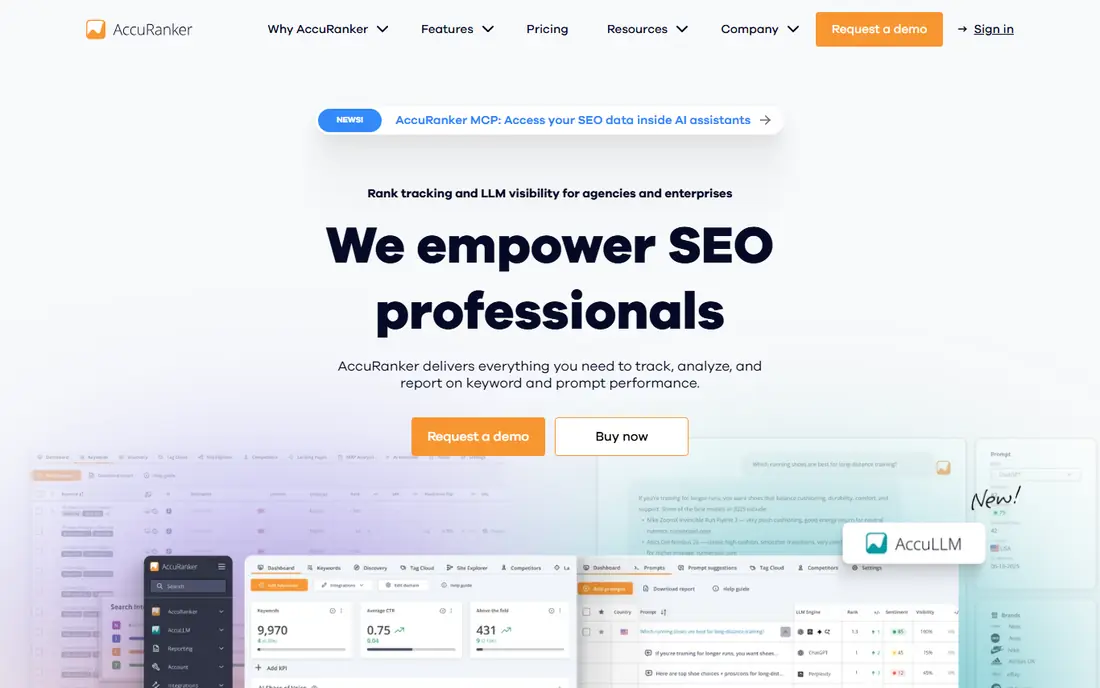
AccuRanker is built for speed and scale. Recent comparisons list the Professional plan at 249 dollars a month, or 224 dollars a month billed yearly, with 2,000 keywords tracked daily and on-demand refreshes available. Unlimited users and strong exports also suit agencies with several team members.
The catch is price and minimum volume. AccuRanker starts at a higher price than SE Ranking or Wincher, and its 2,000-keyword floor may be more than a small site needs. There is no free plan in some guides, only a trial or refund policy depending on the current offer. AccuRanker suits agencies and larger teams that track thousands of keywords and need fast, reliable daily data.
- Daily plus on-demand refreshes
- Fast updates
- Strong API and reporting for agencies
- Entry price is high
- 2,000-keyword floor may exceed small site needs
- No free plan, only a refund policy in some guides
Nightwatch combines daily rank tracking with local tracking and AI search visibility, which helps teams that need to watch Google, local packs and AI answers together. Recent comparisons list the Starter plan at about 79 euros a month billed yearly, with 500 keywords and daily plus on-demand updates. Unlimited seats on some plans also help agencies that share dashboards with clients and team members.
The trade-off is currency and scale. Prices are listed in euros, so US buyers should check the converted cost and billing terms. The entry keyword allowance is also smaller than SE Ranking at a similar price point. Nightwatch suits teams that value local and AI tracking in one login and that track a moderate keyword set across many locations.
- Daily plus on-demand updates
- Local and AI search tracking
- Unlimited seats on some plans
- Prices in euros
- Entry keyword allowance is smaller than SE Ranking
- AI features vary by plan
Wincher is the simplest daily tracker on this list, and that simplicity is its strength. Recent comparisons list the Basic plan at 49 dollars a month, with 500 keywords tracked daily. The interface focuses on rankings, competitors and simple reports, without the large research suite that can overwhelm a small team. That makes Wincher easy to set up and easy to check each morning.
The catch is depth. Wincher does not replace Semrush or SE Ranking for keyword research, audits or content tools, and larger sites will need higher plans. Some guides also list Wincher prices in euros depending on region, so check the price shown for your account. Wincher suits freelancers and small teams that want daily rankings, clear reports and a low monthly cost.
- Simple interface
- Daily updates
- 500 keywords on Basic in recent comparisons
- Fewer research tools than a full suite
- Higher plans needed for larger sites
- Some details vary by currency and plan
Advanced Web Ranking, often called AWR, suits agencies that track thousands of keywords across many locations and search engines. Recent comparisons list plans from about 139 dollars a month, with daily, weekly or on-demand update options and a units system that converts to daily keyword checks. That flexibility helps agencies with varied client needs, from a small local site to a large national campaign.
The catch is the units model and the interface. You need to work out how many units a daily keyword set uses, since a daily check consumes more units than a weekly check. The interface also feels more traditional than newer trackers. Advanced Web Ranking suits experienced SEO teams and agencies that value scale, API access and detailed reporting over a simple beginner interface.
- Daily, weekly or on-demand updates
- Large keyword and location scale
- Strong reporting and API
- Interface feels dated to some users
- Entry units system needs care
- Suite is larger than a simple tracker
Serpstat combines rank tracking with keyword research, site audits, backlink data and PPC insights, at an entry price listed at 69 dollars a month in recent comparisons. That combination suits teams that run SEO and paid search together and want one login for both. Daily rank tracking is available, and the tool covers competitor domains and SERP features that help explain why a ranking moved.
The trade-off is specialisation. Serpstat rank tracking is strong, but dedicated trackers such as AccuRanker offer faster on-demand refreshes, and newer AI visibility tools are more developed elsewhere. Serpstat suits small and mid-size teams that want a combined SEO and PPC tool with daily tracking, rather than a pure rank tracker for a very large keyword set.
- Daily rank tracking
- SEO plus PPC data in one tool
- Lower entry price than full suites
- Rank tracking depth varies by plan
- Interface takes learning
- AI features are limited compared with newer tools
Mangools SERPWatcher is the easiest tracker for beginners to understand, with a clean interface, daily rank indexes and simple performance reports. That simplicity helps freelancers and small site owners who want to check rankings without learning a large suite. Mangools also bundles keyword research and other SEO tools, which adds value for a small team.
The important catch is update frequency. The Basic plan updates weekly in recent comparisons, with daily updates on the Agency plan, so buyers who need daily tracking must choose the higher plan and check the current price, listed as See website here because Mangools prices vary by billing period. The keyword allowance is also small, at 200 keywords on Basic. SERPWatcher suits beginners who will upgrade to daily tracking when their site and budget grow.
- Very easy interface
- Daily tracking on Agency plan
- Useful for beginners and freelancers
- Basic plan updates weekly, not daily
- Keyword allowance is small
- Fewer agency features than rivals
Google Search Console is free, and every site owner should use it alongside a paid tracker. It shows real impressions, clicks, queries and average positions for your own site, with data typically 2 to 3 days behind. That real search data is a useful check on any paid tracker, since it reflects actual Google results rather than a third-party crawl. Search Console also flags indexing, mobile and other technical issues.
The catch is scope and timing. Search Console covers only your own site, not competitors, and it does not provide a daily rank for a chosen keyword list in the same way a paid tracker does. It also lacks white-label reports and alerts for most teams. Use Search Console as the free baseline, then add a paid daily tracker from this list for competitor tracking, daily alerts and client reporting.
- Free and from Google itself
- Real impressions, clicks and queries
- Covers your own site only
- Data lags by 2 to 3 days
- No competitor tracking
- No on-demand daily rank for a chosen keyword list
How we picked these
We compared official pricing pages and recent tracker comparisons, focusing on update frequency, keyword allowance, locations, competitor tracking and reporting. We favoured tools that offer daily updates on their main plans, that publish clear keyword limits, and that suit a distinct budget or team size. We flagged where a plan updates weekly by default, such as Mangools Basic, so daily buyers do not choose the wrong tier.
We did not claim hands-on testing that did not happen. Prices and keyword allowances change, and some tools price in euros, so we used See website where the current price for your region was not clearly confirmed, and we noted annual versus monthly billing where recent comparisons reported it. Readers should check the current pricing page and trial terms before subscribing.
How to use daily rank data well
Daily data is useful only if you separate signal from noise. Rankings move a little each day for normal reasons, such as personalisation, location and search feature changes. Set alerts for large moves, such as a drop of five or more positions on a money keyword, or a fall out of the top ten, rather than reacting to every one-position shift. Check the landing page, the SERP features and competitor movement before you change content.
Track the right keywords, locations and devices
A keyword tracked only nationally can hide a local drop, and a desktop-only track can hide a mobile problem. Split important keywords by location and device where the tool allows it, and remember that each split uses keyword slots. Start with a core set of money and brand keywords, add informational keywords that support them, and review the list each quarter to remove terms that no longer matter.
Report movement with context
A good daily rank report shows the keyword, the old and new position, the landing page, the search features present and the competitor that gained. That context turns a number into an action, such as fixing a page, updating content or checking a technical issue. Schedule reports weekly for most teams, with daily alerts only for large moves, so the team acts on real changes rather than daily noise.
FAQ
What is the best daily rank tracking tool?
SE Ranking is the best value for most teams, with 2,000 keywords tracked daily on Core in recent comparisons. Semrush suits teams that want a full suite, AccuRanker suits agencies that need on-demand refreshes, and Wincher suits small teams that want a simple daily tracker. Pick by keyword volume, locations and whether you need a suite or a tracker alone.
Are daily rank tracking tools accurate?
Paid trackers are generally close to real results, but small differences arise from location, device, personalisation and data centre variation. Use Google Search Console as a free check on your own site, track the same locations and devices consistently, and focus on trends and large moves rather than a single daily position.
How many keywords should I track daily?
Track your money keywords, brand terms and the informational terms that support them, split by important locations and devices. Most small sites need 100 to 500 keywords, while agencies need thousands. Remember that each location and device split uses slots, so a 100-keyword list tracked in three cities on desktop and mobile uses 600 slots in some tools.
Is Google Search Console enough for rank tracking?
Search Console is an excellent free baseline for your own site, with real impressions and queries, but it does not track competitors, does not offer daily alerts for a chosen list, and its data lags by 2 to 3 days. Most teams pair it with a paid daily tracker for competitor tracking, alerts and client reports.
What are the best daily rank tracking tools for agencies?
SE Ranking, AccuRanker, Nightwatch and Advanced Web Ranking suit agencies best, thanks to large keyword allowances, white-label reports, API access and multi-user support. Compare keyword cost at your actual volume, check white-label and client seat terms, and test reporting with a real client set before committing to an annual plan.
Do I need daily tracking or is weekly enough?
Daily tracking suits competitive niches, local businesses with volatile packs, and agencies that need fast alerts for client sites. Weekly tracking suits stable sites with a small keyword set and a slower content cycle. If you rarely act on daily moves, weekly tracking plus Search Console may be enough, and cheaper.