Best Content Syndication Platforms in 2026: 8 Platforms Compared
We compared the best content syndication platforms on reach, lead quality, pricing, and reporting to help brands distribute content that earns results.

- Editor's choice
 Taboola
Large-scale native discovery
Starts atSee websiteVisit taboola.comFull review - Great alternative
 Teads
Premium publisher reach
Starts atSee websiteVisit teads.comFull review - Also consider
 MGID
Mid-market native campaigns
Starts atSee websiteVisit mgid.comFull review
TL;DR:
- Taboola and Teads suit large-scale content discovery, with paid placements across premium publisher sites.
- NetLine suits B2B lead generation, since it charges per lead and filters by job, industry, and company details.
- MGID and Revcontent suit mid-market budgets that want native reach at a lower entry cost than the largest networks.
- Medium and LinkedIn suit free, organic syndication that builds authority, though reach depends on your audience and distribution.
- PRNEWS.IO suits guaranteed editorial placements, where you pay for a specific outlet rather than bidding for clicks.
- Always judge syndication by cost per qualified lead or sale, not just clicks, since cheap traffic that never converts is wasted spend.
Quick comparison
| Tool | Best for | Starts at | Free plan? | |
|---|---|---|---|---|
| Taboola | Large-scale native discovery | See website | No | Visit |
| Teads | Premium publisher reach | See website | No | Visit |
| MGID | Mid-market native campaigns | See website | No | Visit |
 NetLine | B2B lead generation | See website | No | Visit |
 Revcontent | Quality-focused native reach | See website | No | Visit |
 Medium | Free organic reach for articles | Free | Yes | Visit |
 LinkedIn | B2B authority and articles | Free | Yes | Visit |
 PRNEWS.IO | Guaranteed editorial placements | See website | No | Visit |
The best content syndication platforms
Content syndication can mean paid discovery across publisher sites, B2B lead generation from gated content, or republishing articles on platforms where new readers already gather. We compared platforms on reach, audience quality, pricing model, lead filtering, and reporting, so you can pick the type that matches your goal.
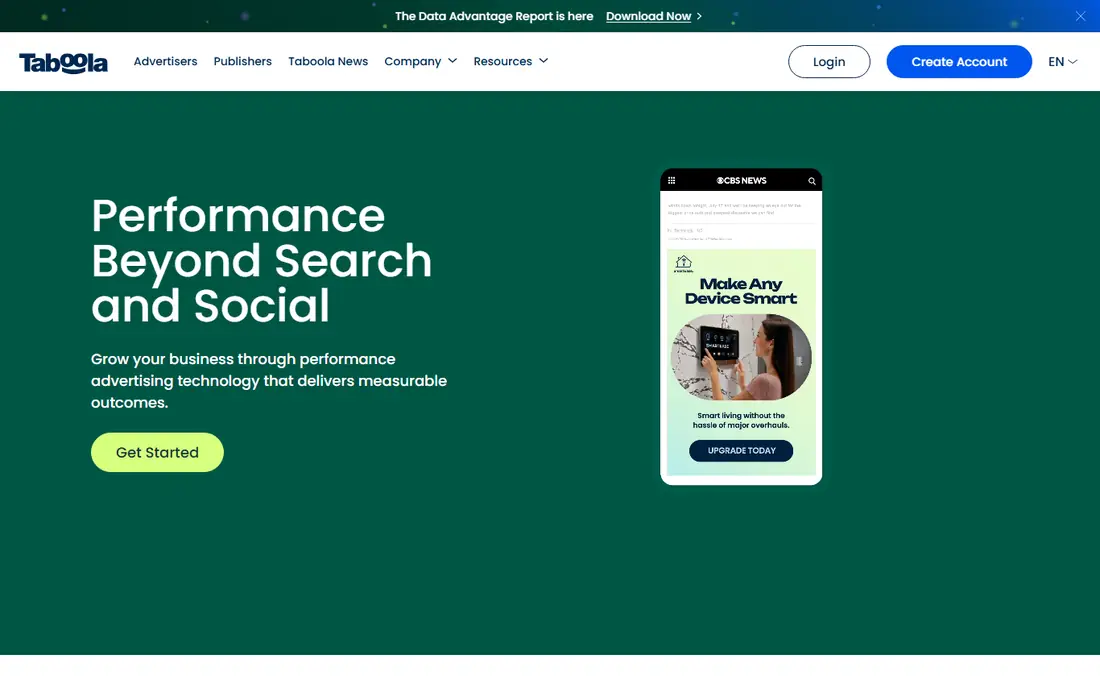
Taboola is the largest content discovery network for many advertisers, with placements across premium publisher sites and a self-serve platform for testing headlines, images, and landing pages. Its model suits brand awareness, article traffic, and lead generation at scale, especially for consumer content with broad appeal. Campaigns can start at a low daily budget, though Taboola recommends around $50 per day to give its system enough signal.
The limits are audience fit and traffic quality. Taboola skews toward consumer audiences, so B2B lead quality can be lower than a dedicated B2B platform, and placement quality varies by site. Exclude weak sites early, test several headlines, and judge results by cost per lead or sale, not just click cost. For broad reach, Taboola remains a core syndication option.
- Very large publisher network
- Self-serve campaigns
- Video and content recommendation formats
- B2C-heavy audience
- Traffic quality varies by placement
- Spend stops when the campaign stops

Teads, which combined with Outbrain in 2025 and completed its renaming in June 2025, offers native content discovery plus video and connected TV inventory in one buy. Its publisher tier includes major news and lifestyle titles, which suits brands that want premium, brand-safe placements rather than the widest possible reach. That focus helps for brand campaigns and high-quality article traffic.
Costs tend to run higher than Taboola or MGID, and pricing is largely sales-led, so you will need a quote for your budget and goals. Managed accounts generally expect higher spend. For a brand that values publisher quality and video options alongside native articles, Teads is a strong premium choice.
- Premium publisher tier
- Native plus video and connected TV options
- Brand-safe inventory focus
- Higher costs than some rivals
- Pricing is largely sales-led

MGID suits mid-market advertisers that want native reach without the largest-network budget. Its minimum deposit is around $100, with a minimum campaign budget near $50, and it recommends around $650 or more as a starting deposit for a meaningful test. Its CPC model and international inventory suit brands selling across many countries or testing a new market.
The trade-off is publisher tier and traffic quality. MGID's premium inventory is smaller than Taboola or Teads, and its audience is more international, so US-only B2B lead quality may be lower. As with other native networks, exclude weak sites, test creative, and track downstream conversions. For a cost-conscious native test, MGID is a practical starting point.
- Lower entry deposit around $100
- CPC model
- International inventory across many sites
- Smaller premium publisher tier than Taboola or Teads
- Traffic quality needs site exclusions
NetLine is built for B2B lead generation from gated content such as white papers, guides, and reports. Instead of paying per click, you pay per lead, and you can filter by job title, industry, company size, and other firm details. That model suits companies that need qualified leads for sales follow-up, rather than raw article traffic.
Lead costs vary by industry, filter strictness, and content quality, so a narrow filter will cost more per lead but may convert better. Your content must be strong enough to earn a download, since a weak guide will generate few leads at any price. For B2B marketers with a clear ideal customer profile, NetLine is one of the most direct syndication options.
- Cost-per-lead pricing
- Granular B2B lead filtering
- Detailed lead reporting
- Lead costs vary by industry and filter
- Content must be gated and high quality to convert
Revcontent positions itself as a premium alternative to the largest native networks, with stricter publisher quality standards and a smaller, more curated network. Its publisher partners include US news, weather, sports, and lifestyle titles, which suits advertisers that value placement quality over maximum reach. Mid-market support and return-focused optimization tools also help smaller teams run native campaigns.
The smaller network limits maximum scale and global reach, so a brand needing worldwide volume will need Taboola or Teads alongside Revcontent. For a US-focused advertiser that has been burned by low-quality native traffic, Revcontent's quality focus is a real advantage. Test it against a larger network on cost per qualified visit, not just click price.
- Stricter publisher quality standards
- Strong US publisher focus
- Mid-market support
- Smaller network than Taboola or Teads
- Less global reach
Medium suits writers and brands that want to republish or publish original articles for a built-in, interest-based audience. It is free to publish, and its distribution system can surface strong evergreen articles to readers who follow a topic, even if they have never heard of your brand. Read ratio and reader interest data help you see which pieces hold attention.
The limits are control and lead capture. Medium offers less branding, lead form, and conversion control than your own site, and reach depends on topic, headline, and distribution. Use Medium as a syndication channel that links back to your site, not as a replacement for it. For thought leadership and evergreen guides, it remains a useful free option.
- Free to publish
- Built-in reader audience
- Read ratio and interest analytics
- Reach depends on distribution and topic
- Limited lead capture and branding control
LinkedIn Articles suit B2B companies and professionals who want to build authority with a business audience. Publishing is free, and the audience is filtered by job title, industry, and company in a way that consumer platforms cannot match. Visitor demographic data helps you see whether the right roles are reading your work.
Organic reach varies by network size, topic, and posting consistency, and LinkedIn does not replace a landing page for lead capture. Pair articles with a clear call to action that sends readers to a gated guide or contact page on your site. For B2B thought leadership, LinkedIn is one of the most effective free syndication channels available.
- Free article publishing
- B2B audience by job, industry, and company
- Visitor demographic data
- Organic reach varies by network and topic
- Lead capture needs a landing page or form
PRNEWS.IO takes a different approach to syndication: you pay for a guaranteed editorial placement in a chosen outlet, rather than bidding for clicks across a network. Prices start from a few dollars per placement on smaller outlets and rise for larger titles, with the price shown before purchase. That transparency suits SEO-driven campaigns and brands that want coverage in specific publications.
The trade-off is traffic. A guaranteed placement does not promise ongoing clicks, and link attributes vary by outlet, so check each outlet's terms before you buy. PRNEWS.IO is not a replacement for Taboola or NetLine, but it complements them well when you need a specific outlet, a fast turnaround, or a link-building campaign with predictable costs.
- Guaranteed placements in chosen outlets
- Transparent pricing before purchase
- Global outlet range
- Placement stops being new once published
- No dofollow link guarantee on every outlet
- Not a traffic network
How we picked these
We compared official platform pages, pricing disclosures, and independent syndication guides for 2026, focusing on reach, audience type, pricing model, lead quality, and reporting. We favored platforms with a current, working offer for advertisers or publishers, clear pricing or lead models, and a track record in native, B2B, or organic syndication. Where a platform does not publish a standard price, we show See website rather than repeating a third-party estimate.
How to run a syndication test that tells the truth
Start with one goal and one metric. If you want leads, judge by cost per qualified lead. If you want sales, judge by cost per sale. Clicks alone will mislead you, since cheap clicks from weak placements rarely convert. Run each platform with the same landing page and offer for at least two to three weeks, so you compare like with like.
Next, control for placement quality. Exclude weak sites early on native networks, filter leads tightly on B2B platforms, and check lead quality with sales, not just marketing. Finally, plan for what happens after the campaign stops. Paid syndication traffic ends when spend ends, while organic syndication on Medium or LinkedIn can keep working, so use paid tests to learn which topics deserve a permanent home on your site.
FAQ
What is the best content syndication platform?
The best content syndication platform depends on your goal. Taboola and Teads suit large-scale discovery, NetLine suits B2B leads, MGID and Revcontent suit mid-market native budgets, and Medium and LinkedIn suit free organic reach. Match the platform to your metric, not just its reach.
What is the best content syndication platform for B2B leads?
NetLine leads for B2B leads, since it charges per lead and filters by job, industry, and company size. LinkedIn Articles also suit B2B authority, though you will need a landing page to capture leads. Test both and compare cost per qualified lead.
How much does content syndication cost?
Costs vary by model. Native networks charge per click or per thousand impressions, with practical daily budgets around $50 or more for a real test. B2B lead platforms charge per lead, with costs varying by industry and filter, while guaranteed editorial placements start from a few dollars on smaller outlets.
Does content syndication help SEO?
Syndication can help SEO when it earns links, brand searches, and referral traffic, but paid native clicks alone do not directly improve rankings. Guaranteed editorial placements may include links, though attributes vary by outlet, so check each placement before you count it as an SEO win.
Should I syndicate the same article on many platforms?
Yes, with care. Republish with a canonical link to your original article where possible, and adapt the headline and introduction for each platform. Avoid publishing identical content on many sites without a canonical tag, since search engines may struggle to pick the original version.
How do I measure content syndication success?
Measure by your goal: cost per qualified lead for B2B, cost per sale for e-commerce, and engaged visits for brand content. Track downstream actions, such as demo requests, purchases, and email sign-ups, not just clicks, impressions, or views.