Best AI Search Monitoring Tools in 2026: 8 Tools Compared
Compare the best AI search monitoring tools for 2026, from Profound and Otterly AI to Semrush and Ahrefs Brand Radar, with pricing and coverage for your brand.
- Editor's choice
 Profound
Enterprise AI answer analytics
Starts at$99 per monthVisit profound.comFull review - Great alternative
 Otterly AI
Low cost daily monitoring
Starts at$29 per monthVisit otterly.aiFull review - Also consider
 Peec AI
Agency dashboards and reporting
Starts atSee websiteVisit peec.aiFull review
TL;DR:
- AI search monitoring tracks how ChatGPT, Perplexity, Gemini and Google AI Overviews mention your brand, not just where you rank on Google.
- Otterly AI is the lowest cost starting point we found, while Profound and Scrunch AI suit larger teams with bigger prompt sets.
- Semrush and Ahrefs Brand Radar make sense if you already pay for those platforms and want AI visibility in the same dashboard.
- Prompt choice matters more than tool choice. Track the questions your buyers actually ask, plus the names of your main rivals.
Quick comparison
| Tool | Best for | Starts at | Free plan? | |
|---|---|---|---|---|
| Profound | Enterprise AI answer analytics | $99 per month | Free trial | Visit |
| Otterly AI | Low cost daily monitoring | $29 per month | Free trial | Visit |
| Peec AI | Agency dashboards and reporting | See website | Free trial | Visit |
 Semrush AI Visibility Toolkit | Teams already using Semrush | $99 per month | Free trial | Visit |
 Ahrefs Brand Radar | Brand research in a large index | $129 per month | No | Visit |
 Scrunch AI | Monitoring plus site audits | $250 per month | Free trial | Visit |
 Rankscale AI | Low cost rank tracking | $20 per month | Free trial | Visit |
 Writesonic GEO | Content teams plus AI visibility | $79 per month | Free trial | Visit |
The best AI search monitoring tools
AI answers are changing how people find brands. A buyer may never click a blue link, because the answer already names a product, cites a source or leaves your brand out entirely. These tools watch that answer layer. They run a set of prompts across AI engines, record mentions, citations and sentiment, and show how your share of voice changes over time.
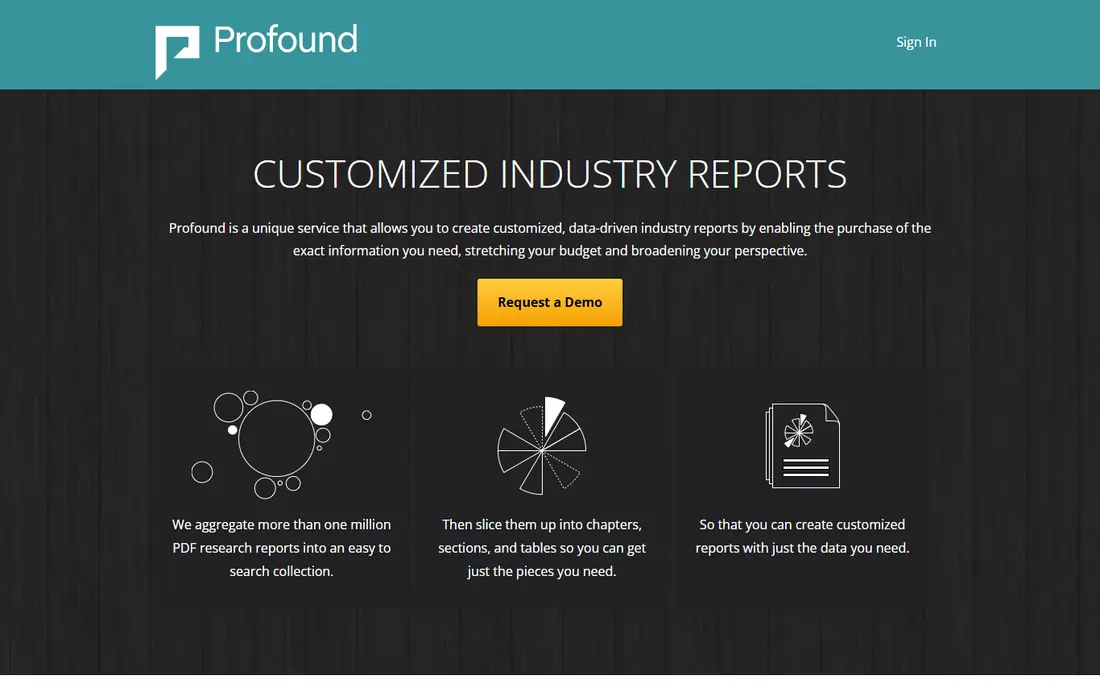
Profound is built for teams that treat AI search as a core channel, not a side report. It tracks prompts across major engines, breaks down which sources get cited, and flags changes in how a brand is described. That last point matters, because an AI answer can be factually wrong or out of date, and you want to know before customers repeat the error.
The price starts at a level that small businesses can test, but larger prompt sets and enterprise reporting push costs up. Profound is best when one person owns AI visibility and reports it alongside SEO and brand work. If you only track a dozen prompts, a cheaper tool below will give you most of the same signal.
- Broad engine coverage
- Strong competitor benchmarking
- Trend alerts for narrative shifts
- Higher cost at scale
- Enterprise features may be more than a small team needs
Otterly AI is our pick for a first AI monitoring tool. The entry plan is affordable, the dashboard is easy to read, and it covers the engines most buyers use first: ChatGPT, Perplexity and Google AI Overviews. You can see which prompts mention you, which cite your site, and where a rival appears instead.
The limit is prompt volume. Fifteen prompts on the entry tier is enough for a small brand with a focused product line, but not for an agency tracking many clients. Extra engines and larger prompt sets cost more. Start small, prove that the reports lead to content changes, and then scale the plan.
- Lowest entry price in this list
- Covers ChatGPT, Perplexity and AI Overviews
- Simple dashboard
- Small prompt allowance on the entry plan
- Some engines are add-ons

Peec AI is designed for marketing teams and agencies that need to show clients what changed. Dashboards separate prompts, mentions, citations and sentiment, and the citation gap view shows which sources AI engines trust in your category. That is useful, because it turns a vague goal such as "get mentioned more" into a concrete list of pages to improve or earn links from.
Pricing has shifted during 2026, so check the current page before you budget. Some plans include a smaller set of models, with others as add-ons. Peec AI works best when you have a clear set of rivals to track and a regular reporting rhythm, such as a monthly review with clients.
- Clean client reporting
- Competitor tracking
- Citation gap analysis
- Pricing is not always shown clearly on the site
- Model coverage varies by plan
Semrush is a natural choice if your team already lives in Semrush for keyword research and site audits. The AI Visibility Toolkit adds AI mentions and prompts to that same workflow, so you can compare an AI answer with the organic results behind it. That pairing helps when a page ranks well on Google but never gets cited in an AI answer.
The standalone price is not cheap, and it is bundled into Semrush One at a higher tier. If you are not a Semrush user, a dedicated tool such as Otterly AI or Profound may be simpler. If you are, the toolkit saves you from learning a second platform and reconciling two sets of reports.
- Sits next to classic SEO data
- Covers AI Overviews, AI Mode, ChatGPT, Perplexity and Gemini
- Familiar reporting
- Less useful if you do not use Semrush already
- Prompt limits apply
Ahrefs Brand Radar takes a different angle. Instead of only tracking your own prompts, it lets you research brands across a large index of AI prompts and web mentions. That is valuable for market research, because you can see how a rival is described across engines before you build your own prompt set. It also ties that view to Ahrefs backlink and keyword data.
The catch is cost and complexity. Brand Radar sits inside Ahrefs plans, and the wider AI index features are add-ons. Small teams may find the entry price hard to justify for monitoring alone. For SEO teams already paying for Ahrefs, it is a strong addition that turns brand research into a regular habit.
- Large prompt index for researching any brand
- Links AI visibility to web and search data
- Strong for competitor research
- No free plan
- Full AI index features are paid add-ons
Scrunch AI pairs monitoring with a practical question: can AI crawlers read and understand your site? Its audits check how your pages appear to AI agents, while the monitoring side tracks mentions and share of voice. That combination suits brand and content teams that want both measurement and a fix list in one place.
The price puts it out of reach for many small businesses. Scrunch AI is best for mid-size and larger companies, or agencies that can spread the cost across clients. If your site is small and well structured, a cheaper monitor plus a manual check of your key pages may be enough.
- Combines monitoring with site audits for AI crawlers
- Share of voice reporting
- Perception analysis
- High entry price
- More tool than a solo marketer needs
Rankscale AI is the budget alternative for teams that mainly want to know whether their position in AI answers is rising or falling. It tracks prompts over time and shows history, which is enough to spot a sudden drop after a site change or a rival launch. The interface is simpler than Profound or Scrunch AI, and that is part of the appeal.
You will miss deeper features such as citation source analysis and sentiment scoring at this price. Rankscale AI is best as a tracker, not as a full brand intelligence platform. Pair it with your own content work, and review the prompts each week to see which answers need a better source page.
- Very low entry price
- Historical rank tracking over time
- Simple prompt tracking
- Smaller feature set than enterprise tools
- Limited reporting depth
Writesonic is best known as a content platform, and its GEO features add AI visibility tracking to that workflow. For a content team, that pairing is practical. You spot a prompt where you are missing, then you draft or update the page that should be cited, without switching tools. The starter plan is priced for small teams that publish regularly.
The trade-off is focus. A dedicated monitor such as Profound gives deeper AI analytics, while Writesonic gives a wider content toolkit with lighter monitoring. Choose Writesonic if content creation is your main job and AI tracking is a supporting task. Choose a dedicated tool if AI visibility reporting is your main job.
- Pairs AI visibility with content creation tools
- Useful for teams that publish often
- Clear starter plan
- AI visibility is one part of a wider platform
- Engine coverage varies by tier
How we picked these
We compared official pricing pages, engine coverage lists, prompt limits and public reviews for tools that track AI search in October 2026. We favored tools with a working product, a clear pricing page or a trial, and coverage of at least ChatGPT, Perplexity and Google AI Overviews. We left out tools that only promised AI tracking without a live dashboard, and tools that required a sales call just to see a price.
How to set up AI monitoring without wasting money
Start with prompts, not plans. Write down the ten questions a buyer asks before choosing a product like yours, then add five prompts that name your brand and five that name each main rival. That set of twenty to thirty prompts is enough to test any tool in this list, and it keeps you from paying for a thousand prompts you never read.
Next, check citations, not just mentions. A mention without a link or source is weaker than a cited answer that sends traffic to your site. When a rival is cited, open the source page and ask what it does better: clearer facts, fresher data, a comparison table, or a direct answer to the question. Fix that page first, then watch the next monitoring cycle.
Finally, set a review rhythm. AI answers change when models update, so a monthly check is the minimum for most brands. Look for new competitors, wrong facts about your product, and prompts where you dropped out entirely. Share one page of findings with the content team each month, with one action per finding. Monitoring without action is just an expensive dashboard.
FAQ
What is AI search monitoring?
AI search monitoring tracks how AI engines such as ChatGPT, Perplexity and Gemini answer questions about your brand. It records mentions, citations, sentiment and share of voice, so you can see whether AI answers help or hurt your visibility.
How is AI search monitoring different from SEO rank tracking?
SEO rank tracking measures your position in a list of links on Google. AI monitoring measures whether you appear inside an answer, what the answer says, and which sources it cites. Both matter, but they measure different stages of a buyer journey.
How many prompts should I track?
Start with twenty to thirty prompts covering buyer questions, your brand and your rivals. Expand only when you have a person who reads the reports and acts on them. A large prompt set that nobody reviews adds cost without value.
Can a small business afford AI search monitoring?
Yes. Otterly AI starts at $29 per month and Rankscale AI starts at $20 per month, which is enough for a focused prompt set. Larger tools suit agencies and enterprises with many brands or clients to track.
Will AI monitoring improve my rankings on Google?
Not directly. It shows where AI answers cite you or ignore you, and that insight can guide content updates. Better source pages can help both AI citations and organic visibility over time, but there is no guaranteed link between the two.
Which engines should I monitor first?
Start with ChatGPT, Perplexity and Google AI Overviews, since those reach the most users. Add Gemini and Google AI Mode once your core prompts are stable, and add others only if your audience uses them.