Best AI Mode SEO Rank Tracking Software in 2026: 8 Tools Compared
Find the best ai mode seo rank tracking software for 2026, with AI Mode citations, prompt tracking, competitor checks and clear pricing guidance for your site.

- Editor's choice
 SE Ranking
small to mid-size SEO teams who want AI and classic tracking in one place
Starts atSee websiteVisit seranking.comFull review - Great alternative
 Semrush
SEO teams who already use Semrush for research and reporting
Starts atSee websiteVisit semrush.comFull review - Also consider
 Ahrefs Brand Radar
research teams who want a large prompt database plus brand tracking
Starts atSee websiteVisit ahrefs.comFull review
TL;DR:
- AI Mode tracking is prompt tracking, not position tracking, so a tool must record the full answer, the cited sources and your brand mention rate.
- Coverage varies by plan, so confirm AI Mode is included, not just AI Overviews, before you pay for a tool.
- Competitor share of voice is often more useful than a single brand score, because AI answers tend to recommend a short list of brands.
- Daily or near-daily checks beat a monthly snapshot, because AI answers change often and a single run can mislead.
Quick comparison
| Tool | Best for | Starts at | Free plan? | |
|---|---|---|---|---|
| SE Ranking | small to mid-size SEO teams who want AI and classic tracking in one place | See website | Free trial | Visit |
| Semrush | SEO teams who already use Semrush for research and reporting | See website | Free trial | Visit |
| Ahrefs Brand Radar | research teams who want a large prompt database plus brand tracking | See website | No | Visit |
 Otterly AI | small businesses who want low-cost AI Mode tracking | See website | Free trial | Visit |
 Profound | enterprise brands who need deep AI answer analytics | See website | Free trial | Visit |
 Peec AI | agencies and lean teams who want clear citation data | See website | Free trial | Visit |
 Scrunch AI | brands who want monitoring plus AI crawler experience tools | See website | No | Visit |
 ZipTie | technical SEOs who want citation gap analysis | See website | Free trial | Visit |
The best AI Mode SEO rank tracking software
Google AI Mode answers questions in a conversational form, with sources woven into the answer rather than a simple list of ten links. That change means a classic rank report can look steady while your brand disappears from the answer itself. The tools below track prompts, citations and competitor mentions across AI Mode and related AI search surfaces, so you can see where you appear and where you are missing.
SE Ranking
Best for: small to mid-size SEO teams who want AI and classic tracking in one place

SE Ranking is a practical first pick for teams that already track classic rankings, because its AI visibility layer sits next to keyword rankings instead of in a separate login. You can track prompts across AI Mode, AI Overviews, ChatGPT, Gemini and Perplexity, then compare your citation rate with competitors and spot prompts where you are absent.
It fits a small agency or in-house team that wants one report for clients or managers, with both old and new search data in the same place. The catch is prompt budgeting, because each tracked prompt uses plan capacity, so start with buyer-intent prompts and expand only after the first month of data shows which prompts matter.
- AI Mode and AI Overview tracking
- Classic rank tracking in same dashboard
- Competitor comparisons
- AI prompt limits vary by plan
- Setup needs a clear prompt list
Semrush makes sense if your team already lives in its keyword, backlink and site audit tools, because AI visibility data can sit beside the rest of your SEO work. Its AI Visibility Toolkit tracks brand mentions across major AI engines, shows sentiment and competitor share, and links findings to pages that may need stronger content or clearer facts.
It fits a larger SEO team that wants one vendor for research, tracking and reporting, and that can justify a suite price for that convenience. The catch is price and plan detail, so check which bundle includes AI Mode tracking and how many prompts are refreshed daily, because a lower bundle may not cover the prompts you care about.
- AI Visibility Toolkit
- Broad SEO suite
- Competitor and traffic context
- Higher cost than specialist trackers
- AI features may need the right bundle
Ahrefs Brand Radar
Best for: research teams who want a large prompt database plus brand tracking
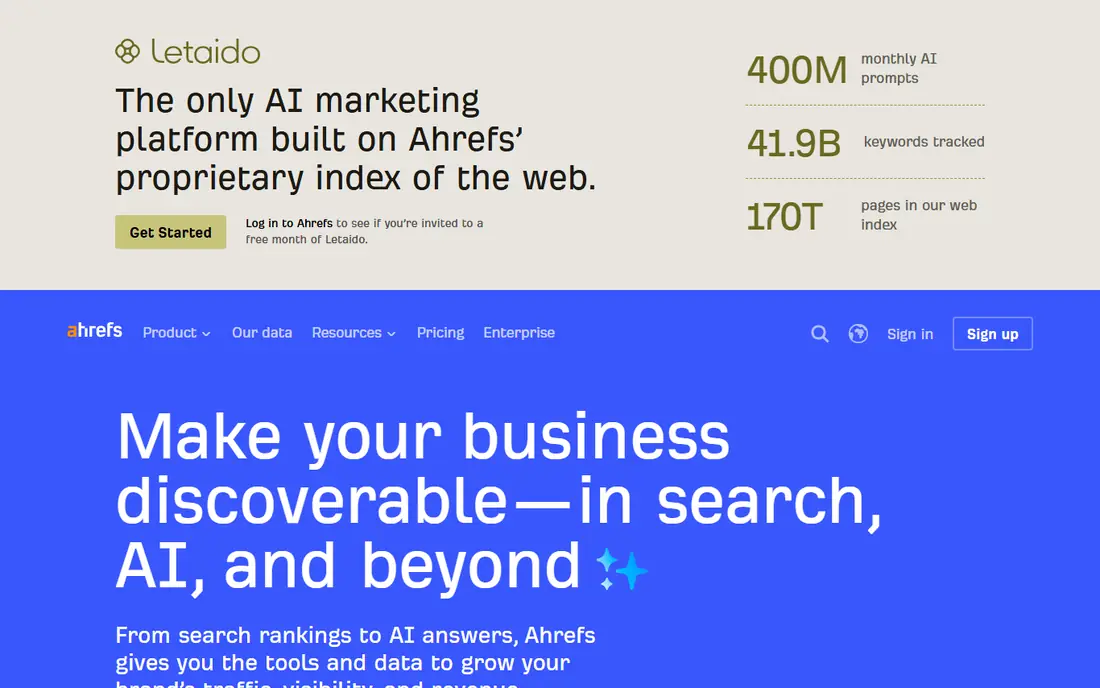
Ahrefs Brand Radar appeals to research-led teams, because it draws on a large prompt database and tracks how brands appear across AI answers and the wider web. You can check share of voice by topic, see which sources AI answers cite, and compare your brand with rivals across demand areas, which helps content planning as well as reporting.
It fits a team that already uses Ahrefs for links and keywords and wants AI visibility as an extension of that research, not a standalone side tool. The catch is that breadth can feel heavy for a small site, so define a narrow set of topics first, or the dashboard will show interesting data that never turns into a content decision.
- Large prompt and brand data
- AI mention tracking
- Web and social context
- AI Mode depth depends on plan
- Can be costly for small teams
Otterly AI is the low-cost entry point on this list, and that matters for a small business that only needs to watch a focused set of prompts. It tracks brand mentions, cited links, share of voice and sentiment across ChatGPT, AI Overviews, Perplexity and Copilot on core plans, with daily updates that make trends visible within weeks.
It fits a solo marketer or small team that wants a simple answer to one question, namely whether AI answers mention us, and how often rivals appear instead. The catch is add-on coverage, because Gemini and Google AI Mode may need an extra fee, so confirm the exact engine list for your plan before you compare prices with other tools.
- Low entry price
- Daily monitoring
- Citation and share of voice reports
- Some engines are paid add-ons
- Prompt limits are low on entry plans
Profound is built for larger brands that need a serious analytics layer, with prompt-level detail, trend alerts and competitor benchmarking across AI answer engines. You can track how often your brand is mentioned, which pages are cited, how sentiment shifts, and where competitors win prompts, then share that data with content and product teams.
It fits an enterprise team that reports AI visibility to leadership and needs governance, permissions and reliable history, rather than a quick one-off check. The catch is cost and scope, because entry plans may cover fewer engines than the top tier, so ask for a written engine and prompt list for the exact plan you will buy.
- Deep prompt analytics
- Competitor benchmarking
- Agent and crawler insights on higher plans
- Enterprise pricing and setup
- Starter coverage may be narrower than expected
Peec AI stands out for agency work, because its reports make citation sources easy to explain to a client who does not follow AI search closely. You can track visibility, sentiment and position across chosen models, compare competitors, and use white-label style reporting for client dashboards, which saves time on monthly updates.
It fits an agency or lean brand team that manages several sites and needs clean, repeatable reports rather than raw answer dumps. The catch is model choice, because the entry plan covers a limited set of models, so pick the engines your buyers actually use and add more only when a client case requires it.
- Citation source data
- Sentiment and position tracking
- Agency reporting
- Entry plan lets you pick a limited set of models
- Costs rise with more models
Scrunch AI goes a step further than a simple tracker, because it pairs monitoring with tools for how AI crawlers experience your site. You can track mentions and citations across engines, watch trend scores over time, and explore an AI-focused site experience that serves structured content to agents and crawlers.
It fits a brand that has already fixed basic SEO and now wants to shape what AI systems read, cite and recommend, with a team to act on the findings. The catch is price and scope, because the platform is priced for teams with a real AI search budget, so a small site may get more value from a cheaper tracker plus focused content work.
- AI search monitoring
- Trend scoring
- Agent experience platform
- Higher entry price
- Some features suit larger teams better
ZipTie is the most technical pick here, and that focus helps SEOs who want to know exactly which citations they are missing and why. It shows citation gaps, content gaps and prompt-level performance, with a strong angle on Perplexity and Gemini alongside Google AI surfaces, which helps teams that already work from data rather than headlines.
It fits a technical SEO or consultant who will turn gap reports into page edits, new sections and better sourcing, rather than a team that only wants a monthly score. The catch is breadth, because a narrower engine set may miss a channel your buyers use, so pair ZipTie with a second check on ChatGPT or AI Mode if those engines matter to your audience.
- Perplexity and Gemini focus
- Citation gap reports
- Content gap insights
- Narrower engine set than some rivals
- Less suited to non-technical users
How we picked these
We compared official feature pages, pricing notes and engine coverage for each tool, plus public reviews and comparison guides from 2026. We checked whether AI Mode was named as a tracked surface, how prompts and citations are reported, and how competitor data is shown. We did not claim hands-on ranking results, and we left out tools that only tracked classic blue-link positions with no AI answer data.
How to buy AI Mode rank tracking software without paying for the wrong coverage
Confirm AI Mode by name
Ask the vendor to confirm AI Mode tracking in writing for your plan, because AI Overviews, ChatGPT and AI Mode are different surfaces. A page can appear in one and be absent from another.
Start with 25 to 50 buyer prompts
Pick prompts a real buyer would ask, including comparisons, best options and problem questions, plus a few branded prompts. Unbranded prompts show where you win new demand, while branded prompts show reputation.
Read citations, not just scores
Open the cited pages for your top prompts and check whether the facts are current, clear and easy for an AI system to quote. A missing citation often points to a content gap, not a tracking error.
Review trends weekly, not single runs
AI answers vary from run to run, so judge a prompt by its mention rate over several weeks. A one-day win or loss is noise, while a steady trend is a signal to act on.
FAQ
What is Google AI Mode?
Google AI Mode is a conversational search experience inside Google Search that writes a combined answer from several sources and lets you ask follow-ups. It is separate from AI Overviews, which appear at the top of classic results.
How is AI Mode tracking different from classic rank tracking?
Classic tracking records a position in a list of links. AI Mode tracking records whether your brand is mentioned, which pages are cited, and how your brand compares with competitors inside a generated answer.
How many prompts should I track?
Start with 25 to 50 prompts that cover buyer questions, comparisons and category terms. Add more only when you have a team ready to act on the extra data, because unused prompts waste budget.
Can a tool guarantee AI Mode citations?
No tool can guarantee a citation, because Google and other AI systems choose sources based on relevance, quality and trust signals. A tracker shows where you stand, while content, reviews and clear facts help you earn citations over time.
Do I still need classic rank tracking?
Yes, for most sites. Classic rankings still drive traffic and show how your pages perform in regular search, while AI Mode tracking shows a growing part of discovery that classic reports miss.