Best AI Content Generation Tools in 2026: 8 Tools Compared
Compare the best AI content generation tools in 2026 for blogs, ads, social posts, and product copy, with pricing, features, and honest pros and cons.
- Editor's choice
 Jasper
Marketing teams needing brand voice
Starts atSee websiteVisit jasper.aiFull review - Great alternative
 Copy.ai
Teams producing lots of short-form copy
Starts atSee websiteVisit copy.aiFull review - Also consider
 Writesonic
Budget-friendly blog and ad drafts
Starts atSee websiteVisit writesonic.comFull review
TL;DR:
- Jasper and Copy.ai lead for marketing teams that need brand voice controls and campaign-ready drafts.
- Writesonic and Rytr are better value picks for solo creators and small teams with tight budgets.
- Frase and Scalenut suit SEO-focused writers who need briefs, outlines, and optimization alongside drafts.
- Anyword stands out for ad and landing page copy tested against performance goals.
- Every tool still needs human editing for facts, tone, and originality before publishing.
Quick comparison
| Tool | Best for | Starts at | Free plan? | |
|---|---|---|---|---|
| Jasper | Marketing teams needing brand voice | See website | Free trial | Visit |
| Copy.ai | Teams producing lots of short-form copy | See website | Yes | Visit |
| Writesonic | Budget-friendly blog and ad drafts | See website | Yes | Visit |
 Anyword | Ad and landing page copy | See website | Free trial | Visit |
 Rytr | Solo writers on a low budget | See website | Yes | Visit |
 Frase | SEO briefs and optimized articles | See website | Free trial | Visit |
 Scalenut | SEO content planning and writing | See website | Free trial | Visit |
 QuillBot | Rewriting and polishing existing text | See website | Yes | Visit |
The best AI content generation tools
AI writing tools can speed up a first draft, but they are not interchangeable. Some focus on marketing copy, some on long articles, and some on search optimization. We compared official feature pages, pricing, templates, and editing controls to sort the tools by the job they do best.

Jasper is built for teams that publish a lot of marketing content and need it to sound consistent. Brand voice settings, memory of company details, and campaign templates help a team produce blog posts, emails, and social copy in a shared style. That matters more than raw speed when several writers touch the same brand.
The platform also supports longer documents, with an editor that lets writers expand, rewrite, and rework sections. The trade-off is price and the need for oversight. Jasper drafts read smoothly, but they can still invent details, so facts, quotes, and product claims need human checking before anything goes live.
- Strong brand voice and style controls
- Wide template library for campaigns
- Team collaboration features
- Higher price than simpler tools
- Long articles still need careful fact checks
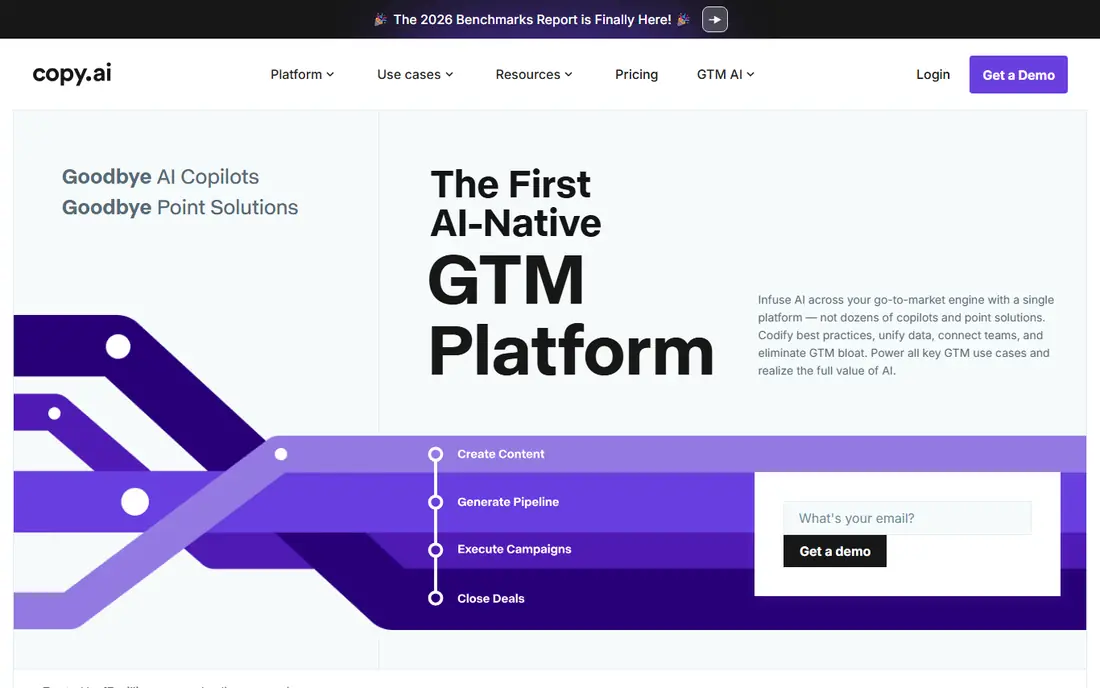
Copy.ai focuses on volume and speed for short content. Social captions, ad variations, email subject lines, and product descriptions can be generated in batches, which helps sales and social teams test more angles. Workflows let teams chain steps together, such as turning a product brief into several post formats.
For a full blog article, Copy.ai is less guided than Frase or Scalenut, and writers may need to shape the structure themselves. It works best as a drafting and variation tool inside a team that already knows its message and audience.
- Fast short-form templates
- Useful workflows for sales and social teams
- Free plan for trying core features
- Long-form writing is less structured
- Output quality varies by prompt
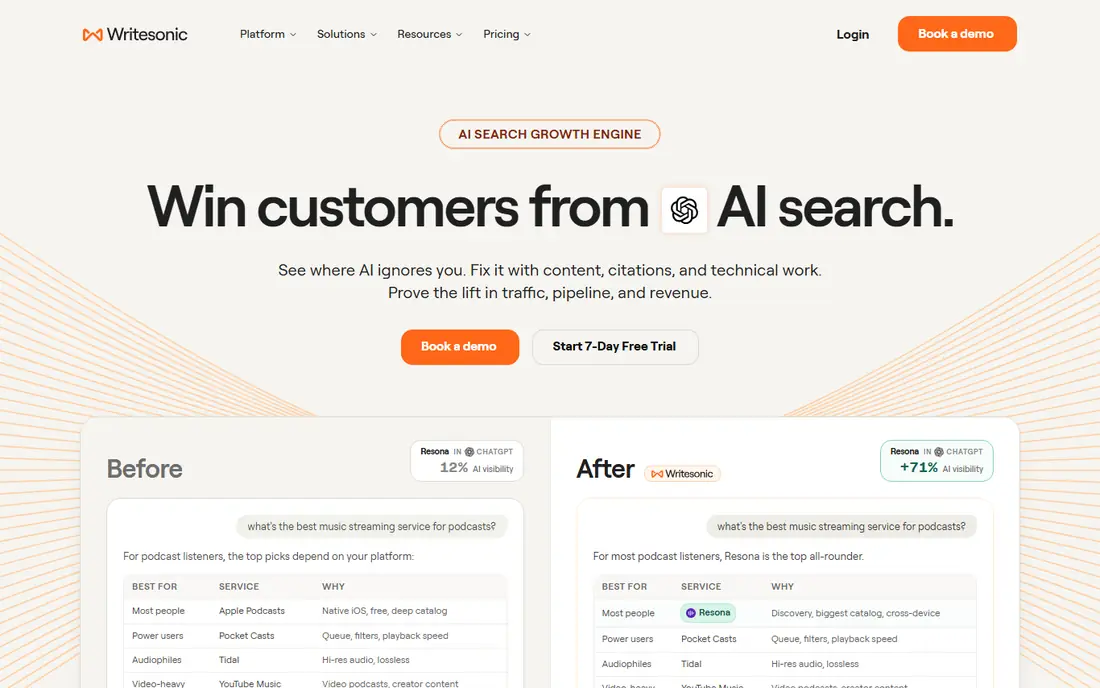
Writesonic gives small teams a broad toolset without a large monthly bill. Its article writer can produce a structured draft from a topic and keywords, and its templates cover ads, landing pages, and product copy. A free plan lets new users test the core features before paying.
The writing is solid for general topics, but technical or regulated subjects need more editing and source checking. Writers who want deep brand controls or advanced SEO briefs may prefer a more specialized tool, while writers who want affordable drafts will find Writesonic practical.
- Good range of templates at a lower price
- Article writer for longer drafts
- Image and chatbot tools in the same account
- Editing controls are simpler than Jasper
- Quality drops on technical topics
Anyword takes a different angle by scoring copy against likely performance. Marketers can compare headline and ad variations before spending on a campaign, which helps when small wording changes affect clicks. Brand rules and approved language can be built in, which is useful for regulated industries.
It is not the best choice for a 2,000-word guide or thought leadership piece. Its strength is short, goal-driven copy where the next step is a click, a signup, or a purchase. Teams that run paid campaigns will get more from it than solo bloggers.
- Predictive scoring for copy performance
- Brand voice and compliance controls
- Strong ad and landing page templates
- Less suited to long editorial articles
- Pricing is geared to marketing teams
Rytr is a good fit for a solo writer who needs help starting, not a full content platform. Blog ideas, outlines, emails, and social posts can be drafted quickly, and tone settings help match a casual or formal style. The free plan covers light use, and paid plans stay affordable.
The limits show on longer work. Rytr works best in short sections, and writers need to stitch sections together and edit for flow. For a freelancer or student on a budget, that trade is fair. For a team, the lack of deeper collaboration tools may push them toward Jasper or Copy.ai.
- Very low cost for regular use
- Simple interface with many use cases
- Supports many languages and tones
- Shorter outputs by design
- Fewer team and brand features
Frase starts with research rather than a blank prompt. It reviews pages that already rank for a topic, pulls common questions and headings, and builds a brief that a writer can follow. That structure helps articles cover a topic fully instead of repeating the same few points.
Drafting happens inside the same editor, with topic suggestions as the writer works. New users may need time to learn the brief workflow, and the price reflects the research features, not just writing. For SEO teams, that research step is the reason to choose Frase over a general writer.
- Research and briefs based on top-ranking pages
- Outline builder with topic coverage
- Drafting inside an SEO editor
- Learning curve for new SEO writers
- Price is higher than pure writing tools
Scalenut combines keyword research, content planning, and AI drafting in one platform. Teams can group related topics into clusters, build briefs, and then draft articles that follow those briefs. An optimization score shows which related terms and headings are missing, which helps editors spot gaps before publishing.
The score is a guide, not a guarantee of ranking, and chasing a perfect score can make writing stiff. Used well, Scalenut helps a small SEO team plan and produce a steady run of articles. Used badly, it can push writers toward keyword stuffing, so human editing stays essential.
- Keyword planning plus briefs and drafts
- Content optimization scoring
- Good for topic clusters
- Interface has many features to learn
- Scores should not replace editorial judgment
QuillBot does a different job from the rest of this list. It rewrites, shortens, expands, and polishes text a human has already written, rather than starting from a blank page. That makes it useful at the editing stage, when a draft needs clearer wording, a different tone, or a shorter version for social posts.
It also includes grammar checking and summarization, which help solo writers clean up work before publishing. It will not plan a content calendar or write a researched guide on its own. Pair it with a drafting tool, or use it alone when the main need is better wording rather than more words.
- Strong paraphrasing and grammar tools
- Easy to tighten or simplify drafts
- Free plan covers basic rewriting
- Not a full article generator
- Premium modes sit behind a paywall
How we picked these
We compared official feature pages, template libraries, pricing pages, and free plans, and we weighed each tool by its main job: marketing copy, long articles, SEO briefs, or rewriting. We favored tools that are actively maintained, offer a free plan or trial, and state their features clearly. We did not claim hands-on testing, and we treated AI output as a draft that needs human fact checking, editing, and original reporting before publication.
How to choose an AI content tool without wasting money
Start with the content you actually produce each week. A team writing ads needs variation and scoring, while a team writing guides needs briefs and outlines. A solo writer needs low cost and simple editing. Matching the tool to that weekly job matters more than picking the tool with the most templates.
Next, test with real work, not sample prompts. Use a free plan or trial to draft a post on your own topic, then edit it as you would for publication. Time the full process, including fact checks and rewrites. If editing takes longer than writing from scratch, the tool is not saving time for that kind of content.
Accuracy, originality, and brand safety
AI tools can invent facts, dates, and quotes, so build a checking step into every workflow. Verify claims against primary sources, keep a style guide for tone and banned claims, and avoid publishing AI text about health, money, or legal topics without expert review. Plagiarism checks and original reporting help keep content useful rather than generic.
Also check data handling. Read the privacy terms for how prompts and drafts are stored, and avoid pasting unpublished product details, customer data, or confidential plans into a tool that may retain them. A tool that fits your workflow and your privacy needs is worth more than a slightly cheaper option that does not.
FAQ
What is the best AI content generation tool for blogs?
For SEO-focused blogs, Frase or Scalenut are strong because they add research and briefs to drafting. For general marketing blogs, Jasper offers better brand voice controls. The best choice depends on whether search coverage or brand consistency matters more for your posts.
What is the best AI content generation platform for ads?
Anyword is built for ads and landing pages, with scoring that helps compare variations before a campaign runs. Copy.ai is also useful for producing many ad variations quickly. Test both with your own offers, since performance depends on the audience and the product, not only on the tool.
Are there free AI content generation tools?
Yes. Rytr, Copy.ai, Writesonic, and QuillBot all offer free plans with limits on output or features. Free plans work for light use and for testing a tool, but regular publishing usually needs a paid plan for higher limits and better controls.
Can AI tools replace human writers?
No, not for content that needs accuracy, original insight, or trust. AI tools speed up drafts, outlines, and variations, but humans still need to check facts, add reporting, shape arguments, and take responsibility for what is published. The best results come from a human-led workflow with AI support.
How do I avoid generic AI content?
Give the tool specific inputs: audience, angle, examples, and facts from your own research. Edit heavily, cut filler, add original examples, and rewrite introductions and conclusions in your own voice. Publishing lightly edited AI drafts is the fastest way to produce content readers ignore.