Best ActiveCampaign Alternatives in 2026: 8 Marketing Tools Compared
Looking for ActiveCampaign alternatives? We compared 8 email and marketing automation tools for small business, creators, and ecommerce teams for your business.
- Editor's choice
 Mailchimp
Small business email
Starts atSee websiteVisit mailchimp.comFull review - Great alternative
 HubSpot
All in one CRM marketing
Starts atSee websiteVisit hubspot.comFull review - Also consider
 Klaviyo
Ecommerce email and SMS
Starts atSee websiteVisit klaviyo.comFull review
TL;DR:
- Mailchimp is our pick for most small businesses that want email, landing pages, and automation in one place.
- HubSpot suits teams that want marketing, sales, and service data in a single CRM.
- Klaviyo suits ecommerce stores that need purchase based flows and strong Shopify links.
- Brevo and Kit suit tighter budgets, with free plans and simpler automation.
- Always price by contacts, not just the monthly plan, because contact growth drives the bill.
Quick comparison
| Tool | Best for | Starts at | Free plan? | |
|---|---|---|---|---|
| Mailchimp | Small business email | See website | Yes | Visit |
| HubSpot | All in one CRM marketing | See website | Yes | Visit |
| Klaviyo | Ecommerce email and SMS | See website | Yes | Visit |
 Brevo | Low cost email and SMS | See website | Yes | Visit |
 Kit | Creators and newsletters | See website | Yes | Visit |
 GetResponse | Webinars plus email | See website | Free trial | Visit |
 Drip | Ecommerce automation | See website | Free trial | Visit |
 Keap | Small business CRM plus sales | See website | Free trial | Visit |
The best ActiveCampaign alternatives
ActiveCampaign is known for strong automation at a mid range price. The tools below match it on different strengths, from creator newsletters to full CRM marketing.
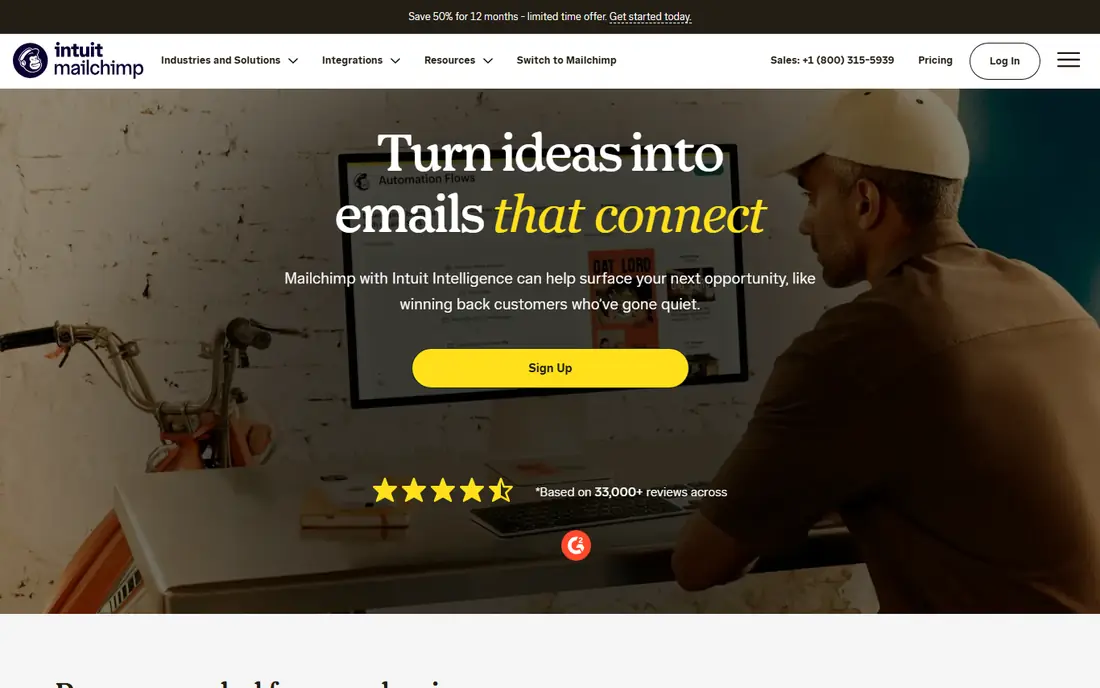
Mailchimp remains the most widely used small business email tool, and its range explains why. You get email campaigns, landing pages, signup forms, basic automation, and analytics in one account, with a free plan for testing. Templates are plentiful, and integrations cover most store, CRM, and social tools.
The bill grows with contacts, so a list that doubles can push you into a much higher tier. Advanced automation and multivariate testing also sit on higher plans. For a small business that wants a familiar, all round email tool, Mailchimp is a safe pick, but watch contact pricing as your list grows.
- Free plan to start
- Wide template and automation range
- Many integrations
- Pricing rises fast as contacts grow
- Advanced automation sits on higher tiers
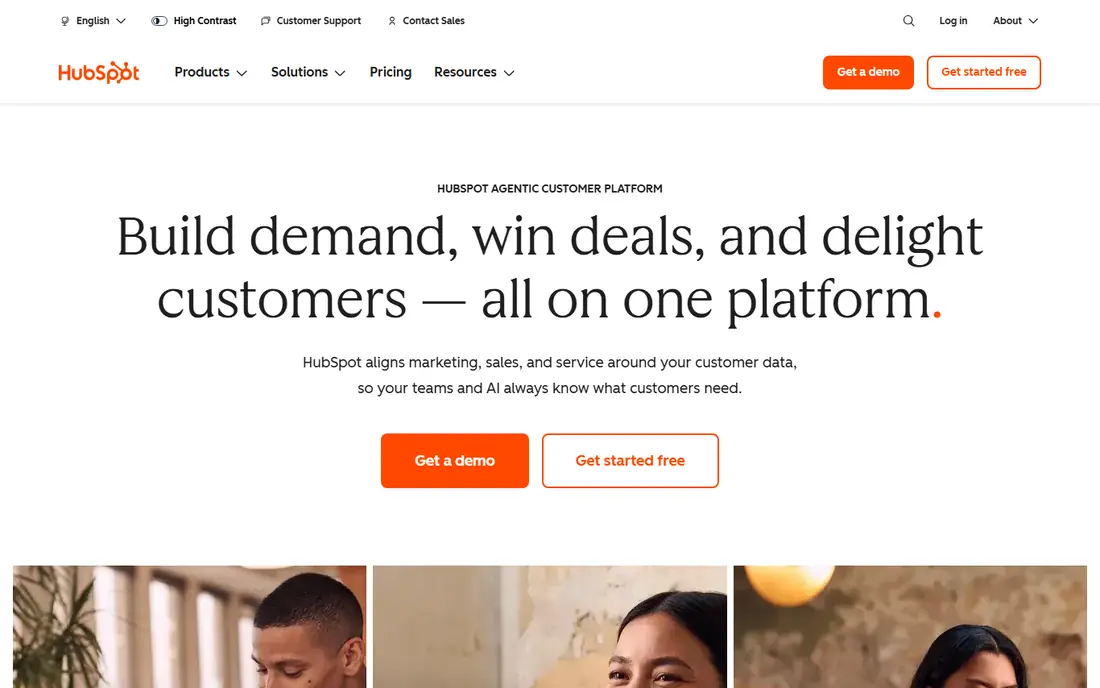
HubSpot suits teams that want marketing and sales data together. The free CRM covers contacts, deals, and tickets, and paid Marketing Hub plans add email, automation, landing pages, and reporting on top. That single view helps teams see which campaigns actually lead to deals, not just opens.
Cost is the main drawback. Marketing Hub paid tiers rise with contacts and features, and a small team can outgrow the free tools quickly. Setup also takes more planning than a simple email tool. For a growing company that wants one system for marketing and sales, HubSpot is worth the investment.
- Free CRM with marketing, sales, and service in one system
- Strong reporting
- Large integration range
- Paid marketing tiers get expensive fast
- Setup takes time for small teams

Klaviyo is built for ecommerce. It pulls order, browsing, and customer data from your store, then lets you build flows for abandoned carts, post purchase follow up, and win back campaigns. Email and SMS live in one platform, so a store can coordinate both channels without separate tools.
Non ecommerce businesses will find Klaviyo less relevant, and its pricing grows with contacts and message volume. For a Shopify or WooCommerce store that lives on repeat purchases, Klaviyo is one of the strongest ActiveCampaign alternatives, and its free plan lets you test flows on a small list.
- Strong Shopify and WooCommerce links
- Purchase based flows and segments
- Email plus SMS in one place
- Pricing rises with contacts and SMS use
- Best value only for ecommerce stores
Brevo suits small businesses that want low cost email plus SMS without a steep learning curve. The free plan covers daily sending limits, and paid plans scale with volume. Automation covers welcome series, transactional mail, and basic workflows, and the CRM tools help small teams track contacts.
Power users will miss ActiveCampaign depth. Brevo automation is simpler, with fewer branching and scoring options, and its template library is smaller. For a small team on a tight budget that needs email and SMS together, Brevo is a practical, low risk pick.
- Free plan to start
- Email, SMS, and WhatsApp options
- Pricing based on emails, not just contacts on some plans
- Automation depth is below ActiveCampaign
- Template range is smaller than Mailchimp
Kit, formerly ConvertKit, focuses on creators who grow an audience by email. It offers simple forms, landing pages, sequences, and paid newsletters, with automation that is easy to follow. The free plan covers a modest subscriber count, which suits a new creator testing a newsletter.
Businesses with complex sales pipelines or large ecommerce catalogs will find Kit thin. It is not trying to be a full CRM, and its design tools are simpler than Mailchimp. For a writer, podcaster, or course creator who lives by email, Kit is a clean, focused alternative.
- Built for creators, newsletters, and paid subscriptions
- Simple automation and forms
- Free plan to start
- Less suited to complex ecommerce or B2B sales automation
- Fewer design templates than Mailchimp
GetResponse bundles more than email. Alongside campaigns and automation, it offers landing pages, funnels, and webinars, which suits coaches and course sellers who run live sessions. Templates cover many niches, and automation includes scoring and tagging similar to ActiveCampaign basics.
The interface packs in many features, which can overwhelm a new user, and plan tiers differ in ways that need a close read. For a business that runs webinars and email from one account, GetResponse is a strong value pick. For pure email simplicity, Mailchimp or Kit may feel lighter.
- Email, automation, landing pages, and webinars in one account
- Good funnel tools
- Many templates
- Interface can feel busy
- Pricing tiers need careful comparison
Drip focuses on ecommerce automation, with a visual builder for flows based on purchases, browsing, and customer behavior. Its Shopify integration is strong, and segmentation lets stores target buyers by product, order history, and engagement. That depth rivals ActiveCampaign for online stores.
There is no permanent free plan, only a trial, and pricing is based on contacts, so costs rise as the list grows. For a pure ecommerce brand that wants deep automation without a full CRM, Drip is a focused alternative. For a mixed business with non store contacts, HubSpot or Mailchimp may fit better.
- Strong ecommerce automation and segmentation
- Good Shopify integration
- Visual workflow builder
- No permanent free plan
- Pricing is contact based and rises with list size
Keap suits service businesses that need more than email. It combines a CRM, email automation, invoicing and payments, and appointment booking, so a coach, agency, or local service firm can run sales and follow up in one place. Automation templates cover common service workflows, which speeds up setup.
Keap costs more than an email only tool, and its breadth takes time to learn. For a business that only sends newsletters, Keap is overkill. For a service firm that wants contacts, sales, payments, and follow up together, Keap is a strong ActiveCampaign alternative with a clear small business focus.
- CRM, email, payments, and appointments in one system
- Good for service businesses
- Strong automation templates
- Higher starting cost than email only tools
- Learning curve for new users
How we picked these
We compared official product pages and pricing pages for email and marketing automation tools that are sold and supported in October 2026. We favored tools with real automation, segmentation, and analytics, and we included options across small business, creator, ecommerce, and CRM categories. We did not claim hands on testing; our comparison rests on vendor features, pricing, and public reviews.
How to choose an ActiveCampaign alternative
Start with your business type. Creators fit Kit, ecommerce stores fit Klaviyo or Drip, and service firms fit Keap or HubSpot. Next, price by contacts and by emails sent, because vendors count those differently and a growing list can change the bill fast.
Test automation with a real flow, such as a welcome series or abandoned cart sequence, not just a single campaign. Check how easy it is to tag, segment, and report on that flow. Finally, confirm integrations with your store, CRM, and forms, because a tool that cannot read your customer data cannot automate well.
FAQ
What is the best alternative to ActiveCampaign?
Mailchimp suits most small businesses, HubSpot suits teams that want a full CRM, and Klaviyo suits ecommerce stores. Kit suits creators, Brevo suits low cost teams, and Keap suits service businesses. Your business type and contact count should decide the pick.
Is there a free ActiveCampaign alternative?
Yes. Mailchimp, HubSpot, Klaviyo, Brevo, and Kit all offer free plans with limits on contacts or sends. GetResponse, Drip, and Keap offer trials instead of permanent free plans. Free plans suit testing and small lists, but growing lists usually need a paid plan.
How much does marketing automation cost?
Costs vary widely by contacts and features. Simple email tools start free or at a low monthly fee, while CRM and ecommerce platforms rise with contacts and message volume. Always model cost at your current list size and at double that size, because contact growth is the main price driver.
Can I move my lists and automations from ActiveCampaign?
Yes, most tools offer import for contacts and tags, and many offer migration help on paid plans. Automations usually need rebuilding, because workflow logic differs between platforms. Export your lists, tags, and key flows before you cancel, and run both tools in parallel for a short switch period.
Do I need a CRM as well as email marketing?
Not always. A simple email tool is enough for newsletters and basic automation. A CRM helps when you track deals, sales calls, and customer history alongside email. HubSpot and Keap combine both, while Mailchimp, Kit, and Klaviyo focus on email and can connect to a separate CRM.